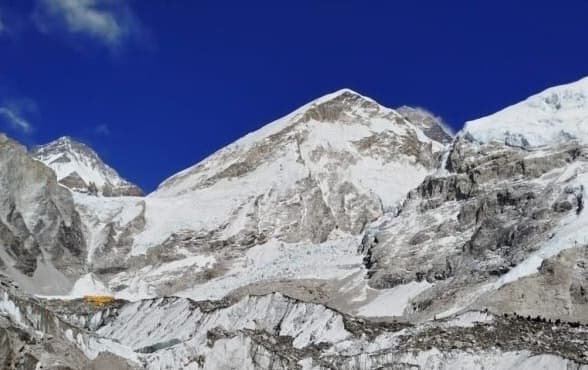
Tengboche Monastery is one of the most important Buddhist and cultural landmarks in Nepal’s Everest region, standing at 3,867 meters (12,687 feet) on a forested ridge of the Khumbu Himalaya. Founded in 1916 by Lama Gulu, the monastery is a living center of Nyingma Buddhism and Sherpa heritage, where daily prayers, monastic traditions, sacred art, and community ceremonies continue alongside the region’s world-famous trekking culture. Its elevated setting within Sagarmatha National Park places the monastery among some of the Himalaya’s most dramatic scenery, with views toward Mount Everest, Ama Dablam, Lhotse, Nuptse, Thamserku, and other major peaks.
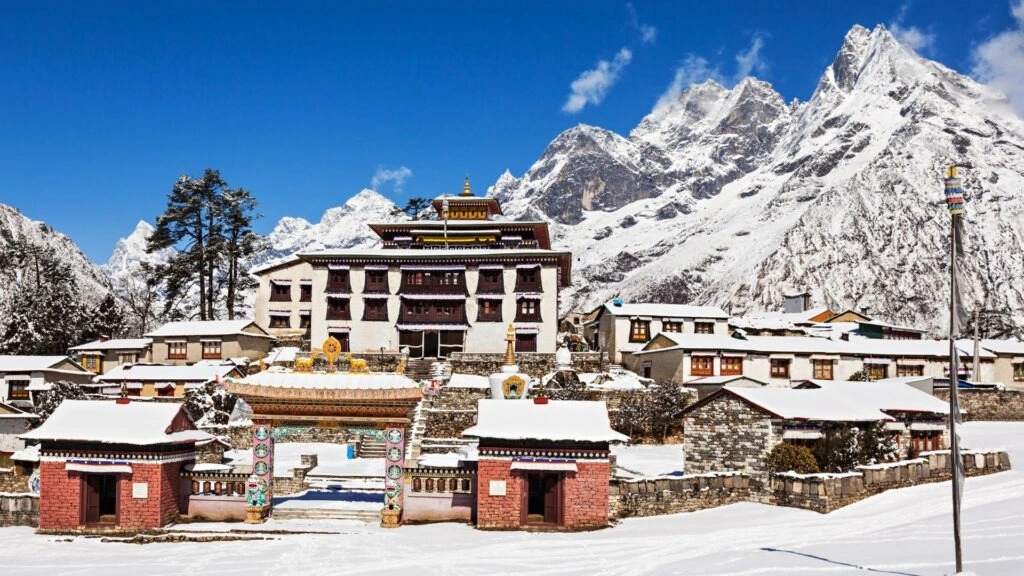
A visit to Tengboche Monastery offers more than a viewpoint along the Everest Base Camp trail. The monastery connects the landscape of the Khumbu with Sherpa spiritual life through Buddhist rituals, the annual Mani Rimdu festival, traditional architecture, sacred paintings, masked dances, and generations of monastic practice. For trekkers, pilgrims, and cultural travelers, understanding Tengboche also means understanding how altitude, acclimatization, trekking routes, seasonal conditions, permits, accommodation, and monastery etiquette shape the experience. This guide brings those dimensions together, covering Tengboche Monastery’s location, altitude, history, religious significance, attractions, Mani Rimdu celebrations, trekking access, practical requirements, and essential advice for visiting in 2026.
Where Is Tengboche Monastery Located?
Tengboche Monastery is located in the Khumbu region of northeastern Nepal, within Sagarmatha National Park, on a glacial moraine ridge at the confluence of the Dudh Kosi and Imja Khola river valleys. The monastery sits inside Solukhumbu District, Koshi Province, approximately 10 kilometers south of Mount Everest's base camp access route.
The site coordinates place it at 27.8360° N, 86.7642° E. The surrounding Sagarmatha National Park, designated a UNESCO World Heritage Site in 1979, protects the monastery's immediate environment across 1,148 square kilometers of alpine terrain. The nearest major settlement is Namche Bazaar, the Khumbu's commercial hub, located 13 kilometers to the southwest via trail. The monastery overlooks the Imja Khola valley to the east and the Dudh Kosi valley to the south, creating a natural amphitheater of peaks.
Tengboche's ridge position is no accident. Lama Gulu, the monastery's founder, selected this site in 1916 specifically because the elevated, south-facing ridge receives maximum winter sunlight, a critical consideration at altitude, while the dense rhododendron and silver fir forest provides natural windbreaks. Trekkers approaching from Namche Bazaar experience the monastery's dramatic first appearance as they crest the ridge after descending through the Phunki Tenga valley: the red-and-white gompa emerges against the Everest massif with an immediacy that most visitors describe as unlike any arrival experience in Nepal.
How High Is Tengboche Monastery?
Tengboche Monastery sits at exactly 3,867 meters (12,687 feet) above sea level. This altitude places it within the high-altitude trekking zone, above the threshold where acute mountain sickness (AMS) symptoms commonly emerge in acclimatization schedules.
The elevation carries 3 direct implications for every visitor:
Acclimatization requirement: Most Everest Base Camp itineraries build in a rest day at Namche Bazaar (3,440 m) before ascending to Tengboche, a gain of 427 meters.
Temperature range: Tengboche records mean January temperatures of −10°C (14°F) and mean July temperatures of 7°C (44.6°F), with overnight lows dropping to −20°C (−4°F) in winter.
Atmospheric oxygen: At 3,867 meters, available oxygen measures approximately 62% of sea-level concentration, meaning physical exertion feels noticeably harder than at Kathmandu (1,400 m).
For context, Tengboche sits higher than Mont Blanc Base Camp (1,461 m) and comparable to some Andean settlements in Bolivia. Trekkers arriving directly from Kathmandu without prior acclimatization at Namche Bazaar report headache onset rates exceeding 40%, based on trek guide field observations across standard EBC itineraries.
How Far Is Tengboche Monastery From Namche Bazaar?
Tengboche Monastery is 13 kilometers from Namche Bazaar by trail, a distance trekkers cover in 4 to 5 hours at a steady pace with 400-meter net elevation gain. The route descends 600 meters from Namche to Phunki Tenga before climbing 1,000 meters to the monastery ridge.
The trail follows this sequence:
Namche Bazaar (3,440 m): depart east through the upper village
Kyangjuma (3,550 m): 45-minute flat traverse with Everest viewpoints
Sanasa junction (3,600 m): split trail toward Thame or Tengboche
Phunki Tenga (3,250 m): riverside descent, tea house stop, 2 hours from Namche
Tengboche (3,867 m): 2-hour climb through rhododendron forest from river level
The descent to Phunki Tenga catches many trekkers off guard. Losing 600 meters only to regain 1,000 meters is physically demanding. Groups that attempt Namche to Tengboche on day 2 (before acclimatizing at Namche) report significantly higher fatigue and AMS symptom rates than those who follow the recommended schedule.
What Is the History of Tengboche Monastery?
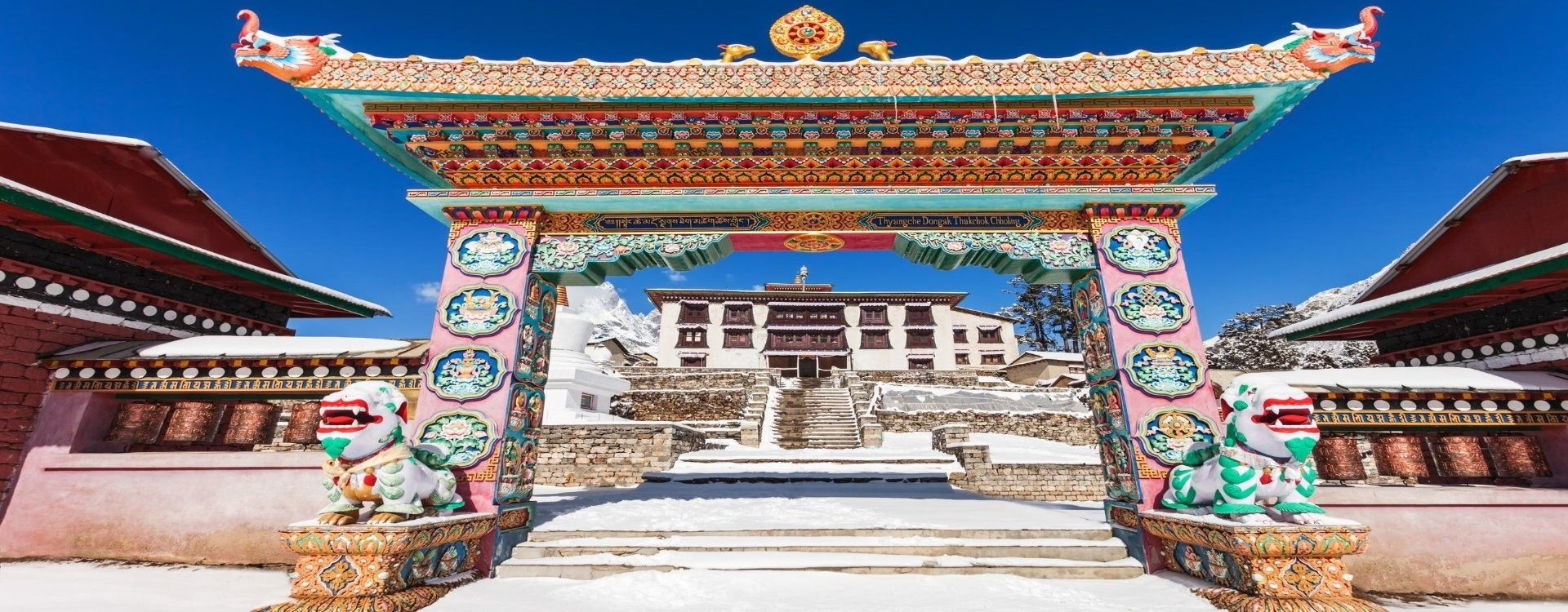
Tengboche Monastery carries more than 300 years of spiritual lineage rooted in the Nyingma school of Tibetan Buddhism, though the physical monastery dates to 1916 when Lama Gulu established a permanent residential gompa on the Khumbu ridge. The site's history spans 4 distinct eras: pre-monastery sacred use, founding, destruction, and modern reconstruction.
When Was Tengboche Monastery Established?
Tengboche Monastery was formally established in 1916 by Lama Gulu (also written as Sangwa Dorje's spiritual successor), making it 110 years old as of 2026. The founding followed a prophecy attributed to Lama Sange Dorje, a 17th-century saint revered across Khumbu, who is said to have blessed the ridge and predicted that a monastery would rise there.
Lama Gulu constructed the original gompa after receiving patronage from local Sherpa chieftains and Rana-era donors. The location was already considered sacred ground: Sherpa oral tradition records Lama Sange Dorje meditating on the ridge in the late 1600s, leaving footprints preserved in stone at Pangboche, the adjacent valley's older monastery founded in 1667.
The 1916 establishment formalized Tengboche as the Khumbu's religious center. Within a generation, it attracted monks from Thyangboche Monastery in Tibet and established teaching lineages that continue operating in 2025 under the current abbot, Ngawang Tenzin Jangbu Rinpoche.
How Has Tengboche Monastery Survived Earthquakes and Fires?
Tengboche Monastery survived 2 major structural disasters, the 1934 Bihar-Nepal earthquake and the 1989 accidental fire, through complete physical reconstruction both times, with the 1989 rebuild supported by international donations exceeding $1 million USD.
The 1934 Bihar-Nepal earthquake, measuring 8.0 on the Richter scale, damaged the original structure extensively. Monks rebuilt the gompa within several years using traditional Tibetan architectural techniques. The rebuilt structure stood for 55 years until January 19, 1989, when an electrical fire, caused by a newly installed generator during the initial rural electrification of Khumbu, destroyed the main prayer hall, religious artifacts, and irreplaceable thangkas within hours.
The 1989 fire galvanized the international mountaineering community. Sir Edmund Hillary's Himalayan Trust, numerous climbing expeditions, and Buddhist organizations across 12 countries contributed funds. Reconstruction was completed in 1993, with the rebuilt monastery incorporating fireproofing measures, improved electrical systems, and reinforced masonry while preserving traditional Tibetan architectural proportions. The 2015 Gorkha earthquake (magnitude 7.8) caused minor structural cracking but left the main gompa intact, a testament to the 1993 rebuild's improved construction standards.
What Role Does Tengboche Monastery Play in Sherpa Buddhism?
Tengboche Monastery functions as the spiritual headquarters of Khumbu's Sherpa Buddhist community, serving as the training center for Nyingma monks, the ceremonial host of Mani Rimdu, and the religious authority for birth, death, marriage, and agricultural blessing rituals across 12 Khumbu villages.
The monastery belongs to the Nyingma school, the oldest of Tibet's 4 major Buddhist traditions, founded by Padmasambhava (Guru Rinpoche) in the 8th century CE. Nyingma practitioners emphasize Dzogchen meditation, tantric ritual, and the preservation of terma (hidden religious texts), all practices actively maintained at Tengboche's teaching program.
The monastery houses approximately 40 resident monks in 2025, ranging in age from 8 to 70+. Young monks begin training between ages 8 and 12, studying Tibetan script, ritual chanting, musical instruments (including cymbals, dungchen horns, and gyalings), thangka painting, and debate. This educational continuum preserves Sherpa Buddhist culture across generations in a region where modern economic opportunities (guiding, tourism) increasingly compete for young people's time.
Beyond ceremonial functions, Tengboche's abbot holds advisory authority over land disputes, community conflicts, and environmental stewardship decisions in Khumbu. When Sagarmatha National Park authorities and local communities debated yak grazing boundaries in the 2010s, the monastery's leadership participated directly in negotiations, reflecting its secular authority alongside its religious mandate.
What Can You See at Tengboche Monastery?
Tengboche Monastery offers visitors 4 primary experiential layers: the main prayer hall (gompa), surrounding monk residences and courtyard, the Himalayan panorama from the ridge, and the rhododendron forest ecosystem of Sagarmatha National Park. Each layer delivers distinct cultural, spiritual, and natural value.
What Is Inside the Main Monastery?
Inside Tengboche's main prayer hall, visitors see 3 central altars featuring a 5-meter statue of Shakyamuni Buddha, a 4-meter statue of Guru Rinpoche (Padmasambhava), and a 3-meter statue of Maitreya (the Future Buddha), flanked by 108 hand-painted thangka scrolls and ceremonial offerings.
The prayer hall's interior follows traditional Tibetan gompa architecture: low wooden benches where monks sit cross-legged during puja (prayer sessions), ornately carved columns painted in reds and golds, a central aisle leading to the main altar, and an elevated seat for the head lama. The walls display 14 large thangkas depicting the Wheel of Life, protective deities (dharmapalas), and scenes from Guru Rinpoche's life.
Visitors who arrive during morning puja (typically 6:00 AM to 8:00 AM) witness monks reciting prayers in unison, accompanied by hand bells, cymbals, and the resonant call of dungchen telescoping horns. Evening puja begins at 3:00 PM. Both sessions are open to respectful observers who remain quiet and seated near the entrance. Photography inside the prayer hall requires explicit permission from the head monk, most grant it during non-ceremonial hours without a fee, though a donation to the monastery is customary.
Which Buddhist Art and Sculptures Can You See?
Tengboche's collection includes 7 categories of Buddhist artistic expression: altar sculptures, thangka paintings, wall murals, ceremonial masks, butter sculptures (tormas), religious textile (brocade hangings), and manuscript texts, all preserved under the monastery's ongoing conservation program initiated in 1994.
The thangka collection represents the most visually striking element. These vertical scroll paintings, executed on cotton or silk canvas with mineral pigments and gold leaf, depict the 35 Buddhas of Confession, the 21 Taras (female bodhisattvas), and wrathful protector deities used in tantric meditation. Several thangkas predate the 1989 fire, stored off-site during the reconstruction period, and carry provenance tracing to late-19th-century Tibetan monastic workshops.
The monastery's Mani Rimdu cham (masked dance) costumes, stored in the main hall's anteroom, represent some of the finest preserved religious textile work in the Everest region. These costumes, worn by monk-dancers during the annual festival, incorporate silk brocade, embroidered animal and deity motifs, and layered headpieces hand-crafted by Sherpa artisans in Namche Bazaar.
What Views of Mount Everest Can You Enjoy From Tengboche?
From Tengboche Monastery's ridge and the adjacent Syangboche viewpoint (a 15-minute walk east), you see 9 major Himalayan peaks above 6,000 meters: Everest (8,849 m), Lhotse (8,516 m), Nuptse (7,861 m), Ama Dablam (6,812 m), Thamserku (6,618 m), Kangtega (6,782 m), Taboche (6,542 m), Cholatse (6,335 m), and Kwangde (6,187 m).
Mount Everest appears framed between Nuptse's west shoulder and Lhotse's north face from the monastery courtyard, a composition that professional photographers specifically travel to Tengboche to capture. Ama Dablam dominates the southeast skyline with its distinctive hanging glacier, earning its Sanskrit name ("Mother's Amulet Box") from the shape visible from this exact angle.
The clearest morning views occur between 6:00 AM and 9:00 AM, before valley clouds build from the south. Afternoon fog regularly obscures peaks by 1:00 PM during monsoon season (June–August). Sunrise from the monastery courtyard, with the golden light catching Ama Dablam's summit pyramid, ranks among Nepal's most photographed landscape moments.
What Is the Tengboche Monastery Festival?
The Tengboche Monastery Festival refers to Mani Rimdu, a 19-day Nyingma Buddhist ceremony combining meditation retreats, public masked dances (cham), fire offerings (puja), and community blessings that transforms the monastery into the cultural and spiritual center of Khumbu life each autumn.
Mani Rimdu originated in Tibet's Rongphu Monastery, the world's highest monastery located on Everest's north face in Tibet. Khumbu Sherpas adopted the festival following the establishment of Tengboche Monastery in 1916. The name "Mani Rimdu" derives from Tibetan: mani (precious, referring to the six-syllable mantra Om Mani Padme Hum) and rimdu (the name of a powerful healing nectar pill distributed during the ceremony).
When Is Mani Rimdu Celebrated at Tengboche Monastery?
Mani Rimdu at Tengboche Monastery is celebrated on the full moon of the 9th month of the Tibetan lunar calendar, which falls between late October and late November in the Gregorian calendar. In 2026, the main public festival days fall in late October (typically October 24–26, dictated by the full moon of the 9th month in the Tibetan lunar calendar).
The 19-day event structure divides into 3 phases:
Phase | Duration | Activity |
Preparation (Drubchen) | Days 1–15 | Closed monastic retreat, mantra recitation, sand mandala construction |
Public Festival (Cham) | Days 16–17 | Masked dances, public blessings, sacred pill distribution |
Fire Offering (Serkyem) | Days 18–19 | Closing rituals, mandala dissolution, protective prayers |
The public Cham dances on days 16 and 17 draw crowds exceeding 2,000 visitors, a mix of local Sherpas from surrounding villages, pilgrims, and international trekkers who specifically time Everest Base Camp treks to coincide with the festival.
What Happens During the Mani Rimdu Festival?
During Mani Rimdu's public days at Tengboche, monks perform 13 distinct masked dances over 2 days, each enacting specific episodes from Guru Rinpoche's life and the subjugation of pre-Buddhist Himalayan spirits, accompanied by monastery orchestras and attended by the head lama who distributes Rilbu (sacred pills) to worshippers.
The cham dances follow a precise ritual sequence documented in Nyingma liturgical texts. Performers wear 3 categories of masks: deity masks (peaceful bodhisattvas with benign expressions), protector masks (wrathful dharmapalas with fierce expressions and bulging eyes), and animal masks (deer, snow lions, and ravens representing Himalayan guardian spirits). These masks are carved from wood, lacquered with mineral pigments, and considered sacred objects stored under lock between festivals.
The distribution of Rilbu, small red pills blessed through 15 days of intensive mantra recitation, represents the festival's most direct personal benefit for attendees. Recipients consume one pill and keep the others as protective amulets for their households. Sherpa families travel from Khumbu's remotest villages specifically to receive Rilbu for elderly relatives who cannot make the journey themselves.
What most non-Sherpa visitors overlook: the Cham performances are not entertainment. Each dance enacts a specific ritual function, the Black Hat dance (Shanag) purifies the space, the Skeleton dance (Citipati) teaches the Buddhist understanding of impermanence, and the Deer dance honors Milarépa's legendary meditation in deer-inhabited valleys. Watching with this context transforms the experience from colorful spectacle to living scripture.
Why Is Mani Rimdu Important to the Sherpa Community?
Mani Rimdu is the Sherpa community's primary annual religious and cultural consolidation event, functioning simultaneously as a spiritual renewal ceremony for individual practitioners, a community reunion for Khumbu's dispersed mountain-working population, and a public reaffirmation of Sherpa cultural identity distinct from Nepali hill culture and Tibetan cultural forms.
Khumbu Sherpas spend 9 months of each year dispersed across climbing expeditions, trekking routes, Kathmandu, and international cities. Mani Rimdu serves as the one event that draws the community back to a single location. Extended family networks reunite, business agreements are settled, marriages are arranged, and inter-village disputes are mediated, all within the monastery's ceremonial context.
The festival's cultural preservation function became critical after the 1959 Tibetan diaspora severed Khumbu's direct ties to Tibetan Buddhist institutions. Tengboche became the de facto custodian of Nyingma practices that, in Tibet, faced systematic suppression during the Cultural Revolution (1966–1976). Mani Rimdu at Tengboche preserves liturgical texts, dance traditions, and medical practices that no longer exist in their original Tibetan monastery contexts.
How Can You Visit Tengboche Monastery?
Visiting Tengboche Monastery requires a flight from Kathmandu to Lukla airport (35-minute flight), followed by 3 days of trekking through Phakding and Namche Bazaar with a mandatory acclimatization day at Namche before ascending to the monastery on day 4. The total trekking distance from Lukla to Tengboche measures 38 kilometers.
What Is the Best Time to Visit Tengboche Monastery?
The 2 optimal windows for visiting Tengboche Monastery are October to November (autumn/post-monsoon) and March to May (spring/pre-monsoon). Each season delivers different advantages across 4 key factors:
Autumn (October–November):
Sky clarity: highest of the year, averaging 6–8 hours of clear mountain views daily
Temperature: 5°C to 15°C daytime, −5°C to −10°C overnight
Trail conditions: dry, firm, excellent visibility
Festival opportunity: Mani Rimdu falls within this window
Crowd density: highest of the year (30,000–35,000 visitors enter Sagarmatha NP)
Spring (March–May):
Sky clarity: good, with afternoon cloud build-up from March onward
Temperature: 8°C to 18°C daytime, −3°C to −8°C overnight
Trail conditions: rhododendrons in full bloom, pink and red forests along the Tengboche climb
Climbing season: heavy expedition traffic at upper elevations
Crowd density: 20,000–25,000 visitors enter Sagarmatha NP
Winter (December–February) brings extreme cold (−20°C overnight at Tengboche), minimal trekker traffic, and the rare experience of having the monastery nearly to yourself, but requires serious cold-weather preparation. The monsoon window (June–September) produces heavy rainfall, leeches on lower trails, and persistent cloud cover that obscures mountain views for days at a time.
How Can You Reach Tengboche Monastery on Foot?
The standard trekking route to Tengboche Monastery follows the Everest Base Camp trail from Lukla (2,840 m), covering 38 kilometers over 4 days with the following overnight stops: Phakding (2,610 m) on day 1, Namche Bazaar (3,440 m) on day 2, an acclimatization rest day in Namche on day 3, and Tengboche (3,867 m) on day 4.
The 4-day itinerary breaks down by daily trekking distance and elevation:
Day | Route | Distance | Elevation Change |
Day 1 | Lukla → Phakding | 8 km | −230 m |
Day 2 | Phakding → Namche | 11 km | +830 m |
Day 3 | Namche acclimatization | Rest day | 0 m net |
Day 4 | Namche → Tengboche | 13 km | +427 m net |
The Namche-to-Tengboche section passes through Kyangjuma and Sanasa before descending to the Dudh Kosi river crossing at Phunki Tenga. The river crossing uses a suspension bridge. From Phunki Tenga, a relentless 600-meter climb through rhododendron forest brings trekkers to the monastery ridge. This final climb takes 1.5 to 2 hours and generates significant leg fatigue, making trekking poles valuable equipment on this specific section.
What Should You Pack for a Visit to Tengboche Monastery?
Packing for Tengboche Monastery requires 3 equipment categories: cold-weather layering systems, altitude-specific health supplies, and monastery visit essentials totaling approximately 8–12 kilograms in a day pack for teahouse trekking with porter support.
Cold-weather layering (essential at 3,867 m):
Base layer: moisture-wicking thermal top and bottom
Mid layer: 200-weight fleece or down sweater (−10°C rating minimum)
Outer shell: waterproof, windproof hardshell jacket and pants
Accessories: wool or fleece hat, insulated gloves, neck gaiter
Health and safety supplies:
Diamox (acetazolamide) tablets for AMS prevention, carry regardless of prior altitude experience
Pulse oximeter for blood oxygen monitoring
Oral rehydration salts
Blister treatment kit
Sunscreen SPF 50+ (UV radiation increases by 10% per 1,000 m altitude)
Sunglasses with UV400 protection
Monastery visit essentials:
Modest clothing covering shoulders and knees (required for entry)
Small-denomination NPR notes for donation boxes
Passport for permit checks at park entry gates
Headlamp with fresh batteries for early morning puja attendance
What Trekking Permits Are Needed for the Tengboche Area?
Trekking to Tengboche Monastery requires 2 mandatory permits in 2025: the Sagarmatha National Park Entry Permit costing NPR 3,000 (approximately $23 USD) and the Khumbu Pasang Lhamu Rural Municipality (KPLRM) entry fee costing NPR 3,000 (approximately $23 USD). Both permits are verified at checkpoints between Lukla and Namche Bazaar.
The permit structure for 2025:
Permit | Cost (NPR) | Cost (USD) | Where Obtained |
Sagarmatha NP Entry | 3,000 | ~$23 | Monjo checkpoint or Kathmandu |
KPLRM Municipality Fee | 3,000 | ~$23 | Monjo or Lukla office |
TIMS (Trekkers' Information Management System) cards, previously required for Nepal trekking, are no longer mandatory for the Everest region as of 2023, replaced by the KPLRM fee. Trekkers booking through registered Nepali trekking agencies receive permit processing as part of the service package. Independent trekkers obtain permits at the Sagarmatha National Park office in Kathmandu (Babar Mahal) or at the Monjo checkpoint, 3 hours from Lukla on the trail.
What Should You Know Before Visiting Tengboche Monastery?
Visiting Tengboche Monastery safely requires advance knowledge across 3 critical areas: altitude physiology, Buddhist monastery etiquette, and accommodation availability, all of which directly affect the quality and safety of your visit.
What Are the Altitude and Weather Conditions Like?
At 3,867 meters, Tengboche Monastery's altitude produces low-pressure air with 62% of sea-level oxygen concentration, making acclimatization the single most important factor in any visit plan. Weather shifts rapidly at this elevation: clear mornings regularly transition to afternoon snowfall between October and December.
Acute Mountain Sickness (AMS) symptoms begin appearing above 2,500 meters in unacclimatized individuals. At Tengboche's elevation, common AMS indicators include headache (reported by 25–40% of first-time altitude trekkers), insomnia, nausea, and reduced appetite. Severe AMS progression to High Altitude Pulmonary Edema (HAPE) or High Altitude Cerebral Edema (HACE) requires immediate descent, both conditions emerge faster at 3,867 m than at lower altitudes.
The monastery environment provides no medical facilities. The nearest healthcare post is at Khunde Hospital (3,840 m), a 3-hour trek northwest. The nearest helicopter evacuation landing zone is the Tengboche meadow adjacent to the monastery, helicopter evacuation from this location to Kathmandu takes 45 minutes and costs between $4,000 and $6,000 USD without travel insurance coverage.
Temperature management demands attention across the diurnal range. Morning temperatures at Tengboche in October average 2°C at sunrise, rising to 14°C by midday and dropping to −4°C by 10:00 PM. Winter overnight lows reach −18°C to −22°C. Teahouse heating relies on yak-dung or wood-burning stoves in common dining areas; bedrooms are unheated.
How Can You Respect Buddhist Customs at the Monastery?
Respecting Tengboche Monastery's Buddhist customs requires 6 specific behavioral practices: removing shoes before entering the prayer hall, walking clockwise around all stupas and mani walls, never pointing feet toward altar images, maintaining silence during puja sessions, asking permission before photographing monks or ceremonies, and dressing modestly with covered shoulders and knees.
Buddhist monastery protocol at Tengboche follows Nyingma tradition customs:
Circumambulation direction: Always clockwise (in the direction of dharma) around stupas, mani walls, and the main gompa building. Counterclockwise movement is considered inauspicious.
Physical conduct in the prayer hall: Remove shoes at the entrance. Sit quietly on benches near the door, never in the monks' designated seating areas. Keep voice to a whisper or remain silent.
Photography protocol: The exterior and courtyard photograph freely. Inside the prayer hall, obtain verbal permission from the head monk or duty monk before photographing. Flash photography near thangkas damages pigments and is prohibited.
Offerings: Donation boxes are positioned at the main entrance and inside the prayer hall. Monetary offerings (any denomination) are appropriate. Offerings of food, incense, or flowers are welcomed but not required.
Dress code: Both men and women cover shoulders and wear pants or skirts below the knee. Shorts and sleeveless tops are not permitted inside the gompa. A shawl or light jacket serves as an adequate cover-up if trekking attire is otherwise minimal.
What most visitors overlook: the daily schedule structures monastery life rigorously. Arriving between 6:00 AM and 8:00 AM to observe morning puja, then exploring the exterior during the monks' study period (9:00 AM to 12:00 PM), and returning for afternoon puja at 3:00 PM maximizes access to Tengboche's living spiritual culture, as opposed to simply photographing an empty courtyard.
Where Can You Stay Near Tengboche Monastery?
5 teahouses and lodges operate within 500 meters of Tengboche Monastery in 2025, offering dormitory beds and private rooms at rates ranging from NPR 500 ($4 USD) for dormitory accommodation to NPR 2,500 ($19 USD) for a private double room with attached bathroom.
The most established accommodation options near the monastery:
Tengboche Monastery Guesthouse: Run by the monastery trust, located 80 meters from the gompa. Basic rooms, shared bathrooms, and the monastery's own dining hall.
Ama Dablam Lodge: Private teahouse, 200 meters from the monastery gate. Heated dining room, solar-charged phone charging, Wi-Fi available (2G–3G speed).
Rivendell Lodge: 300 meters from the monastery, named by a Tolkien-fan expedition. Known for warm food service and a reliable yak-butter tea supply.
All Tengboche accommodation relies on yak transport for food and fuel resupply. Menu prices are 30–50% higher than Namche Bazaar due to transport costs, a meal of dal bhat costs NPR 1,200–1,500 ($9–11 USD) at Tengboche versus NPR 800 ($6 USD) in Namche. Solar panels provide electricity for device charging during daylight hours; generator use is restricted to minimize noise during monastery ceremonies.
Booking ahead during Mani Rimdu season (late October to early November) is essential, Tengboche's combined accommodation capacity of approximately 120 beds fills completely 1 to 2 weeks before the festival's public Cham days.
How Can Nepal Intrepid Treks Help You Experience Tengboche Monastery?
Nepal Intrepid Treks designs Everest region trekking itineraries that incorporate Tengboche Monastery as a structured cultural destination, not simply a trail waypoint, including monastery orientation, scheduled puja attendance, Mani Rimdu festival timing options, and monk interaction facilitated by Sherpa guides with direct community connections.
The difference between passing through Tengboche and genuinely experiencing it depends on local knowledge. Nepal Intrepid Treks' Sherpa guides, many of whom grew up in Khumbu villages with family ties to the monastery, provide context that no guidebook delivers: the specific meaning of each thangka in the prayer hall, the correct circumambulation sequence, the protocol for receiving the head lama's blessing, and the historical narratives behind specific architectural elements.
Nepal Intrepid Treks also handles the logistical complexity that independent trekkers underestimate: permit acquisition, teahouse booking during peak festival season, acclimatization schedule optimization, and helicopter rescue coverage arrangements. Every Tengboche-inclusive itinerary from Nepal Intrepid Treks includes a minimum 2-night stay at the monastery to allow for morning puja attendance, a full monastery visit, and the Himalayan viewpoint walk to Syangboche.
Can Nepal Intrepid Treks Include Tengboche Monastery in an Everest Trek?
Yes, Nepal Intrepid Treks includes Tengboche Monastery in all 4 primary Everest region trek packages: the Classic Everest Base Camp Trek (14 days), the Gokyo Lakes and EBC Trek (16 days), the Three Passes Trek (18 days), and the Mani Rimdu Festival Trek (12 days), each incorporating at least 1 acclimatization night at Tengboche.
The Mani Rimdu Festival Trek deserves specific attention. This 12-day package is timed exclusively to the annual festival, departing from Kathmandu 5 days before the public Cham dances and returning after the fire offering ceremony concludes. Group size is capped at 10 participants to maintain respectful observation conditions. Nepal Intrepid Treks coordinates directly with monastery administration for guided access to non-public areas of the festival, including the pre-dawn sand mandala viewing before the mandala is ceremonially dissolved on the final day.
Trekkers interested in the monastery as a primary destination rather than a passing stop choose the Mani Rimdu Festival Trek specifically. Those integrating Tengboche into a broader Everest Base Camp itinerary benefit from the Classic 14-day package, which builds 2 nights at Tengboche into the acclimatization schedule before continuing toward Dingboche, Lobuche, and Base Camp.
What Are the Key Things to Know About Tengboche Monastery?
Tengboche Monastery is a living Nyingma Buddhist monastic institution at 3,867 meters in Nepal's Khumbu region, founded in 1916, rebuilt after the 1989 fire, home to 40 resident monks, host to the annual Mani Rimdu festival, and the single site in the Everest corridor that combines authentic Himalayan Buddhism with direct views of 9 peaks above 6,000 meters.
The 8 essential facts every visitor carries before arriving:
Altitude: 3,867 meters (12,687 feet), acclimatize at Namche Bazaar for 1 full day before ascending.
Distance from Lukla: 38 kilometers, reachable in 4 trekking days.
Best visit seasons: October–November and March–May.
Required permits: Sagarmatha NP Entry (NPR 3,000) and KPLRM fee (NPR 3,000).
Festival dates: Mani Rimdu falls in late October to mid-November, with the 2026 public Cham days occurring in late October.
Dress code: Covered shoulders and knees for all monastery entry.
Photography: Free in the courtyard and exterior; permission required inside the prayer hall.
Medical awareness: No medical facility on-site; nearest helicopter landing zone is the adjacent meadow.
Tengboche Monastery rewards trekkers who approach it with preparation and patience. The 4-day walk from Lukla is not simply a path to the monastery, it is an introduction to the Khumbu landscape, its people, and the elevation context that makes the monastery's spiritual life comprehensible. Arriving at the monastery courtyard at dawn, with the Himalayan peaks illuminated behind the prayer flags and the sound of gyalings carrying across the valley, delivers the precise experience that draws trekkers back to this ridge year after year.