Nepal is one of the world's most extraordinary travel destinations, where the Himalayas, ancient civilizations, diverse cultures, and remarkable biodiversity come together in a single country. Situated between India and China, Nepal is home to Mount Everest, eight of the world's fourteen 8,000-meter peaks, UNESCO World Heritage Sites, sacred Hindu and Buddhist pilgrimage centers, protected national parks, and vibrant ethnic communities that have preserved their traditions for centuries. From the bustling heritage streets of Kathmandu and the tranquil lakes of Pokhara to the wildlife-rich forests of Chitwan National Park and the birthplace of Lord Buddha in Lumbini, Nepal offers an unmatched combination of natural beauty, cultural heritage, and authentic travel experiences.
The reasons to visit Nepal extend far beyond its famous mountains. World-class trekking routes, challenging mountaineering expeditions, spectacular landscapes, rare wildlife, colorful festivals, traditional Nepali cuisine, thrilling adventure sports, and peaceful wellness retreats make the country a destination for every type of traveler. Whether you seek Himalayan adventure, cultural exploration, spiritual discovery, or meaningful encounters with local communities, Nepal delivers experiences that are both diverse and unforgettable. The following guide explores the top 10 reasons to visit Nepal, helping you understand what makes this Himalayan nation one of the most rewarding destinations in the world.
1. Trekking Paradise
Nepal is widely regarded as the global home of Himalayan trekking, and not just because of Mount Everest. The country has an intricate network of trails stretching across different elevations, terrains, and difficulty levels that can satisfy complete beginners and seasoned mountaineers equally. What separates Nepal from every other mountain destination on Earth is the seamless combination of raw Himalayan wilderness, cultural immersion through villages, and a teahouse infrastructure that makes the world's highest terrain genuinely accessible.
Which Are the Best Trekking Routes in Nepal?
Nepal's trail system offers something no single other country can replicate: a range of iconic, world-class routes within one compact geography.
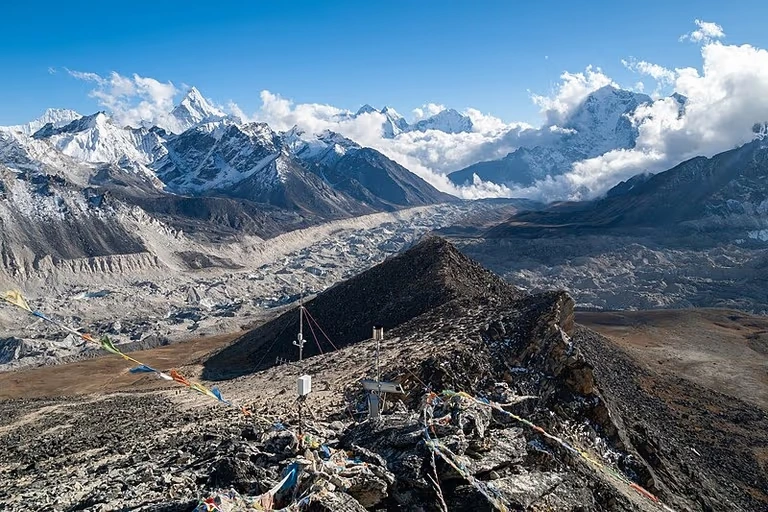
Everest Base Camp Trek (EBC): The most iconic trek in the world leads you through the Khumbu Valley, past Namche Bazaar, Tengboche Monastery, and Gorak Shep to the base of the world's highest mountain at 5,364m. The classic route takes 12–14 days and rewards trekkers with views of Everest, Lhotse, Nuptse, and Ama Dablam, an assembly of mountains that simply doesn't exist anywhere else on Earth.
Annapurna Circuit: Once voted the greatest walk on Earth, this 160–230 km circuit crosses the Thorong La Pass at 5,416m. What most competitors rarely mention is the ecological and cultural layering: you walk through subtropical rice paddies in the south, rhododendron and pine forests in the mid-hills, and a high-altitude Tibetan desert landscape near Mustang in the north, all in a single continuous route.
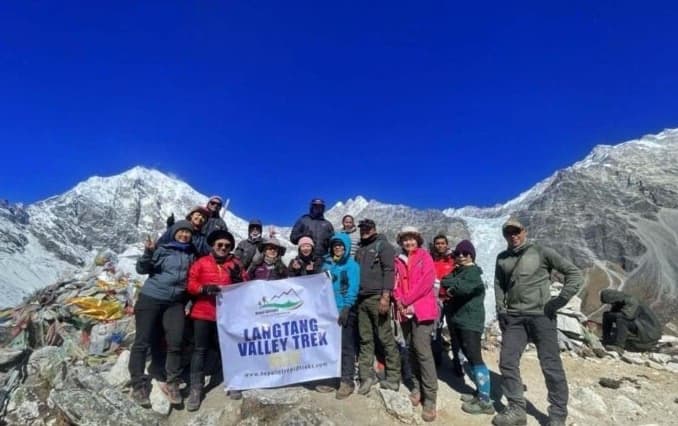
Langtang Valley Trek: Often called "the valley closest to Kathmandu," Langtang is underrated precisely because it doesn't carry Everest or Annapurna's brand weight. It delivers uncrowded trails, authentic Tamang villages, the sacred Gosainkunda glacial lakes, and views of Langtang Lirung (7,227m) with a fraction of the foot traffic. For first-time trekkers seeking genuine mountain immersion without the crowds, this is our first recommendation.
Manaslu Circuit: For experienced trekkers, Manaslu's restricted permit zone keeps commercial traffic low while delivering high passes, ancient Buddhist gompas, and raw Himalayan landscapes that feel increasingly rare as more popular routes get busier.
Upper Mustang: A former forbidden kingdom only opened to foreign visitors in 1992, Upper Mustang is a Tibetan-Buddhist enclave of mud-walled medieval villages and ancient cave dwellings perched in a high-altitude desert. It requires a special restricted area permit, but it delivers an experience that is completely unlike anywhere else on Earth.
When Is the Best Time for Trekking in Nepal?
Nepal has two primary trekking seasons, and knowing the difference between them changes how you plan:
Spring (March–May): Rhododendron forests bloom across the mid-hills in March and April, turning the Annapurna and Everest regions into living landscapes of color. Weather is stable, skies are clear, and mountain views are consistently sharp. This is peak season, trails are busiest, but the conditions justify the company.
Autumn (September–November): Post-monsoon skies are the clearest of the year. October is statistically the best single month for trekking in Nepal, zero precipitation, exceptional visibility, and moderate temperatures at altitude. Experienced trekkers who prioritize summit views over solitude consistently choose this window.
What most trekking guides won't tell you: December through February winter trekking is entirely viable at lower elevations, the Annapurna Foothills, Ghorepani-Poon Hill, and the lower reaches of the EBC approach, with dramatically fewer trekkers and significantly lower teahouse prices. High passes may be snowbound, but for the right itinerary, winter delivers exceptional value and genuine trail solitude.
Monsoon season (June–August) is typically avoided on most routes but opens access to the rain-shadow regions of Upper Mustang and Dolpo, which remain dry while the rest of the country soaks, a well-kept secret among experienced Nepal trekkers.
Why Is Nepal Famous Among Trekkers Worldwide?
Nepal's teahouse trekking culture is unique on the planet. Unlike multi-day treks in most of Europe or North America, where you carry your own tent or stay in remote mountain huts, Nepal's main routes are served by a dense network of locally owned teahouses, lodges offering beds, hot meals, charging facilities, and often surprisingly good espresso at regular intervals along the trail. This infrastructure means that trekkers of moderate fitness can experience genuine high-altitude Himalayan landscapes without an expensive expedition setup.
The cultural richness, moving continuously through Sherpa, Gurung, Tamang, and Magar villages, means that Nepal's treks are as much anthropological immersions as they are physical achievements. That combination is what keeps experienced trekkers coming back to Nepal year after year.
2. Mountaineering
Nepal hosts eight of the world's fourteen 8,000-meter peaks, making it the undisputed epicenter of high-altitude mountaineering on Earth. This is where the sport was born, where records are still being set, and where the world's most accomplished alpinists still return every season.
Which Peaks Can Climbers Summit in Nepal?
The eight 8,000-meter summits located fully or predominantly within Nepal include:
Peak | Elevation | Technical Difficulty |
Mount Everest (Sagarmatha) | 8,849m | Extreme |
Kangchenjunga | 8,586m | Very High |
Lhotse | 8,516m | Very High |
Makalu | 8,485m | Very High |
Cho Oyu | 8,188m | High (most accessible 8,000er) |
Dhaulagiri I | 8,167m | Very High |
Manaslu | 8,163m | High |
Annapurna I | 8,091m | Extreme (highest fatality rate) |
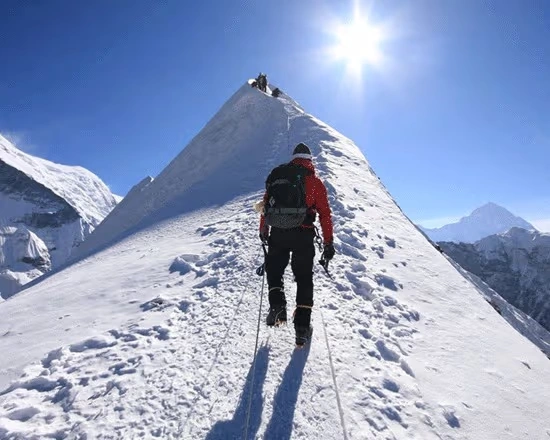
Beyond the 8,000-meter peaks, Nepal has over 400 permitted mountains for climbing, including 27 officially designated 'trekking peaks' in the 5,500m–7,000m range that can be summited with standard mountaineering training and basic equipment. Island Peak (Imja Tse, 6,189m), Mera Peak (6,476m), and Lobuche East (6,119m) serve as excellent entry points for climbers looking to move beyond trekking and experience their first genuine summit. These three peaks are physically demanding but technically accessible, the right bridge between experienced trekker and aspiring mountaineer.
What Should You Know Before Mountaineering in Nepal?
Permit requirements have evolved significantly. Nepal is introducing stricter eligibility requirements for high-altitude permits: under the 2026 Tourism Bill, Everest aspirants must demonstrate prior summit experience on a Nepali peak of at least 7,000m. Permit fees and seasonal quotas are subject to ongoing regulatory updates, always verify current requirements with the Department of Tourism before planning any expedition.
Acclimatization is non-negotiable, not optional. Acute Mountain Sickness (AMS) claims lives every season not because mountains are climbed carelessly, but because acclimatization protocols are compressed under schedule pressure. The "climb high, sleep low" principle and the guideline of ascending no more than 300–500 vertical meters per day above base camp are survival strategies, not suggestions.
Your operator defines your expedition's safety margin. The difference between a well-organized Everest expedition and an under-resourced one is measured in outcomes. Nepal Intrepid Treks partners with UIAGM-certified guides and deploys rigorous expedition protocols across all climbing programs, from trekking peaks to 8,000-meter objectives.
3. Breathtaking Landscapes
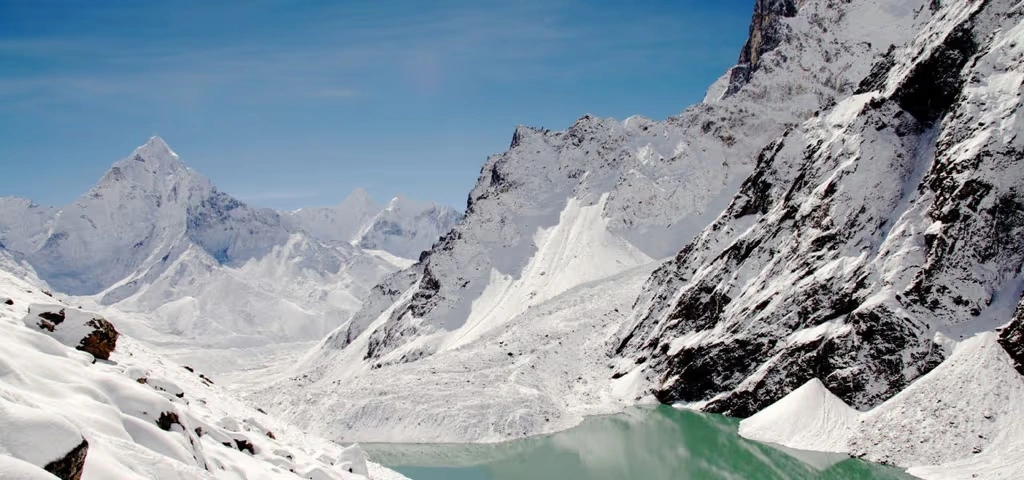
Nepal compresses one of the most astonishing ecological and topographic ranges on Earth into a country just 150–250 km wide from north to south. Within that span, elevation rises from 59 meters above sea level in the southern Terai plains to 8,849 meters at the summit of Everest, the greatest continuous elevation gain of any country in the world. The consequence is landscape diversity that no other single destination can match.
What Natural Wonders Can You Explore Across Nepal?
Phewa Lake, Pokhara: The second-largest lake in Nepal offers perfect mirror reflections of Machhapuchhre (Fishtail Mountain, 6,993m) on still mornings. Sunrise from the Sarangkot viewpoint above Pokhara is one of Nepal's most accessible and consistently spectacular natural experiences.
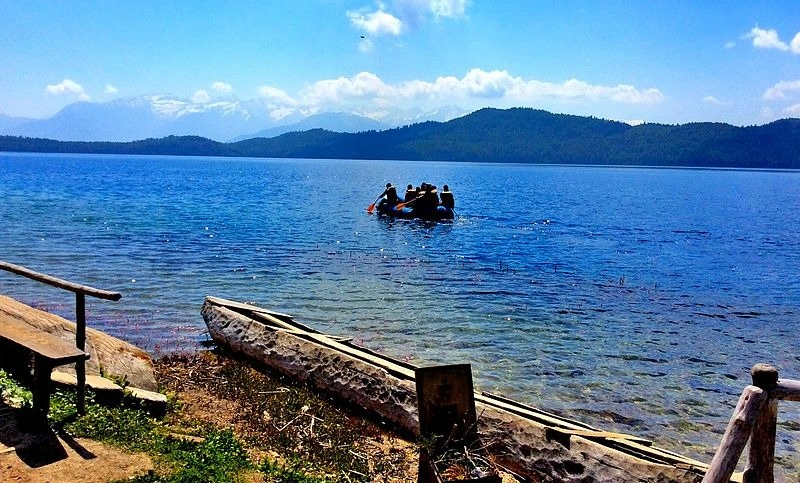
Rara Lake: Nepal's largest lake, sitting at 2,990m in the remote Karnali region, is so pristine that its waters appear an impossible shade of deep cobalt blue. Access requires a flight to Jumla, which keeps it gloriously free of mass tourism.
Gosaikunda Lake: A high-altitude glacial lake at 4,380m that serves simultaneously as a natural wonder and a significant Hindu-Buddhist pilgrimage site. During the Janai Purnima festival, tens of thousands of pilgrims make the journey entirely on foot.
Chitwan's Riverine Ecosystem: The Rapti and Narayani rivers carve through Chitwan's sal forests, creating wildlife corridors where you can observe gharial crocodiles, Gangetic river dolphins, and greater one-horned rhinoceroses in a single afternoon game drive.
Mustang's Lunar Landscape: Upper Mustang's wind-carved cliffs, medieval cave systems, and ochre canyon walls look like a different planet, the product of geological forces that are geographically distinct from anything else in South Asia.
How Do the Himalayas, Hills, and Terai Differ?
Nepal's three geographical zones offer radically different experiences, and what most first-time visitors never realize is that all three are accessible within a single trip:
The Himalayan Zone (above 3,000m): Snow-capped peaks, glaciers, alpine meadows, high-altitude glacial lakes, and sparse Buddhist settlements define this zone. The air is thin, the light extraordinary, and the silence between villages total.
The Hilly Zone (300m–3,000m): This is where most of Nepal's population lives and where cultural richness is most concentrated. Terraced rice fields, rhododendron forests, traditional stone villages, and dramatic river gorges make this zone endlessly photogenic. Kathmandu, Pokhara, and most trekking teahouses occupy this zone.
The Terai Zone (below 300m): The flat, subtropical lowlands bordering India contain Nepal's richest wildlife habitat. Chitwan, Bardia, and Shuklaphanta national parks are all here. So is Lumbini, the birthplace of the historical Buddha. A well-structured Nepal itinerary can realistically include all three zones in seven to ten days.
4. Home to Varieties of Wildlife
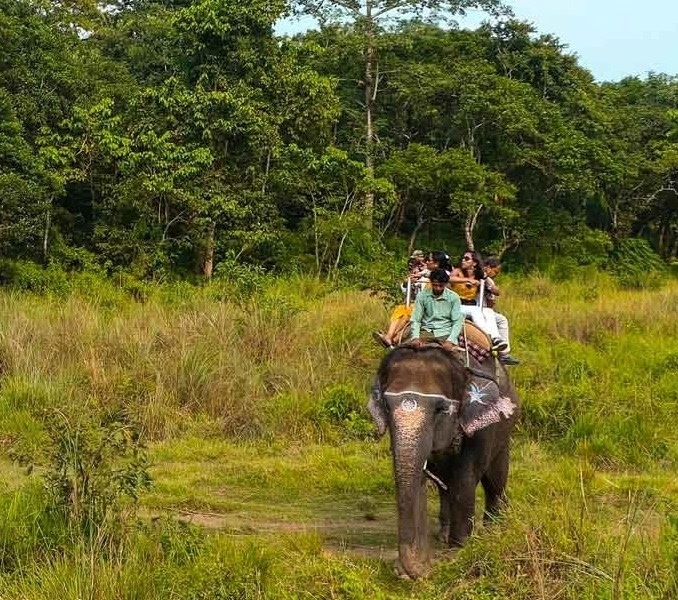
Nepal's conservation record is one of the most impressive in Asia. Despite its status as a lower-income country, Nepal has successfully increased wild populations of Bengal tigers, greater one-horned rhinoceroses, snow leopards, and gharial crocodiles through dedicated national programs - rhino numbers alone climbed from roughly 100 in the early 1960s to 752 by 2021 (Government of Nepal Protected Area Management Strategy 2022-2030) models that conservation scientists from around the world now travel to Nepal to study. The country's protected area network covers 23.39% of its total land area (Journal of Tourism and Hospitality Education / NepJOL), organized across four distinct categories.
National Parks
Nepal maintains 12 national parks, among which:
Chitwan National Park: Nepal's first national park (est. 1973) and a UNESCO World Heritage Site. Home to over 68 mammal species including Bengal tigers, greater one-horned rhinoceroses, sloth bears, and Gangetic dolphins. Over 560 bird species have been recorded within its boundaries. Travelers wanting a closer look can join a guided Chitwan jungle safari to spot rhinos and tigers by jeep, canoe, or on foot.
Sagarmatha National Park: The world's highest national park (est. 1976), encompassing the entire Everest region. Protected habitat for the elusive snow leopard, Himalayan tahr, red panda, and over 150 bird species.
Bardia National Park: Located in the remote far-western Terai, Bardia National Park is home to 112 Bengal tigers as of Nepal's 2026 National Tiger Census (DNPWC/IUCN) making it one of the best places in Nepal for big cat sightings and genuine wilderness immersion, even as conservationists watch closely for signs of habitat pressure. Less visited than Chitwan but consistently rated superior for big cat sightings and genuine wilderness immersion.
Langtang National Park: Nepal's first Himalayan national park and the closest to Kathmandu. Red pandas are regularly sighted in the bamboo and rhododendron forests around Langtang Village, a compelling reason to choose this route beyond its dramatic mountain scenery.
Wildlife Reserves
Nepal maintains 1 wildlife reserves. Koshi Tappu Wildlife Reserve, a Ramsar Wetland Site of international importance in the eastern Terai, is one of Asia's premier birdwatching destinations, hosting Nepal's only remaining population of wild water buffaloes, over 485 bird species including several critically endangered migratory species, and significant populations of aquatic wildlife along the Koshi River floodplain.
Conservation Areas
Nepal's 6 conservation areas operate on an innovative community-based management model. Annapurna Conservation Area (ACAP), the largest protected area in Nepal at 7,629 sq km and home to more than 100,000 residents (National Trust for Nature Conservation Annual Report 2024), is co-managed with local communities who receive a portion of trekking permit revenues. This arrangement has demonstrably reduced deforestation and poaching while funding local schools, health posts, and trail maintenance. It is widely studied globally as a successful model in conservation economics, proof that protecting wildlife and improving community livelihoods are not competing goals.
Manaslu, Api Nampa, Gaurishankar, and Kangchenjunga conservation areas protect critical high-altitude biodiversity corridors between Nepal and Tibet.
Hunting Reserve
Dhorpatan Hunting Reserve, spread across four districts in western Nepal, is the country's only designated hunting reserve. Strictly controlled trophy hunting of blue sheep (bharal), Himalayan tahr, Tibetan argali, and serow is permitted under government-managed quotas. Revenue from hunting licenses directly funds conservation programs and community development in one of Nepal's most remote and economically underserved regions, an example of regulated resource management rather than exploitation.
5. Diverse Culture, Tradition and Festivities
Nepal's cultural landscape is as layered and complex as its geography. A total of 142 ethnic groups speaking 124 languages (National Statistics Office, Nepal Atlas of Caste and Ethnic Groups, based on the 2021 census) share a single national identity while maintaining entirely distinct traditions, festivals, belief systems, and material cultures. For travelers, this means that no two valleys feel the same, and no single visit captures everything.
Which Ethnic Communities Shape Nepal's Cultural Identity?
Newars: The original inhabitants of the Kathmandu Valley and its master artisans. Newar architecture, the pagoda-style temples, carved wooden lattice windows, multi-tiered courtyards, is what makes Kathmandu's Durbar Squares UNESCO-worthy. Newar cuisine, the Indra Jatra festival, and the guthi social institution all reflect a sophisticated urban culture continuous since at least the 4th century CE.
Sherpas: World-famous as Himalayan guides and climbers, Sherpas are also the custodians of a rich Tibetan Buddhist culture in the Solu-Khumbu region. Their monasteries, prayer flag rituals, and philosophy of life at altitude carry a depth that impresses even the most secular visitors.
Tharus: The indigenous people of the Terai lowlands, Tharus developed remarkable genetic resistance to malaria and a material culture of extraordinary intricacy, from stick dances and elaborate floor paintings (lakhara) to distinctive long communal house architecture. Tharu cultural programs in and around Chitwan are genuinely engaging, not tourist theater.
Tamangs, Gurungs, Magars, Rais, Limbus: The mid-hill communities whose men formed the legendary Gurkha regiments of the British and Indian armies. Their oral traditions, folk music (dhime, sarangi, madal), and festivals add cultural richness to trekking routes that too many visitors walk past without engaging.
What Festivals Should You Experience in Nepal?
Nepal's festival calendar is relentless, in the most delightful sense.
Dashain (October): Nepal's largest festival celebrates the victory of good over evil. Family gatherings, kite-flying, village swings, and the ritual application of tika (red blessing paste) by elders to younger family members transform the entire country. If your travel dates allow any flexibility, plan them around the Dashain festival.
Tihar (October–November): Five days of lights and worship, sequentially honoring crows, dogs, cows, oxen, and brothers. The illumination of Kathmandu during Tihar rivals Diwali in beauty. The Newari New Year (Mha Puja) overlaps with Tihar and is celebrated with particular intensity in the old city neighborhoods of Asan, Indrachowk, and Thamel.
Indra Jatra (September): Eight days of masked dances, royal chariot processions, and the appearance of the living goddess Kumari before thousands of devotees in Basantapur Durbar Square. One of Asia's most photogenic and genuinely authentic festivals, and it remains deeply participatory rather than performative.
Mani Rimdu (November): A masked Buddhist dance festival at Tengboche Monastery in the Everest region. Few trekkers time their EBC itinerary to coincide with it, those who do consistently describe it as the most memorable experience of their Nepal visit.
How Do Local Traditions Make Nepal Unique?
What distinguishes Nepal from other culturally rich destinations is the living quality of its traditions. These are not museum exhibits or cultural performances arranged for tourist consumption, they are daily practice. You will see elderly women circumambulating stupas at dawn with prayer beads in hand. You will be invited into a Gurung household and offered raksi (local millet wine) before you have exchanged ten words. Street shrines receive fresh marigold offerings every morning before the day's commerce begins. The sacred and the everyday are not separate categories in Nepal, they coexist in continuous, unremarkable integration.
6. UNESCO Heritage Sites in Nepal
Nepal has four UNESCO World Heritage Sites, an extraordinary density for a country of its size. They divide into cultural and natural heritage categories, each carrying global significance well beyond their immediate geographic context.
Which Cultural Heritage Sites Should You Explore?
The Kathmandu Valley, a single UNESCO cultural site, comprises seven distinct monument zones concentrated within the valley:
Kathmandu Durbar Square: The palace complex of Nepal's former kings, featuring the Kumari Ghar (home of the living goddess Kumari), the 55-Windowed Palace, and centuries-old pagoda temples. The platform of Maju Deval temple offers the most cinematically rewarding people-watching in the valley.
Patan Durbar Square: Often considered the most refined of the three Durbar Squares, Patan's central courtyard is a masterclass in Newar artisanship. Every temple, stone water spout (dhunge dhara), and carved wooden window represents centuries of accumulated craft tradition.
Bhaktapur Durbar Square: The best-preserved of the three complexes and the one that most successfully conveys the atmosphere of medieval Nepal. The 55-Windowed Palace, the Golden Gate (Sun Dhoka), and the working Pottery Square collectively justify an entire day.
Pashupatinath Temple: The most sacred Hindu temple in Nepal and one of the four most important Shiva shrines in the world. Located on the banks of the Bagmati River, Pashupatinath is also an open cremation site, witnessing the cremation ghats here is one of those travel experiences that provokes genuine reflection on mortality, impermanence, and the Hindu conception of the cycle of existence.
Boudhanath Stupa: The largest stupa in Nepal and one of the largest in the world. The all-seeing eyes of the Buddha gaze serenely in four directions from the gilded harmika above. In the early morning, hundreds of Tibetan Buddhist pilgrims circumambulate the stupa while spinning prayer wheels, an experience of rare collective spiritual purpose.
Swayambhunath (Monkey Temple): Perched above Kathmandu with panoramic valley views, Swayambhunath is one of the oldest Buddhist sites in Nepal and offers a combination of spiritual atmosphere, macaque population, and city panorama that makes it a compelling visit at any hour.
Changu Narayan: The oldest temple in the Kathmandu Valley, believed to date from the 4th century CE, is frequently skipped by first-time visitors. This is a mistake: its courtyard contains some of the finest Licchavi-era stone carvings anywhere in South Asia, and its relative obscurity means you can spend time there in genuine quiet.
Which Natural Heritage Sites Can You Visit?
Nepal's natural UNESCO entries, Sagarmatha National Park (Everest region) and Chitwan National Park, protect globally significant ecosystems and biodiversity that would be irreplaceable if lost. Lumbini, the Birthplace of Lord Buddha, completes the UNESCO trifecta as a site of extraordinary spiritual and historical significance.
Why Are These UNESCO Sites Globally Significant?
Nepal's UNESCO sites are significant not merely as isolated monuments but as evidence of continuous, living civilizations. Unlike many World Heritage Sites that preserve extinct cultures in architectural amber, Nepal's heritage sites are actively used, for worship, cremation, festivals, and daily ritual, by millions of people. This living quality is what distinguishes Nepal's UNESCO portfolio from much of the rest of the world's list, and what gives even a first-time visitor the sense of encountering something real rather than curated. For a closer look at each site's history and significance, see our full guide to Nepal's UNESCO World Heritage Sites.
7. Religious Importance
Nepal occupies a uniquely sacred position within both Hinduism and Buddhism, the world's two most geographically widespread Dharmic traditions. It is the birthplace of the historical Buddha and the home of Pashupatinath. Understanding this dual sacred identity is not peripheral to understanding Nepal, it is central to it.
Which Hindu and Buddhist Pilgrimage Sites Should You Visit?
Hindu Pilgrimage Sites:
Pashupatinath Temple, Kathmandu: One of four most sacred Shiva temples in the world. Foreign visitors may not enter the main temple sanctum but can observe the riverside ghats, the Deupatan sacred forest, and the broader compound with complete freedom.
Muktinath Temple, Mustang (3,710m): Sacred to both Hindus and Buddhists, Muktinath is extraordinary in its spiritual particularity: an eternal flame burns in water at the same site, and 108 stone waterspouts offer ritual purification. The approach on foot from Kagbeni through Jharkot is among the most atmospheric walks in Nepal.
Gosaikunda Lake: Sacred to Shiva; pilgrims believe that bathing in these high-altitude glacial waters during Janai Purnima dissolves the accumulated karma of a lifetime.
Manakamana Temple: Reached by cable car above the Trishuli Gorge and famous throughout Nepal for fulfilling sincere wishes. One of the country's most actively visited pilgrimage temples.
Buddhist Pilgrimage Sites:
Lumbini: The birthplace of Siddhartha Gautama, the historical Buddha. One of the four most sacred sites in all of Buddhism. The Sacred Garden, the Maya Devi Temple, and the extraordinary international monastic zone, where Buddhist nations from Cambodia to Germany have built temples within walking distance of each other, make Lumbini simultaneously a pilgrimage site and an architectural phenomenon.
Boudhanath Stupa and Swayambhunath Stupa: Both described above under UNESCO Heritage.
Kopan Monastery: Overlooking the Boudhanath valley, Kopan has been introducing Western practitioners to Tibetan Buddhism since the 1970s through structured residential courses and retreats. Its November meditation course books out months in advance.
How Does Nepal Promote Religious Harmony?
Nepal's constitution declares it a secular state, but its cultural DNA is irreducibly intertwined with both Hinduism and Buddhism. What is genuinely remarkable, and rarely given adequate attention by travel writers, is how peacefully these traditions coexist, often at the same physical sites. Muktinath is simultaneously a Vaishnava Hindu shrine and a Tibetan Buddhist gompa. Boudhanath hosts Hindu shrines in its immediate vicinity. Sherpa Buddhists make offerings in proximity to the same Pashupatinath complex where Hindu pilgrims bathe in the Bagmati. This is not the product of policy or modern tolerance campaigns, it is the organic result of centuries of geographic and cultural co-evolution in a small, mountain-bounded country where traditions had to coexist or conflict, and largely chose the former.
8. Nepali Cuisine and Delicacies
Nepali cuisine reflects the country's geography and cultural complexity, it is neither Indian food nor Tibetan food, but a distinct culinary tradition shaped by altitude, ethnicity, agricultural history, and the resourcefulness of hill farming communities. It is also, almost entirely, underrepresented in global food culture, which means that arriving in Nepal with any expectations set by South Asian restaurants abroad will leave you productively surprised.
Which Traditional Nepali Dishes Should You Taste?
Dal Bhat: The national dish, lentil soup (dal) served with rice (bhat), seasonal vegetable curry (tarkari), and typically a chili-tomato achaar. What most visitors don't realize: dal bhat in Nepal comes with unlimited refills (the famous trekker's mantra, "dal bhat power, 24 hour"), and quality varies enormously between a Kathmandu restaurant and a high-altitude teahouse cooked from scratch over a wood fire. The teahouse version wins every time.
Momo: Himalayan dumplings filled with buffalo, chicken, vegetables, or cheese, steamed or fried. Nepali momos are distinct from Tibetan or Indian versions in their spicing and the accompanying achar (a tomato-sesame dipping sauce that is legitimately addictive). Street momo shops in Kathmandu are among the most honest food experiences in Asia.
Sel Roti: A traditional Newar rice-flour ring, crispy outside, soft inside, made during Tihar and Dashain festivals but available year-round from street vendors in the Kathmandu Valley. Best eaten fresh and warm alongside a glass of sweet milk tea.
Newari Cuisine: The indigenous food culture of the Kathmandu Valley is a category entirely unto itself. Bara (black lentil pancakes), chatamari (rice crepe, sometimes called "Newar pizza"), yomari (steamed dumplings filled with molasses and sesame seeds), and kwati (a nine-legume soup eaten during Janai Purnima) represent a culinary tradition of genuine sophistication. To experience it authentically, you must go to old Patan or the backstreets of Bhaktapur, tourist-facing restaurants rarely capture it.
Which Regional Foods and Local Delicacies Are Worth Trying?
Sherpa Stew (Shyakpa): A thick mountain stew of potatoes, vegetables, and sometimes yak meat, exactly the calorie-dense, warming meal your body craves after a long day at altitude. Available at most teahouses in the Khumbu region.
Dhido: A traditional staple made from buckwheat or millet flour, similar in texture to ugali, eaten with gundruk (fermented leafy greens) and nettle soup. Dhido was the caloric foundation of Nepal's hill communities for centuries before rice became widely affordable. Increasingly rare in restaurants, but deeply meaningful when you find it.
Tongba: A fermented millet drink from the Limbu communities of eastern Nepal, served in a wooden vessel with a bamboo straw. Hot water is poured over fermented millet and sipped slowly. Warming, mildly alcoholic, and the correct drink for a cold evening in Ilam or Taplejung.
Chhaang: Fermented barley or millet beer common in Sherpa and Tibetan communities, shared communally and offered to guests as a gesture of genuine welcome. Cultural etiquette: never refuse the first cup.
Butter Tea (Po Cha): Made with yak butter, salt, and compressed tea, an acquired taste for most Western visitors but a practical high-altitude fuel source above 4,000m. Yak butter provides essential fat and calories at elevations where digestion of heavy food is physiologically compromised.
9. Land of Adventure Sports
Nepal's extraordinary topography makes it a natural laboratory for adventure sports. The same elevation gradients that create the world's highest mountains generate some of its most powerful rivers, most dramatic thermal updrafts, and most technically demanding terrain. Trekking is the entry point. But what Nepal offers beyond the trails is equally compelling.
Which Adventure Activities Can You Experience Beyond Trekking?
White Water Rafting: Nepal's rivers, the Trishuli, Bhote Kosi, Sun Kosi, Kali Gandaki, and Marsyangdi, offer rafting grades from Grade II (family-accessible on the Trishuli) to Grade IV–V (the Bhote Kosi and Upper Seti). The Sun Kosi multi-day expedition (9 days, 270 km) is consistently ranked among the world's top ten river journeys.
Paragliding in Pokhara: The thermal conditions above Phewa Lake combined with the Annapurna range as a backdrop make Pokhara one of the finest paragliding destinations in Asia. Tandem flights launch from Sarangkot and, in favorable conditions, extend for hours over the lake and valley — an experience that has made paragliding in Pokhara one of Nepal's most popular adventure activities.
Bungee Jumping: The Bhote Kosi bungee at 160 meters above the river gorge on the Nepal-Tibet border road is consistently ranked among the world's highest bungee jumps. The canyon setting amplifies the experience considerably beyond a platform bungee.
Mountain Biking: The Annapurna region, Mustang's ancient trade roads, and the Kathmandu Valley rim offer world-class mountain biking terrain. The Mustang circuit, high altitude, minimal vehicle traffic, and salt-trade-era villages, has developed a serious following among international adventure cyclists.
Zip-lining: The Pokhara zip-line above Sarangkot operates one of the world's longest and steepest cables, 1.8 km with a vertical drop exceeding 600 meters. The Annapurna range view during the descent is, by any objective measure, extraordinary.
Skydiving over Everest: A handful of operators offer HALO (High Altitude Low Opening) skydive experiences over the Everest region, among the most extreme adventure experiences available commercially anywhere on Earth.
Where Are the Best Places for Adventure Sports in Nepal?
Pokhara: Nepal's adventure capital: paragliding, zip-lining, kayaking, canyoning, and mountain biking all converge here in one compact geographic area.
Bhote Kosi Gorge (Arniko Highway): Bungee jumping and canyon swinging.
Trishuli River: Introductory rafting accessible from Kathmandu as a day trip.
Sun Kosi: Multi-day expedition rafting for experienced paddlers.
Upper Mustang: Advanced mountain biking and off-road motorcycle touring through one of the most visually dramatic landscapes in Asia.
10. Spiritual as Well as Mental Healing
Nepal does something to visitors that is difficult to articulate but consistently reported across cultures, ages, and backgrounds. Travelers arrive for adventure or cultural exploration and leave with something additional, a quietness, a recalibration of perspective, a sense of having touched something old and real. This quality is not tourism marketing. It has a grounded explanation in Nepal's natural environment, its living spiritual traditions, and its fundamental pace of life.
Which Meditation, Yoga, and Wellness Experiences Are Available?
Kopan Monastery, Kathmandu: Offers structured meditation retreats from one-day introductions to month-long intensive courses in Tibetan Buddhist philosophy and practice. The November meditation course is internationally renowned and typically books out months in advance, worth planning for well ahead of travel.
Osho Tapoban, Nagarjun Forest: A meditation and yoga commune set in forested hills just outside Kathmandu, offering daily meditation programs, residential retreats, and access to the Osho library of teachings in a setting of unusual natural quietude.
Pokhara Yoga Schools: The Lakeside area of Pokhara hosts several internationally recognized yoga schools, Fishtail Yoga, Nepal Yoga Home, and Himalayan Yoga Academy among them, offering everything from morning drop-in hatha classes to residential teacher training programs certified to international standards.
Lumbini Retreat Centers: The international monastic zone of Lumbini, where Buddhist temples from Cambodia, Myanmar, Korea, Japan, China, France, Germany, Sri Lanka, and a dozen other countries sit in landscaped gardens around the Sacred Garden, offers a uniquely multi-national Buddhist meditation environment that is available to visitors for silent practice.
Vipassana Meditation Centers: Nepal hosts several Dhamma centers offering the standard 10-day silent Vipassana retreats in the tradition of S.N. Goenka, available at no charge, with donations accepted. Waiting lists are common: register well in advance.
Ayurvedic Wellness: Several retreats in Kathmandu and Pokhara offer structured Ayurvedic consultations, treatments, and cleansing programs drawing on South Asian medical traditions that predate modern pharmaceutical medicine by millennia.
Why Do Travelers Find Peace and Healing in Nepal?
Three factors consistently combine to create Nepal's reputation as a destination for psychological and spiritual renewal:
Scale and the Awe Effect: The Himalayas impose a scale that resets human self-importance in a way that modern neuroscience has begun to document clinically. The "awe effect", the demonstrated psychological benefit of encountering something vastly larger than oneself, reliably produces reduced anxiety, increased prosocial behavior, and lasting positive affect. Standing below peaks that are 8,000 meters tall, in a landscape shaped over 60 million years of tectonic uplift, delivers this effect reliably and powerfully.
Living Spiritual Culture: Unlike destinations where "spiritual tourism" means visiting the ruins of extinct religious traditions behind museum glass, Nepal's spiritual life is continuous, immediate, and participatory. You are not a spectator of Buddhism or Hinduism in Nepal, you are immersed in the sensory reality of practices that have continued without interruption for centuries.
Digital Detox by Geography: Many of Nepal's most powerful destinations, the upper Langtang Valley, Upper Dolpo, the higher reaches of the Manaslu Circuit, have limited or no mobile connectivity. This delivers an inadvertent digital detox that most modern travelers have genuinely never experienced. The psychological benefit of extended connectivity interruption is well-documented, and Nepal provides it not as an act of will but as a consequence of terrain.
How Can Nepal Intrepid Treks Help You Experience the Best of Nepal?
Understanding why Nepal is worth visiting is the first step. Experiencing it in a way that is safe, deeply immersive, and genuinely transformative requires the right partner on the ground.
Nepal Intrepid Treks is a Kathmandu-based trekking and expedition company built around two core commitments: authentic mountain experiences and responsible tourism. Our team includes UIAGM-certified high-altitude guides, naturalist guides for wildlife safaris, cultural experts for heritage tours, and expedition managers with combined experience spanning over two hundred Himalayan seasons.
We design itineraries that go beyond standard routes, combining teahouse treks with village homestays, cultural festivals with wilderness expeditions, and meditation retreats with summit objectives. Whether you want a structured 14-day Everest Base Camp experience, a 21-day Kanchenjunga traverse, a Chitwan wildlife safari paired with Pokhara paragliding, or a private yoga and trekking retreat, we build programs around what genuinely matters to you.
Our sustainability commitment is operational, not decorative: every trip we run contributes to local employment (all guides and porters are Nepali nationals), environmental stewardship (leave-no-trace protocols across all expeditions), and community development (ongoing partnerships with schools and health posts along our primary routes).
Why Choose Nepal Intrepid Treks for Your Nepal Adventure?
Local expertise, international standards: Our guides hold deep cultural and geographic knowledge of Nepal alongside safety certifications that meet internationally recognized mountaineering and adventure guiding benchmarks.
Customization without compromise: No two Nepal experiences are identical. We don't operate cookie-cutter group tours, every itinerary is built around your fitness level, timeline, interests, and prior experience.
End-to-end logistical support: From visa guidance and permit applications to airport transfers, teahouse reservations, emergency protocols, and post-trip support, we handle every logistical layer so you can focus entirely on the experience itself.
Small group philosophy: We cap all group treks at twelve participants, small enough for genuine guide attention and safety management, large enough for the social dimension of shared adventure.
Transparent, honest pricing: Every quote includes guide fees, porter wages, permit costs, accommodation bookings, and insurance contributions with full line-item transparency. No hidden fees, no bait-and-switch structures.
Ready to plan your Nepal adventure? Contact Nepal Intrepid Treks for a personalized itinerary consultation, we respond within 24 hours.
What Are the Key Reasons to Visit Nepal Before Planning Your Trip?
Nepal is one of those rare destinations where the reality consistently exceeds expectation. The reasons to visit are not manufactured by a tourism board, they emerge from the convergence of geography, history, culture, and spiritual tradition in a place that has not yet lost its essential character to mass tourism.
As a trekker, you will find in Nepal what other mountain destinations genuinely cannot replicate: trails that are simultaneously world-class and culturally immersive, teahouse infrastructure that makes the Himalayas accessible without diminishing their wildness, and a community of local guides and hosts whose relationship with their landscape is authentic rather than performed.
In 2026, as global travel expands and new "destinations of the moment" appear on social media weekly, Nepal holds its position as a place that delivers irreplaceable experiences. The mountains are still there. The monasteries are still lit by butter lamps at 5am. The momos are still being steamed over wood fires in high-altitude kitchens. The trails, despite their fame, still lead, ultimately, into a silence that is rare and increasingly precious.
The only question is when you go.
.avif&w=1920&q=75)