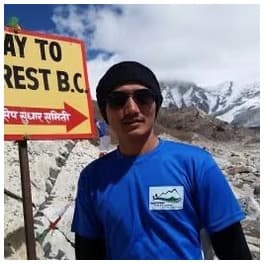
The Everest Base Camp Trek is a high-altitude Himalayan route in Nepal’s Khumbu region that leads from Lukla (2,860 m) to Everest Base Camp (5,364 m) beneath Mount Everest (8,849 m). Spanning roughly 130 kilometers round-trip through Sagarmatha National Park, the trail passes Sherpa villages, glacial valleys, and Buddhist cultural sites including Namche Bazaar and Tengboche Monastery, while also offering views of multiple 8,000-meter peaks such as Lhotse, Makalu, and Cho Oyu. It is one of the most established trekking routes on Earth, combining accessible infrastructure with extreme mountain environments.
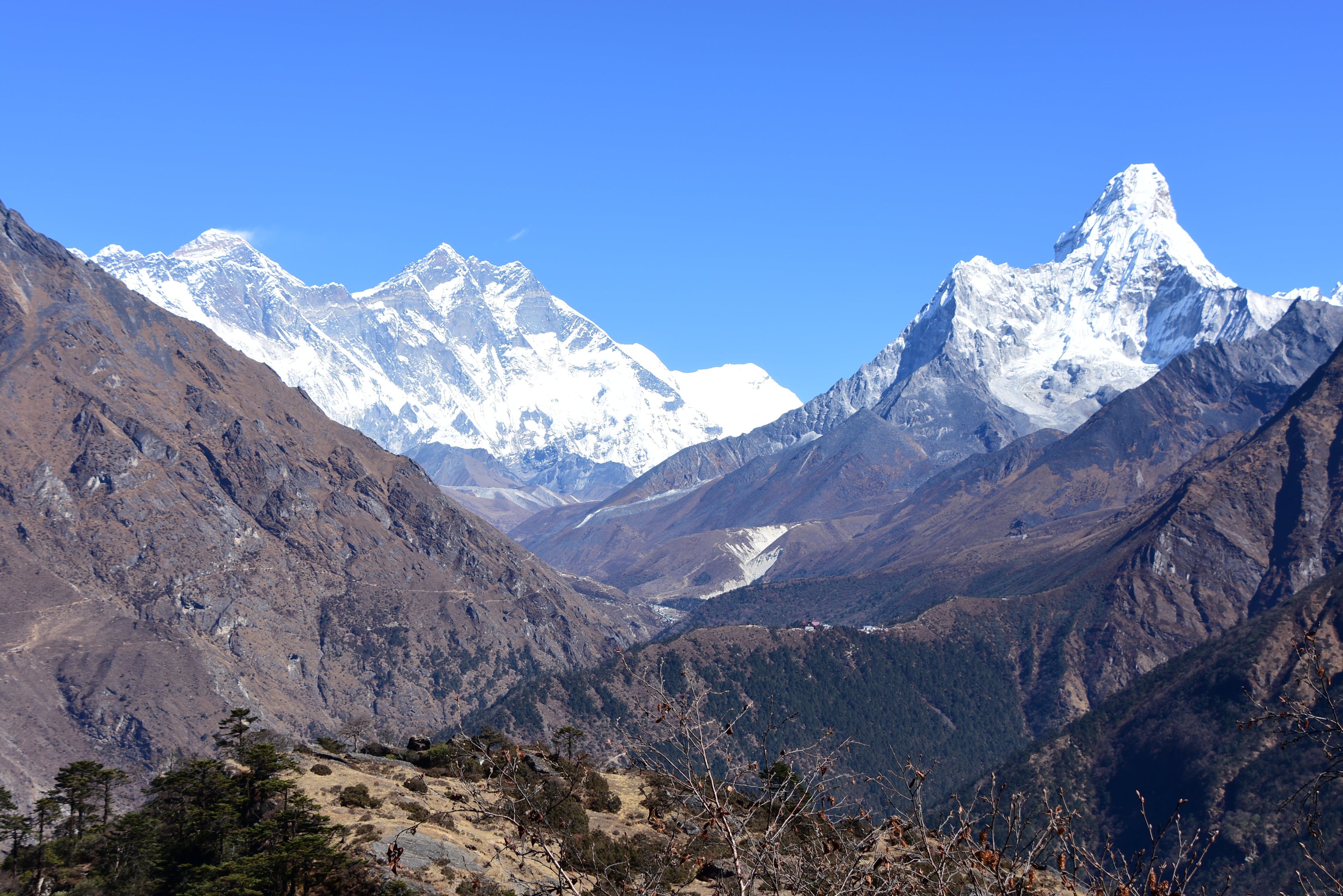
Beyond its geography, the trek functions as a complete high-altitude expedition experience defined by physical endurance, acclimatization demands, and cultural immersion in the Himalayan Sherpa heartland. The journey typically requires 12–14 days and involves significant altitude adaptation, moderate-to-strenuous hiking conditions, and careful seasonal planning for safety and visibility. The following guide breaks down its cost structure, difficulty level, fitness requirements, altitude risks, permits, and optimal timing to provide a clear, evidence-based understanding of whether the Everest Base Camp Trek is truly worth it.
What Is Everest Base Camp Trek and Where Is It Located?
The Everest Base Camp Trek is a 130-kilometer round-trip trekking route in the Khumbu region of northeastern Nepal, Solukhumbu District, leading from Lukla (2,860 m) to Everest Base Camp at 5,364 meters above sea level. The trek passes through Sherpa villages, ancient Buddhist monasteries, and glacial terrain within Sagarmatha National Park, a UNESCO World Heritage Site declared in 1979.
Where exactly does the Everest Base Camp Trek route go in the Himalayas?
The standard Everest Base Camp Trek route follows 9 main waypoints: Lukla → Phakding → Namche Bazaar → Tengboche → Dingboche → Lobuche → Gorak Shep → Everest Base Camp → Kala Patthar. Most trekkers also include Kala Patthar (5,545 m) for the highest panoramic view of Mount Everest's summit pyramid.
The trail begins with a flight from Kathmandu (1,400 m) to Tenzing-Hillary Airport in Lukla, one of the world's most challenging airport approaches. From Lukla, the route ascends the Dudh Koshi river valley through dense rhododendron and pine forests before opening into the barren alpine terrain above 4,000 meters.
Most trekkers complete the full circuit in 12 to 14 days, with acclimatization rest days built into the schedule at Namche Bazaar (3,440 m) and Dingboche (4,410 m). These rest days are not optional additions, they are medically essential for adjusting to altitude gain.
What makes the Khumbu region unique for trekking experiences?
The Khumbu region stands apart from all other Himalayan trekking zones for 4 defining reasons:
-
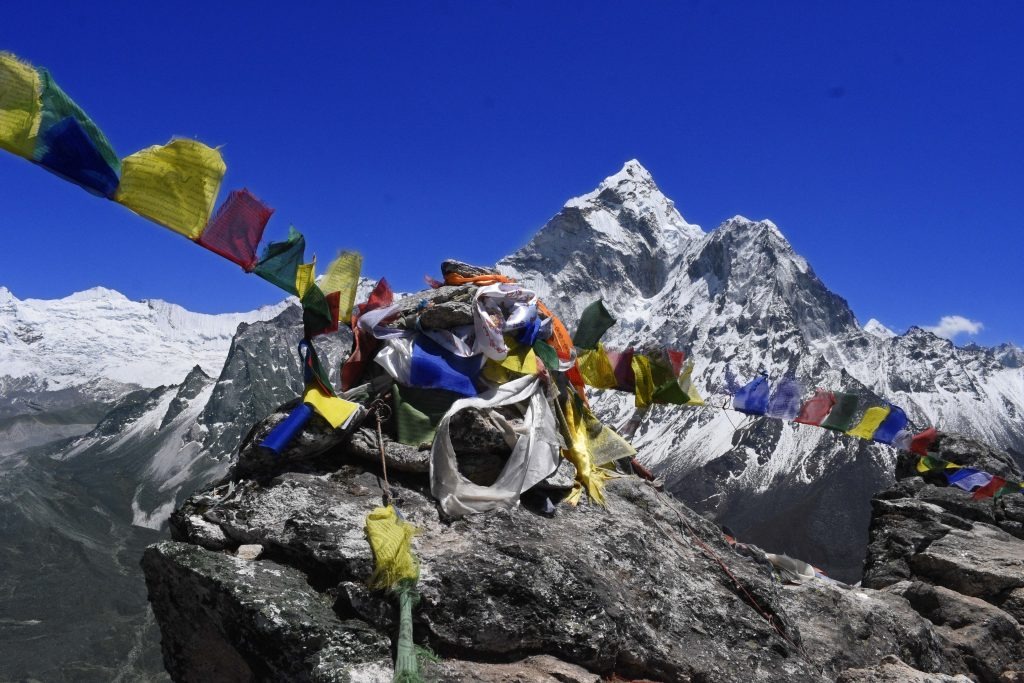
Cultural concentration: The Khumbu is home to Sherpa communities who have inhabited these valleys for over 500 years. Villages like Namche Bazaar, Khumjung, and Tengboche preserve living Tibetan Buddhist culture, active monasteries, mani walls, chortens, and prayer flag corridors that date back centuries.
-
Mountain density: Within a single trek, trekkers view 8 of the world's 14 eight-thousanders, including Everest (8,849 m), Lhotse (8,516 m), Makalu (8,485 m), and Cho Oyu (8,188 m).
-
Infrastructure accessibility: Unlike remote Himalayan treks requiring weeks of road travel, the Khumbu is accessible via a 35-minute flight from Kathmandu, making it one of the most logistically practical high-altitude routes on earth.
-
Conservation protection: Sagarmatha National Park covers 1,148 square kilometers and enforces strict environmental regulations, preserving trail conditions and ecological integrity in a way that many comparable regions do not.
Why Is Everest Base Camp Trek Considered Worth It?
The Everest Base Camp Trek is considered worth it because it delivers a combination of extreme natural beauty, cultural depth, physical achievement, and emotional resonance that no lower-altitude trek replicates. Trekkers reach the foot of the world's highest mountain without technical climbing skills, making this one of the most accessible high-altitude experiences available globally.
What emotional and scenic rewards do trekkers get from the journey?
Trekkers report 5 consistent emotional and scenic rewards from completing the route:
-
Scale and perspective: Standing at Gorak Shep or Everest Base Camp surrounded by peaks above 7,000 meters produces a visceral sense of scale that photographs cannot capture. The Khumbu Glacier, 17 kilometers long and one of the world's highest glaciers, flows directly beside the Base Camp site.
-
Cumulative achievement: Each day of altitude gain builds a tangible sense of earned progress. Reaching Namche Bazaar on day 3 feels like an accomplishment; reaching Base Camp on day 10 or 11 feels transformational.
-
Cultural encounters: Sharing tea houses with Sherpa guides, attending monastery blessings at Tengboche Monastery (3,867 m), and witnessing high-altitude agricultural communities creates cultural memories distinct from any standard tourism experience.
-
Isolation and silence: Above Dingboche, trails thin out, mobile signals disappear, and the landscape becomes entirely primordial. This silence, punctuated only by wind and distant avalanche rumble, is a rare sensory experience in the modern world.
-
Sunrise at Kala Patthar: The pre-dawn ascent to Kala Patthar for the 180-degree view of Everest's south face at sunrise is consistently cited as the visual peak of the entire journey.
Why do adventurers rank Everest Base Camp Trek as a bucket-list experience?
Adventurers rank the Everest Base Camp Trek as a bucket-list experience because it is the closest non-technical route to the summit of Mount Everest (8,849 m), the highest point on Earth. No other trail on the planet places non-climbers at the staging ground of the world's most famous mountaineering objective.
The trek also sits within a region that defines modern mountaineering history. The 1953 British expedition that placed Tenzing Norgay and Edmund Hillary on Everest's summit passed through every village along this trail. That historical weight makes the physical journey also a passage through a landmark chapter of human achievement.
How Much Does Everest Base Camp Trek Cost?
The total cost of an Everest Base Camp Trek ranges from USD 1,200 to USD 5,000+, depending on whether you choose a budget, mid-range, or luxury trekking package. This range accounts for flights, permits, accommodation, food, guide and porter fees, equipment, and travel insurance.
What are the major expenses involved in the Everest Base Camp Trek?
The 7 primary cost categories for the Everest Base Camp Trek are:
|
Expense Category |
Budget Range (USD) |
|
Kathmandu–Lukla round-trip flight |
$200 – $450 |
|
Trekking permits (TIMS + Sagarmatha NP) |
$50 – $70 |
|
Tea house accommodation (per night) |
$5 – $30 |
|
Meals on trail (per day) |
$20 – $45 |
|
Guide fee (per day) |
$25 – $40 |
|
Porter fee (per day) |
$18 – $28 |
|
Travel and evacuation insurance |
$100 – $250 |
Food and accommodation costs escalate significantly above Namche Bazaar because all supplies are carried by porters or yaks. A basic dal bhat meal that costs NPR 200 in Kathmandu costs NPR 800 to NPR 1,200 at Lobuche (4,940 m). This altitude-based price inflation is not optional, it reflects genuine logistical cost and is consistent across all tea houses above 4,500 meters.
Helicopter evacuation insurance is not optional for responsible trekking. A single rescue helicopter flight from high altitude to Kathmandu costs between USD 4,000 and USD 6,000 without coverage.
How can budget and luxury trekking options change the total cost?
Budget trekkers who hire a licensed guide, carry their own gear, and stay in basic tea houses complete the trek for USD 1,200 to USD 1,800 total (excluding international flights). This approach is viable but requires prior trekking experience, fitness confidence, and willingness to share dormitory-style rooms above 4,000 meters.
Mid-range trekkers spending USD 2,500 to USD 3,500 access private tea house rooms with attached bathrooms where available, quality guide-and-porter packages, and better acclimatization-paced itineraries.
Luxury trekking packages priced above USD 5,000 include premium lodges at Namche Bazaar and Dingboche, gourmet meals, dedicated personal guides, satellite communication devices, and comprehensive medical support, but the trail itself remains identical regardless of budget tier.
The single most impactful cost decision is hiring a licensed TAAN (Trekking Agencies' Association of Nepal) registered guide. Guides improve safety, navigate permit checkpoints, coordinate emergency response, and provide cultural context that self-guided trekkers consistently report missing.
How Difficult Is Everest Base Camp Trek?
The Everest Base Camp Trek is rated moderately difficult to strenuous, with the primary challenge being sustained altitude exposure rather than technical terrain. No ropes, crampons, or climbing equipment are required on the standard route.
What physical challenges do trekkers face on the Everest Base Camp route?
Trekkers face 4 primary physical challenges on the Everest Base Camp route:
-
Cumulative ascent: The total elevation gain from Lukla to Base Camp is approximately 2,504 meters over 5 to 6 trekking days. Individual daily ascents range from 400 to 800 meters.
-
Trail surface variability: Trails alternate between stone-paved sections, loose moraine, river crossings on suspension bridges, and steep rocky descent paths. Ankle stability and trekking pole use become important above Namche Bazaar.
-
Reduced oxygen availability: At 5,364 meters, atmospheric oxygen concentration drops to approximately 53% of sea-level pressure. Simple physical tasks, lacing boots, climbing tea house stairs, require noticeably more effort than at lower elevations.
-
Distance consistency: Daily trekking distances range from 9 to 16 kilometers. Combined with altitude, these distances demand 5 to 8 hours of active movement per day, often in cold temperatures.
How do altitude, terrain, and weather affect difficulty levels?
Altitude is the defining difficulty variable, not terrain. The section from Lobuche (4,940 m) to Gorak Shep (5,164 m) and onward to Base Camp (5,364 m) crosses glacial moraine, rocky, uneven, and mentally fatiguing terrain at an elevation where every breath delivers less oxygen than the last.
Weather amplifies difficulty unpredictably. Morning temperatures in the Khumbu above 4,500 meters drop to -10°C to -20°C during peak trekking months (October–November, March–April). Afternoon cloud cover builds quickly, reducing visibility and making sections above Lobuche particularly exposed in poor conditions.
Wind at Kala Patthar (5,545 m) regularly exceeds 50 km/h during midday. Pre-dawn ascents (departure at 4:30–5:00 AM) avoid the worst wind and secure the clearest Everest views, a practical detail that many first-time trekkers discover only after arriving.
What Fitness Level Is Required for Everest Base Camp Trek?
The Everest Base Camp Trek requires good aerobic fitness and muscular endurance, not elite athletic performance. Trekkers who exercise consistently 4 to 5 times per week and complete regular multi-hour hikes are well-positioned to complete the route safely.
How should you train before attempting the Everest Base Camp Trek?
A structured 12-week training program for the Everest Base Camp Trek addresses 3 core fitness dimensions:
-
Cardiovascular endurance: Run, cycle, swim, or use a stair machine for 45 to 60 minutes, 4 times per week. By week 10, long aerobic sessions of 2 to 3 hours on consecutive days simulate back-to-back trekking demand.
-
Leg strength and stability: Weighted squats, lunges, step-ups with a loaded daypack (10–12 kg), and single-leg balance exercises build the quadricep and glute strength required for sustained descent on loose terrain.
-
Loaded hike progression: Start with 2-hour hikes carrying 8 kg in week 4. Progress to 5 to 6-hour hikes with 10 to 12 kg by week 10, including elevation gain of 600 to 800 meters per session. This progression directly mirrors what Khumbu trail days demand.
Trekkers who neglect loaded hike training, focusing only on gym cardio, consistently report that muscle fatigue on descents from Gorak Shep to Pheriche is more limiting than cardiovascular effort.
What stamina and endurance benchmarks should you meet?
Before departing for the Everest Base Camp Trek, meet these 3 practical benchmarks:
-
Complete a 6-hour hike with 800 meters of elevation gain carrying a 10 kg pack without knee pain or significant exhaustion the following day.
-
Sustain 4 consecutive active days of 4 to 5-hour physical effort, a direct simulation of the Namche Bazaar to Dingboche section.
-
Recover quickly: Heart rate at rest is below 65 bpm and morning resting heart rate does not spike unexpectedly, an early altitude sickness indicator trekkers monitor daily on trail.
Age is not a disqualifying factor. Trekkers aged 60 to 75 complete this route annually with proper preparation. The critical variable is preparation consistency, not chronological age.
When Is the Best Time to Do Everest Base Camp Trek?
The best times to do the Everest Base Camp Trek are October to November (autumn) and March to May (spring). These 2 windows offer stable weather, clear skies, and the safest trekking conditions on the Khumbu route.
How do spring and autumn seasons compare for Everest Base Camp trekking?
|
Factor |
Autumn (Oct–Nov) |
Spring (Mar–May) |
|
Sky clarity |
Excellent |
Good to excellent |
|
Trail crowds |
High (peak season) |
Moderate to high |
|
Temperature range |
-5°C to 15°C |
-3°C to 18°C |
|
Rhododendron bloom |
No |
Yes (March–April) |
|
Summit expedition presence |
Minimal |
High (Everest climbing season) |
|
Snowfall risk |
Low–moderate in Nov |
Low in March, moderate in May |
Autumn is the more predictable of the 2 windows. Post-monsoon skies clear by late September, and October delivers the most consistently stable trekking weather of the entire year. November remains viable but introduces heavier cold and some early snow above 5,000 meters in the second half of the month.
Spring offers warmer daytime temperatures and the spectacular spectacle of rhododendron forests in full bloom below 3,500 meters. April also coincides with Everest climbing season, trekkers reach Base Camp and observe active expedition teams, a uniquely charged atmosphere. The trade-off is afternoon cloud buildup accelerating faster than in autumn.
What weather conditions impact trekking safety and visibility?
3 weather conditions directly affect safety and visibility on the Everest Base Camp route:
-
Monsoon (June–August): Heavy rainfall makes trails slippery, leeches abundant below 3,000 meters, and clouds obscure mountain views for days at a time. Trekking in monsoon season is possible but significantly less rewarding and more hazardous.
-
Winter (December–February): Temperatures at Base Camp drop to -25°C to -30°C at night. High-altitude sections above Dingboche experience heavy snowfall that blocks trails and forces tea houses above Lobuche to close entirely.
-
Afternoon thunderstorms in shoulder months: In late May and late September, afternoon electrical storms develop rapidly above 4,000 meters. Experienced guides and trekkers maintain the practice of reaching daily destinations by early afternoon to avoid exposure.
What Permits Are Needed for Everest Base Camp Trek?
For the standard Everest Base Camp trek, plan for the Sagarmatha National Park entry permit, the Khumbu Pasang Lhamu Trek-Card/local entry fee, and a licensed trekking guide with a TIMS card arranged through a registered trekking agency.
Which official permits are required to enter the Everest region?
The mandatory permits and their 2026 fee structure are:
-
Sagarmatha National Park Entry Permit: NPR 3,000 (approximately USD 22) for foreign nationals. Obtained at the Nepal Tourism Board office in Kathmandu or at the park entry gate in Monjo.
-
Khumbu Pasang Lhamu Rural Municipality Permit: NRs 2,000 for SAARC countries and China; NRs 3,000 for other foreign nationals.
The Everest Base Camp route is still on the NTB list of treks that require a licensed guide and a TIMS card arranged through a registered trekking agency.
Permit fees are subject to annual revision by Nepal's Department of National Parks and Wildlife Conservation. Verify current fees at the Nepal Tourism Board official portal before departure.
How do you obtain trekking permits in Nepal?
Trekkers obtain permits through 3 channels:
-
Nepal Tourism Board office, Kathmandu: Located in Pradarshani Marg, central Kathmandu. Permits issued same-day with a valid passport and passport-sized photograph. Open Sunday to Friday, 9:00 AM to 5:00 PM.
-
Registered trekking agency: Licensed agencies process permits as part of a guided package, handling all paperwork before the Lukla flight departs.
-
Monjo checkpoint: Sagarmatha National Park permits are obtainable at the Monjo entry gate for trekkers who did not collect them in Kathmandu, though carrying them from Kathmandu avoids potential checkpoint queuing delays.
Carry physical permit copies throughout the trek. Checkpoint officers at Monjo, Namche Bazaar, and Lobuche verify permits in person. Digital copies on a phone are not accepted as substitutes at all checkpoints.
What Are the Altitude Sickness Risks on Everest Base Camp Trek?
Altitude sickness, clinically termed Acute Mountain Sickness (AMS), affects approximately 40% of trekkers above 3,000 meters in the Khumbu region to some degree. Severe altitude illness (HACE or HAPE) affects a smaller proportion but is life-threatening without rapid descent and medical intervention.
What symptoms and dangers come with high-altitude trekking?
AMS presents 6 common symptoms at altitudes above 3,000 meters: headache, nausea, fatigue, dizziness, loss of appetite, and disrupted sleep. Mild AMS resolves with rest, hydration, and a 24-hour acclimatization pause at the same altitude.
Two severe altitude conditions demand immediate attention:
-
High Altitude Cerebral Edema (HACE): Fluid accumulation in the brain. Symptoms include severe headache unresponsive to medication, confusion, loss of coordination, and altered consciousness. HACE is fatal without immediate descent of 1,000 meters or more and emergency medical treatment.
-
High Altitude Pulmonary Edema (HAPE): Fluid in the lungs. Symptoms include breathlessness at rest, persistent dry cough, pink frothy sputum, and extreme fatigue. HAPE develops rapidly and requires helicopter evacuation from high altitude.
The "golden rule" of altitude medicine is absolute: never ascend to sleep at a higher elevation when any AMS symptoms are present. This rule overrides schedule pressure, guide encouragement, or trekking partner dynamics.
How can trekkers prevent or manage altitude sickness safely?
Trekkers prevent and manage altitude sickness through 5 evidence-based practices:
-
Ascend slowly: Above 3,000 meters, daily sleeping altitude gains above 500 meters significantly increase AMS risk. The standard acclimatization schedule builds in rest days at Namche Bazaar (day 3–4) and Dingboche (day 7–8) specifically for this reason.
-
Hydrate consistently: Drink 3 to 4 liters of water daily at altitude. Dehydration worsens AMS symptoms and impairs judgment. Avoid alcohol above 3,500 meters, it suppresses respiratory drive during sleep.
-
Use acetazolamide (Diamox) prophylactically: Acetazolamide 125 mg twice daily, started 24 hours before ascending above 3,000 meters, reduces AMS incidence. Consult a physician before use, common side effects include increased urination and tingling in the extremities.
-
Monitor with a pulse oximeter: A personal pulse oximeter (oxygen saturation monitor) costs USD 15 to USD 30 and provides objective daily readings. Blood oxygen saturation below 80% at rest warrants a rest day; below 70% warrants descent.
-
Descend immediately when severe symptoms appear: No schedule justifies remaining at altitude with HACE or HAPE symptoms. Descent is the definitive treatment.
What Are the Main Highlights of Everest Base Camp Trek?
The main highlights of the Everest Base Camp Trek are Tengboche Monastery, Namche Bazaar, the Khumbu Glacier, Kala Patthar sunrise, and Everest Base Camp itself, 5 distinct experiences that collectively define the trek's reputation.
What mountains, villages, and viewpoints make the trek special?
The trek delivers 7 specific highlights that separate it from all comparable high-altitude routes:
-
Namche Bazaar (3,440 m): The commercial and cultural hub of the Khumbu. This horseshoe-shaped town contains the Sherpa Culture Museum, the weekly Saturday market, and the first panoramic view of Everest from the Namche viewpoint, a revelation for trekkers who have not yet seen the summit.
-
Tengboche Monastery (3,867 m): The largest and most important Buddhist monastery in the Khumbu region, founded in 1916. Morning and evening prayer ceremonies (puja) are open to respectful visitors. The backdrop, Everest, Lhotse, and Ama Dablam (6,812 m) framed simultaneously, is one of the most photographed scenes in the Himalayas.
-
Ama Dablam (6,812 m): Not the destination but the constant visual companion from Namche Bazaar to Lobuche. Its sharp, symmetrical profile makes it the most aesthetically striking peak visible along the route, widely regarded as one of the world's most beautiful mountains.
-
Khumbu Glacier: At 17 kilometers in length and up to 600 meters deep, the Khumbu Glacier forms the physical foundation of the upper trail. Walking beside and over glacial moraine from Lobuche onward provides an irreplaceable geological and environmental education.
-
Gorak Shep (5,164 m): The final tea house settlement before Base Camp. The frozen Gorak Shep lake bed beside the settlement creates a surreal, lunar landscape unlike any other stopping point on the route.
-
Kala Patthar (5,545 m): The highest point of most EBC treks. The 180-degree summit panorama from Kala Patthar displays Everest's complete south face from the Khumbu Icefall to the summit pyramid, the clearest close-range Everest view accessible without a climbing permit.
-
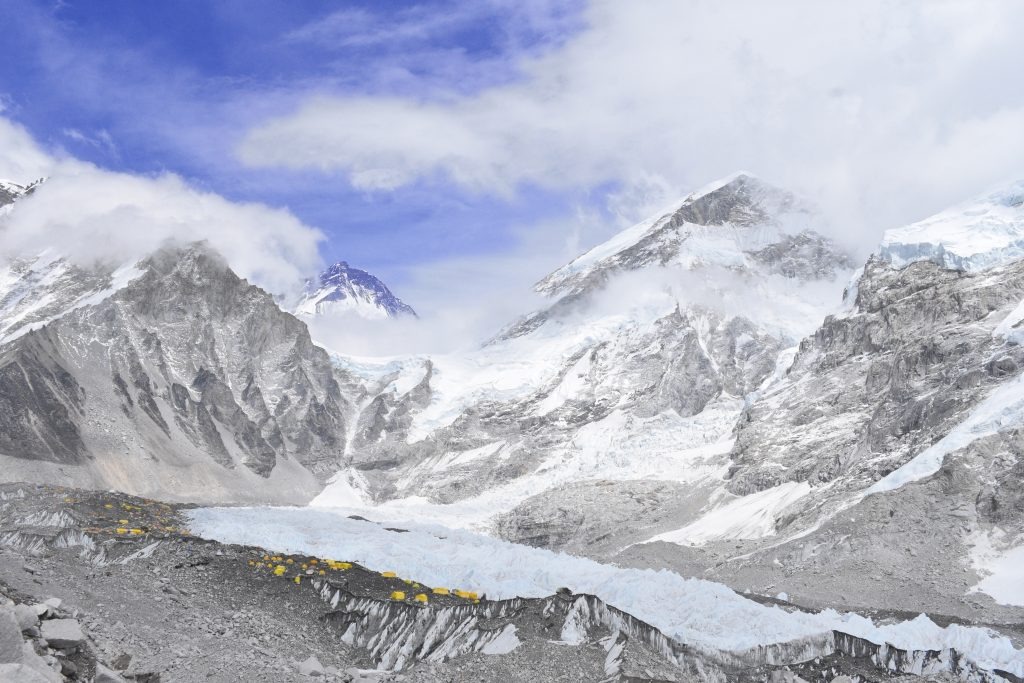
Everest Base Camp (5,364 m): A field of colored expedition tents, prayer flags, and glacial ice during climbing season. Outside of season (October–November), Base Camp is a windswept moraine plateau, powerful in its stillness but modest in visual drama. The meaning of the place is in reaching it, not in what it looks like.
Why is reaching Everest Base Camp itself such a milestone?
Reaching Everest Base Camp is a milestone because it represents the convergence of physical preparation, altitude acclimatization, and multi-day commitment into a single geographic point that carries the weight of mountaineering history.
Every climber who has attempted the summit of Everest, from the 1953 British expedition to present-day commercial ascents, began their climb from this exact location. Standing at Base Camp at 5,364 meters, trekkers occupy the same ground as Hillary, Tenzing, Reinhold Messner, and every Everest expedition team of the last 70 years. That historical continuity transforms a physical location into an emotional experience that outlasts the trek itself.
How Should You Decide If Everest Base Camp Trek with Guided Tours Is Right for You?
Guided Everest Base Camp trekking is the right choice for first-time Himalayan trekkers, solo travelers, and anyone trekking without prior high-altitude experience. For the standard Everest Base Camp route, a guided trek is the compliant default under the current NTB TIMS rule.
Can guided trekking services improve safety and overall experience on the Everest Base Camp Trek?
Guided trekking services improve 4 concrete dimensions of the Everest Base Camp trek:
-
Safety and medical response: Licensed guides trained in wilderness first aid recognize early AMS symptoms, carry supplemental oxygen and emergency medications, and coordinate helicopter evacuation through established agency networks. Response time in an altitude emergency is measured in minutes, guides compress that response time compared to independent trekkers navigating emergency contacts alone.
-
Acclimatization pacing: Experienced guides read individual trekker performance signals daily, pace consistency, appetite, sleep quality, morning demeanor, and adjust ascent schedules accordingly. This individualized pacing reduces AMS incidence more effectively than any fixed itinerary schedule.
-
Cultural access: Sherpa guides are cultural insiders. They facilitate monastery visits, translate conversations with village elders, explain the significance of religious structures, and provide geopolitical and historical context that transforms the route from a physical challenge into a cultural education.
-
Logistical efficiency: Guides manage all tea house bookings, permit verifications, porter coordination, and emergency communication, removing logistics burden from trekkers and allowing full attention on the experience.
Nepal mandated licensed guides for Everest region trekking beginning in 2023, formalizing what experienced trekkers have long understood: the Khumbu above 4,000 meters is not a terrain for casual independent navigation.
What are the key takeaways about whether Everest Base Camp Trek is worth it?
The Everest Base Camp Trek is worth it when 5 conditions align:
-
Physical preparation is honest: Trekkers who complete a structured 12-week training program and meet the 6-hour loaded hike benchmark enter the Khumbu with the physical foundation to enjoy rather than endure the route.
-
Timing is correct: October–November or March–May trekking windows provide the weather stability that transforms a difficult route into a rewarding one.
-
Budget is realistic: Planning for USD 1,500 to USD 3,500 depending on style preference, plus helicopter evacuation insurance, eliminates the financial stress that undermines the experience for underprepared trekkers.
-
Altitude risk is understood: Trekkers who study AMS symptoms, carry a pulse oximeter, and internalize the "no ascent with symptoms" rule arrive prepared to make safe decisions under pressure.
-
Expectations are calibrated: Everest Base Camp itself is a moraine field, not a dramatic viewpoint. The trek's value is in the 12 to 14 days of accumulated experience, not exclusively in the final destination.
For trekkers who meet these 5 conditions, the Everest Base Camp Trek delivers an experience that is genuinely difficult to replicate anywhere else on Earth. The Khumbu's combination of altitude, culture, mountain scale, and historical meaning creates a journey that remains vivid in memory long after the physical effort fades.