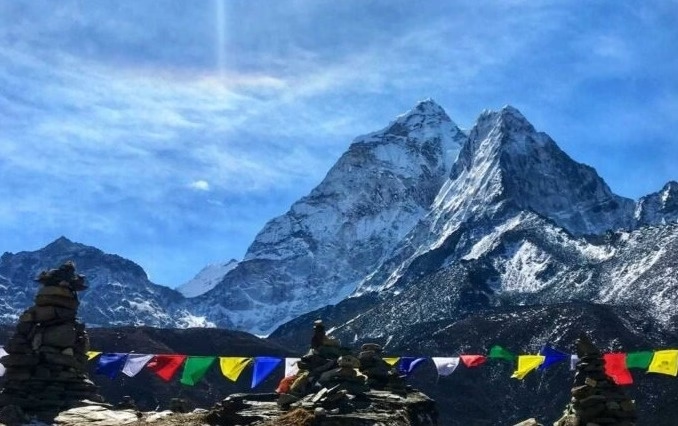
Short treks in Nepal are Himalayan trekking routes that deliver mountain scenery, traditional villages, teahouse stays, and high-altitude landscapes within a compact itinerary. The best short treks in Nepal range from the 1-day Dhampus–Australian Camp Trek to the 10- to 11-day options such as Langtang Valley and Khopra Ridge, covering the Annapurna, Langtang, Khumbu, and Solu regions. Each route has a distinct trekking profile: Mardi Himal brings close views of Machhapuchhre, Ghorepani Poon Hill is renowned for sunrise over Annapurna and Dhaulagiri, Langtang combines glacier-carved landscapes with Tamang culture, Pikey Peak provides a wide Everest panorama, and Everest View Trek reaches the Sherpa heartland without the commitment of Everest Base Camp.
Choosing among Nepal's short trekking routes depends on available days, maximum altitude, physical difficulty, mountain-view priorities, cultural interests, trekking season, and current permit and guide requirements. Easy routes such as Ghandruk and Dhampus–Australian Camp suit beginners and families, while Mardi Himal, Pikey Peak, Khopra Ridge, and Everest View offer higher-altitude Himalayan experiences for trekkers seeking more demanding terrain. Ghorepani Poon Hill and Mohare Danda combine accessible mountain viewpoints with sunrise experiences, while Helambu and Ghandruk provide stronger connections to Sherpa, Hyolmo, and Gurung communities. This guide compares all 10 routes by duration, altitude, difficulty, trailhead, permits, best season, landscapes, cultural experiences, and suitability so travelers can match a short trek in Nepal to their time, experience, and priorities.
1. Mardi Himal Trek
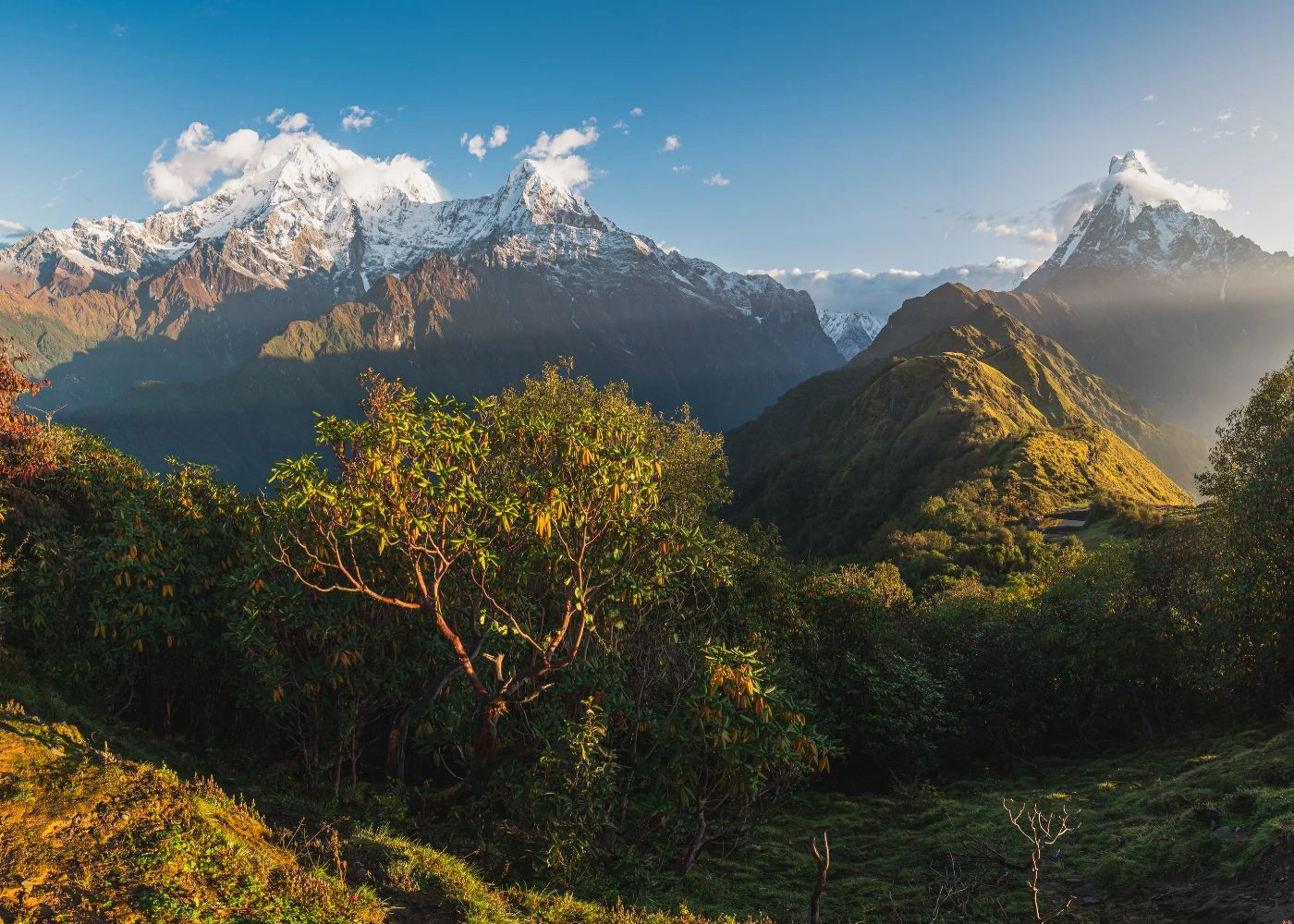
The Mardi Himal Trek is a 5- to 7-day moderate trek to a 4,200-meter viewpoint beneath Machhapuchhre (Fishtail), starting from Kande near Pokhara. Opened as an official trekking route only in 2012, Mardi Himal remains far quieter than Poon Hill or the Annapurna Base Camp trail, even though it starts from the same trailhead region.
Detail | Information |
Duration | 5–7 days (round trip from Pokhara) |
Max altitude | 4,200 m viewpoint; 4,500 m Base Camp for strong hikers |
Difficulty | Moderate |
Trailhead | Kande, 45 minutes from Pokhara |
Permits | ACAP + TIMS |
Best season | March–May, September–November |
What Can You See and Experience on the Mardi Himal Trek?
The Mardi Himal Trek delivers close-range views of Machhapuchhre, Annapurna South, and Hiunchuli from a narrow forested ridge that most Annapurna itineraries skip entirely. The trail climbs through oak and rhododendron forest to Forest Camp (2,550 m), then breaks above the treeline at Low Camp (2,970 m) and High Camp (3,580 m), where the panorama opens on both sides of the ridge at once.
What most competing guides overlook: Mardi Himal has no long teahouse settlements above High Camp, so trekkers carry the same simple menu (dal bhat, noodles, eggs) all the way to the viewpoint. Groups who underestimate this often arrive expecting Poon Hill-style variety and are disappointed. We brief every client on this before departure, because it changes what they pack for snacks.
How Many Days Does the Mardi Himal Trek Usually Take?
Most itineraries run 5 to 7 days, including a rest day built into the Forest Camp to Low Camp stage for altitude adjustment. A compressed 4-day version exists for very fit trekkers who skip Low Camp, but it raises acclimatization risk above 3,500 meters and we do not recommend it for first-time high-altitude trekkers. Adding a jeep transfer to Siding on the descent shortens the return by a full day compared with walking back to Kande.
2. Ghorepani Poon Hill Trek
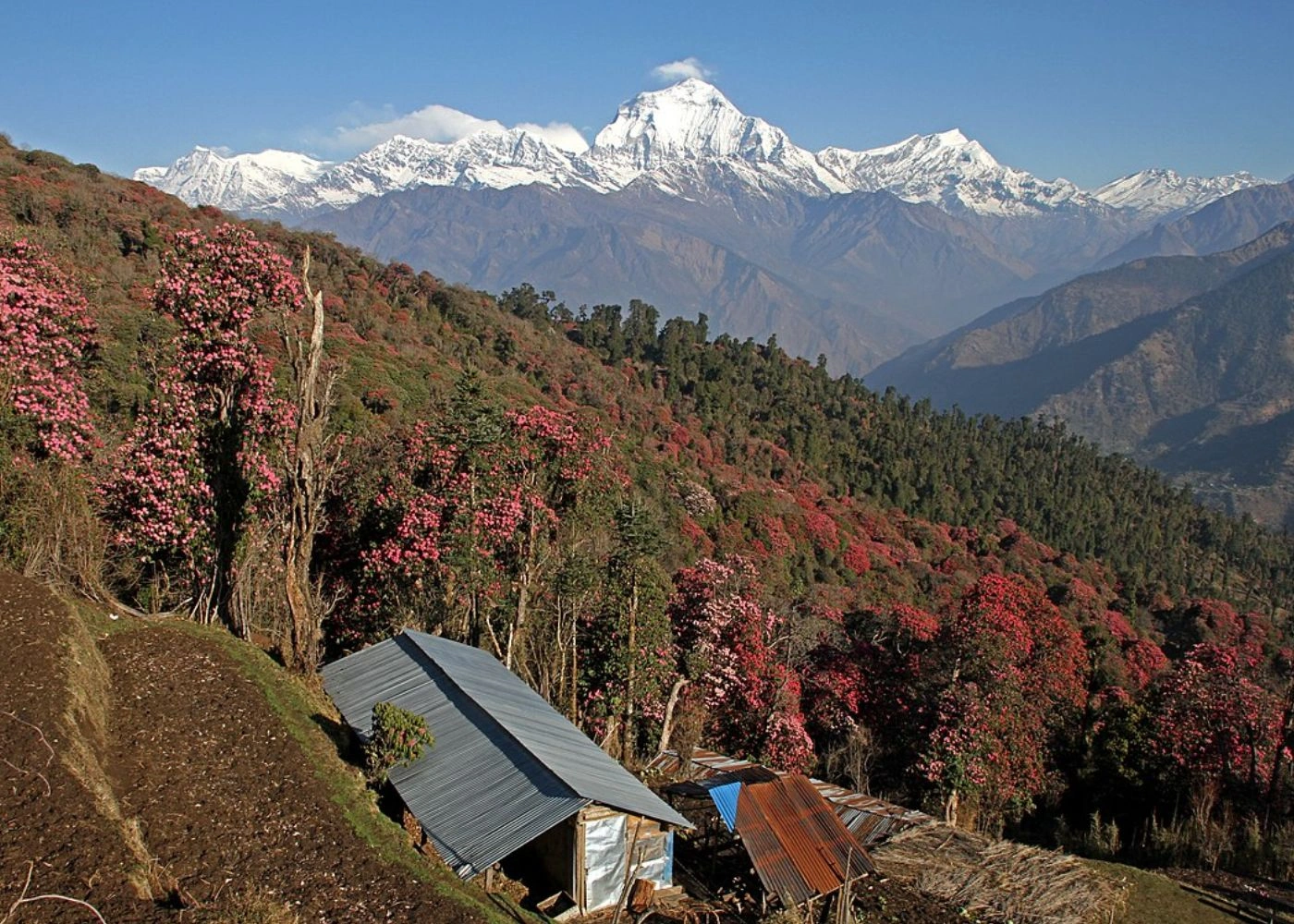
The Ghorepani Poon Hill Trek is a 4- to 6-day trek to a 3,210-meter sunrise viewpoint over the Annapurna and Dhaulagiri ranges, making it Nepal's most-booked short trek for first-time Himalayan visitors.
Detail | Information |
Duration | 4–6 days |
Max altitude | 3,210 m (Poon Hill) |
Difficulty | Easy to moderate |
Trailhead | Nayapul, 90 minutes from Pokhara |
Permits | ACAP + TIMS |
Best season | October–December, March–April |
What Makes Poon Hill Famous for Sunrise Views?
Poon Hill sits at 3,210 meters directly opposite an unbroken wall of 7,000- and 8,000-meter peaks, including Dhaulagiri I (8,167 m), Annapurna I (8,091 m), and Machhapuchhre (6,993 m), with no closer ridge blocking the sightline. Sunrise light hits Dhaulagiri first, then sweeps east across the entire Annapurna massif over roughly 20 minutes, which is why the hilltop platform fills with 200 to 400 trekkers on clear autumn mornings.
A detail most itineraries do not mention: the viewpoint tower gets crowded by 5:45 a.m. in peak season (October to November). Agencies that schedule a 4:30 a.m. departure from Ghorepani, instead of the more common 5:00 a.m., secure a front-row spot on the platform rather than a rear view over other trekkers' heads.
What Can You See Along the Ghorepani Poon Hill Trek?
Beyond the summit view, the trek passes through Ulleri's stone staircase, dense rhododendron forest, and the Gurung village of Ghandruk, giving it more terrain variety per day than most short Annapurna routes. The climb from Tikhedhunga to Ulleri alone gains 460 meters over roughly 3,300 stone steps, which is the single hardest stretch on the entire circuit despite the trek's easy-to-moderate rating overall.
How Many Days Does the Ghorepani Poon Hill Trek Take?
The standard itinerary takes 4 to 6 days, depending on whether trekkers return via Ghandruk (adding a cultural stop and one extra day) or descend directly back to Tikhedhunga. Rhododendron bloom season (March to April) adds visual reward to the same 5-day itinerary, since the entire forest section turns red and pink.
3. Langtang Valley Trek
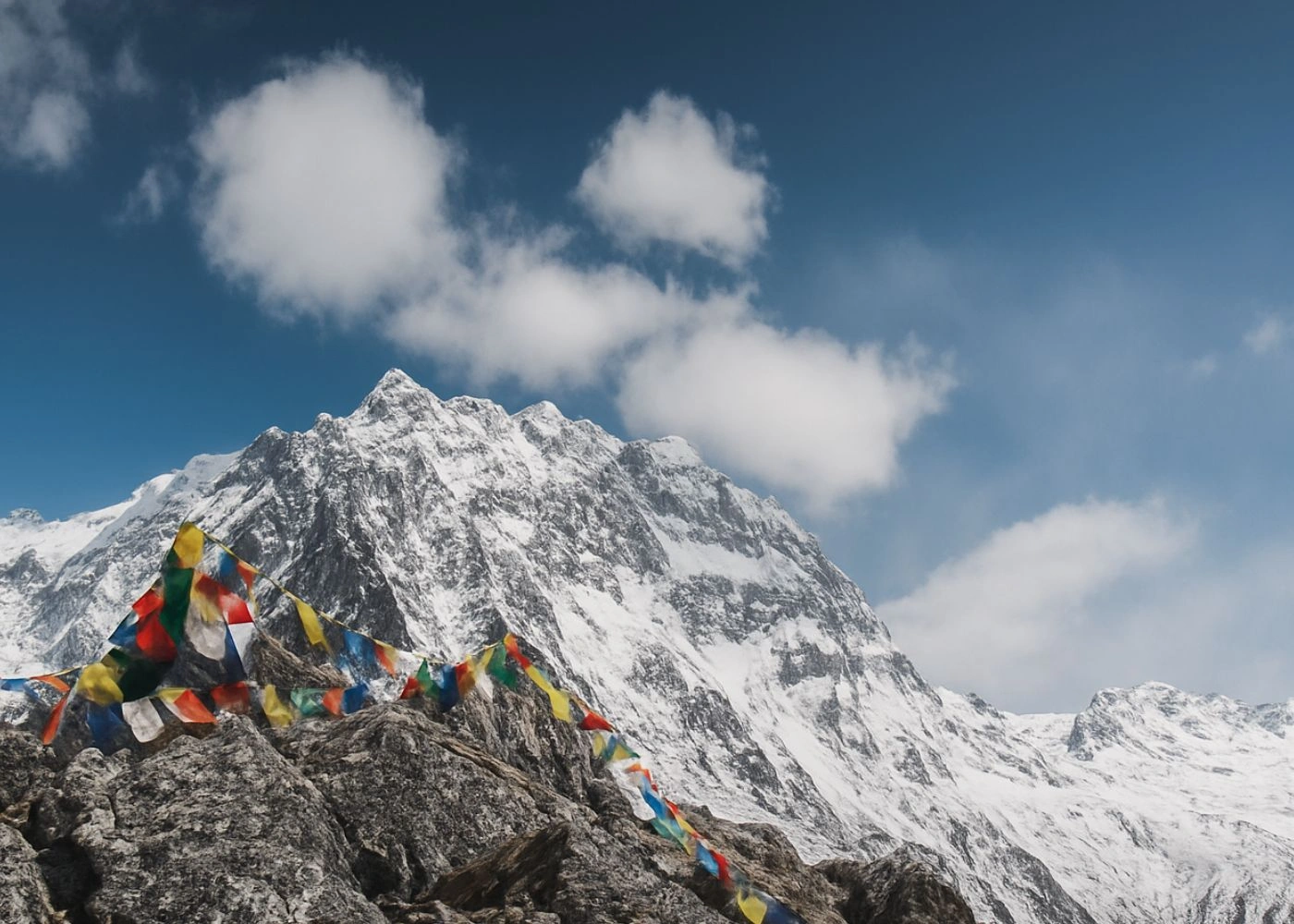
The Langtang Valley Trek is a 7- to 10-day moderate trek to Kyanjin Gompa (3,870 m), the closest major Himalayan valley to Kathmandu and the only trek on this list that starts with just a 6- to 7-hour drive rather than a domestic flight.
Detail | Information |
Duration | 7–10 days |
Max altitude | 3,870 m (Kyanjin Gompa); 4,750–4,984 m on optional side peaks |
Difficulty | Moderate |
Trailhead | Syabrubesi, 6–7 hours by road from Kathmandu |
Permits | Langtang National Park entry + TIMS |
Best season | March–May, October–November |
What Mountains and Landscapes Can You See in Langtang Valley?
Langtang Valley frames Langtang Lirung (7,227 m), Dorje Lakpa (6,966 m), and Ganchenpo (6,387 m) across a glacier-carved valley floor lined with bamboo groves, rhododendron forest, and Tamang stone villages. From Kyanjin Gompa, two optional side hikes extend the view further: Kyanjin Ri (4,773 m) adds a half-day round trip, while Tsergo Ri (4,984 m) requires 6 to 7 hours up and 3 to 4 hours down for a wider panorama that includes Shishapangma across the Tibetan border.
What Makes Langtang Valley Trek Different From Other Short Treks?
Langtang combines glacier scenery with a rebuilding story that no other trek on this list carries: the 2015 earthquake triggered a landslide that destroyed Langtang Village, and the settlement has been rebuilt slightly uphill from the original site. Trekkers walk past a memorial chorten before entering the new village, and the Kyanjin Gompa cheese factory, rebuilt after the disaster, still produces fresh yak cheese sold directly to passing trekkers. This gives the route a depth of local history that purely scenic treks like Mardi Himal do not offer.
How Many Days Does the Langtang Valley Trek Take?
Most agencies run Langtang Valley over 7 to 10 days, including one dedicated acclimatization day at Langtang Village or Kyanjin Gompa before any summit push to Kyanjin Ri or Tsergo Ri. Trekkers on a tighter schedule can complete a 7-day version by skipping the side peaks, though this sacrifices the best wide-angle mountain views on the route.
4. Helambu Trek
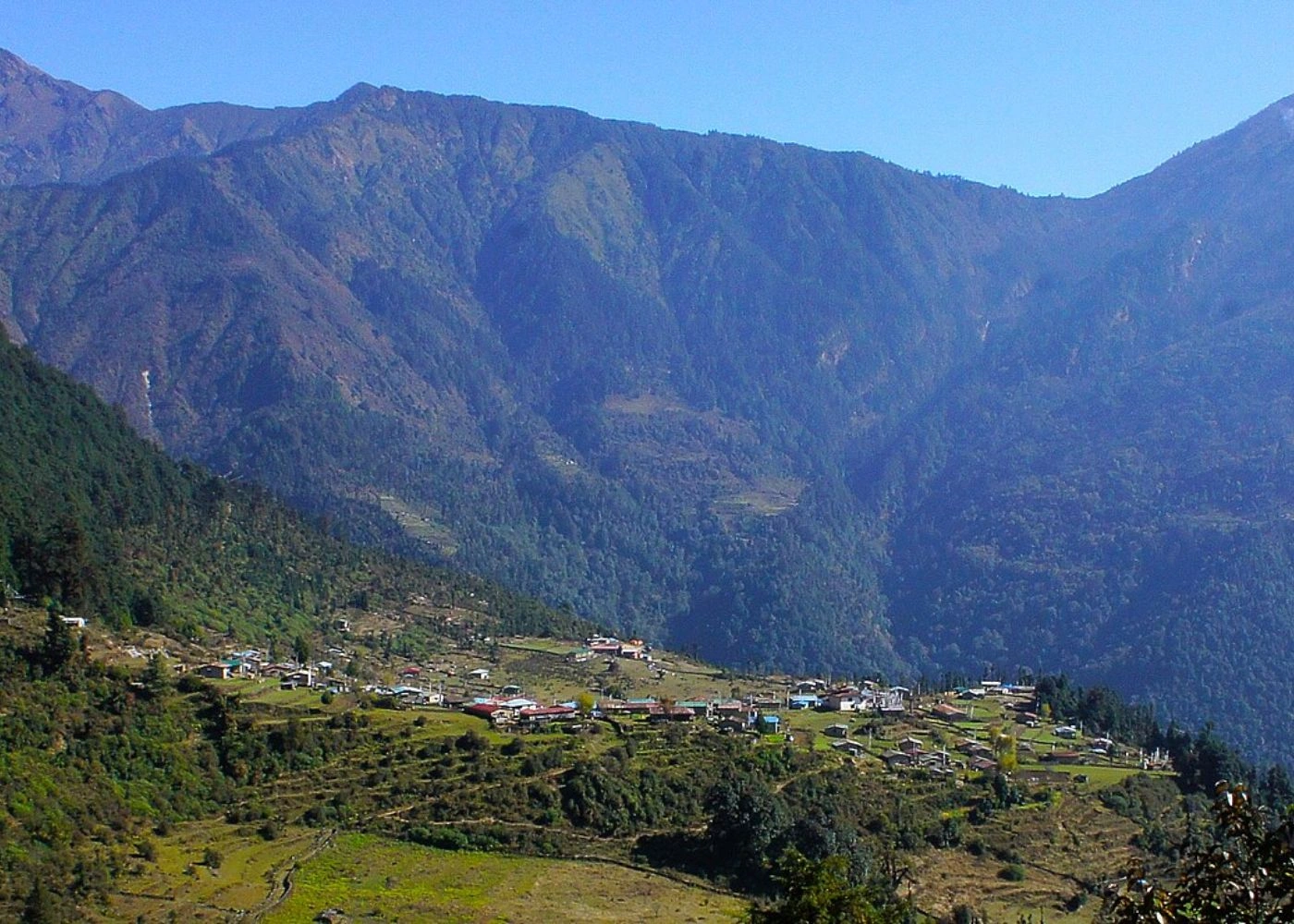
The Helambu Trek is a 6- to 9-day easy-to-moderate trek through Sherpa and Hyolmo villages north of Kathmandu, starting at Sundarijal, a 45-minute drive from the capital and the closest trailhead of any trek on this list.
Detail | Information |
Duration | 6–9 days |
Max altitude | ~3,650 m (Tharepati ridge) |
Difficulty | Easy to moderate |
Trailhead | Sundarijal, 45 minutes from Kathmandu |
Permits | Shivapuri Nagarjun National Park + Langtang National Park entry, plus TIMS |
Best season | March–May, October–December |
What Villages and Cultural Experiences Can You Discover on the Helambu Trek?
Helambu passes through Chisapani, Kutumsang, Tarke Ghyang, and Sermathang, a chain of Hyolmo and Sherpa settlements whose culture and monastery architecture closely mirror Tibet's, despite sitting only a few days' walk from Kathmandu's Ring Road. Tarke Ghyang holds one of the region's oldest gompas, and homestay-style teahouses here serve Tibetan bread and butter tea rather than the standard dal bhat found on Annapurna trails.
What sets Helambu apart from culturally similar treks like Ghandruk: the route loops back to a different exit point (Melamchi Pul Bazaar) than its entry point (Sundarijal), so trekkers see a continuous chain of new villages rather than retracing the same trail on the way down.
What Mountains Can You See During the Helambu Trek?
From the Tharepati ridge and Ama Yangri side peak (3,771 m), Helambu opens views of the Langtang range, Jugal Himal, and, on clear days, Gauri Shankar to the east. The mountain views are wider than Mardi Himal's but less dramatic close-up than Langtang's, which is why we position Helambu as a culture-first trek with mountains as a bonus, rather than the reverse.
How Many Days Does the Helambu Trek Take?
The classic circuit takes 6 to 9 days, with the shorter end reserved for trekkers who exit at Melamchi Pul Bazaar by road rather than continuing on foot to Timbu. Combining Helambu with a Gosaikunda extension through the Laurebina Pass turns it into a 12- to 13-day trek, but that combination falls outside the short-trek category covered here.
5. Pikey Peak Trek
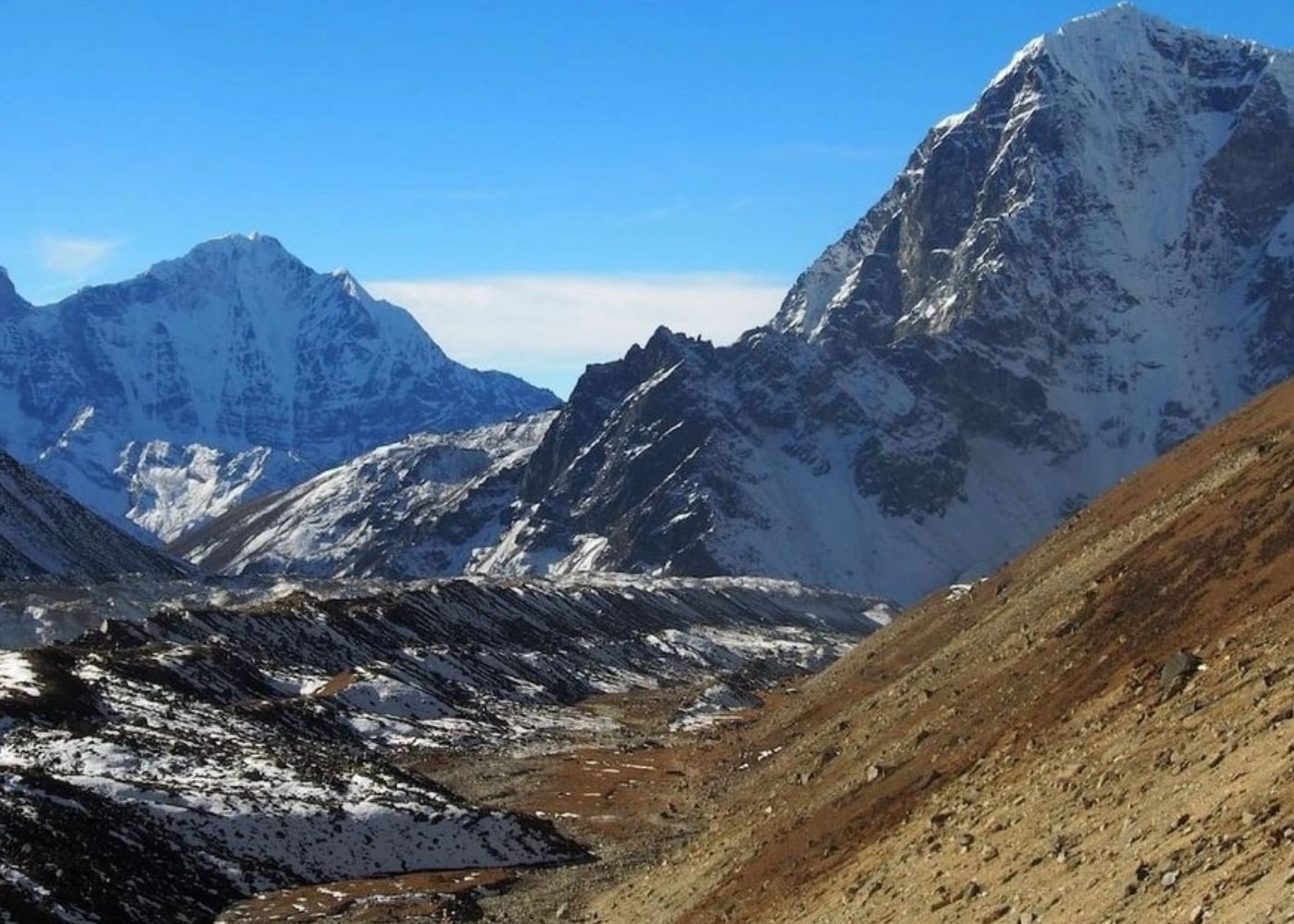
The Pikey Peak Trek is a 5- to 7-day trekking itinerary (7 to 12 days including road transfers) to a 4,065-meter summit in the Solu region, widely cited as Sir Edmund Hillary's favorite view of Mount Everest.
Detail | Information |
Duration | 5–7 trekking days; 7–12 days including Kathmandu transfers |
Max altitude | 4,065 m (Pikey Peak summit) |
Difficulty | Moderate |
Trailhead | Dhap or Jiri, reached by road from Kathmandu |
Permits | Solukhumbu Rural Municipality Permit + TIMS |
Best season | March–May, October–December |
What Makes Pikey Peak Famous for Himalayan Sunrise Views?
Pikey Peak's summit sits far enough west of the main Khumbu peaks to frame Everest, Lhotse, and Makalu as a single distant skyline, rather than the close, foreshortened view trekkers get from inside the Khumbu valley itself. This wide separation is exactly what made the viewpoint a favorite of Edmund Hillary, who trekked the region extensively while building schools and hospitals for the Himalayan Trust.
Which Mountains Can You See From Pikey Peak?
On a clear morning, Pikey Peak shows Everest, Lhotse, Makalu, Kanchenjunga, Numbur, and the Rolwaling range in one panorama, a spread of seven named 6,000-to-8,000-meter peaks that no other trek in this list matches from a single viewpoint. The trade-off is distance: because Pikey Peak sits roughly 40 kilometers from Everest as the crow flies, the mountains appear smaller and more atmospheric than the close-up views on the Everest View Trek.
How Many Days Does the Pikey Peak Trek Take?
Trekking days alone run 5 to 7 days, from Dhap through Jhapre and Pikey Base Camp to the summit and back down toward Junbesi. Agencies quoting 10- to 12-day packages are including the long jeep transfers from Kathmandu to Dhap and back, not additional trekking distance, so trekkers comparing quotes should confirm whether "trek days" or "total package days" is being advertised.
6. Everest View Trek
The Everest View Trek is a 5- to 7-day trek to Namche Bazaar (3,440 m) and the Everest View Hotel viewpoint (3,880–3,962 m) in the Khumbu region, built for trekkers who want Everest in view without the altitude, cost, or time commitment of Everest Base Camp.
Detail | Information |
Duration | 5–7 days |
Max altitude | 3,880–3,962 m (Everest View Hotel / Syangboche) |
Difficulty | Moderate (short duration, but starts with a high-altitude flight) |
Trailhead | Lukla, reached by flight from Kathmandu or Ramechhap |
Permits | Sagarmatha National Park entry + Khumbu Pasang Lhamu Rural Municipality fee |
Best season | March–May, October–November |
What Can You See on the Everest View Trek?
The Everest View Trek shows Everest, Lhotse, Ama Dablam, and Thamserku from the Everest View Hotel terrace at 3,880 meters, along with the Sherpa villages of Namche Bazaar, Khumjung, and Khunde, and the Khumjung monastery. Namche's Saturday market, where Tibetan traders and Khumbu villagers still exchange goods much as they did before the region opened to tourism in 1950, adds a working cultural stop that pure viewpoint treks like Mardi Himal cannot replicate.
How Does the Everest View Trek Compare With Longer Everest Treks?
The Everest View Trek reaches roughly 3,900 meters in 5 to 7 days, compared with 5,364 meters and 12 to 14 days for Everest Base Camp. That difference matters for three groups: trekkers with limited vacation time, trekkers who want Everest views without the altitude-sickness risk that rises sharply above 4,000 meters, and families trekking with children or older relatives. What it sacrifices is the base camp itself and the Khumbu Icefall view; trekkers set on standing at Everest Base Camp need the longer itinerary.
How Many Days Does the Everest View Trek Take?
Most operators run this trek over 5 to 7 days, including one mandatory acclimatization day in Namche Bazaar before the push to the viewpoint, since the Lukla flight itself lands trekkers directly at 2,860 meters with no gradual approach. Flight delays out of Lukla, common in October and November mornings, are the most common reason short Everest-region itineraries need a built-in buffer day.
7. Khopra Ridge Trek
The Khopra Ridge Trek is an 8- to 11-day moderate-to-challenging trek to a 3,660-meter ridge in the Annapurna region, opened to trekkers later than Poon Hill and still far less crowded despite sharing the first two days of trail.
Detail | Information |
Duration | 8–11 days |
Max altitude | 3,660 m (Khopra Ridge); 4,600–4,660 m on the Khayer Lake side trip |
Difficulty | Moderate to challenging |
Trailhead | Nayapul, via Ghorepani and Tadapani |
Permits | ACAP + TIMS |
Best season | March–May, September–November |
What Himalayan Views Can You Enjoy From Khopra Ridge?
Khopra Ridge faces Dhaulagiri, Annapurna South, Nilgiri, Annapurna I, and Machhapuchhre in a single 360-degree sweep, from a viewpoint that sits above the treeline with no lodge crowd competing for the same photo angle. The optional side trip to Khayer Lake (4,600–4,660 m), a sacred glacial lake five hours' round trip from Khopra, adds a genuine wilderness day that the Poon Hill route does not offer at any point.
What Makes Khopra Ridge Trek Different From Poon Hill?
Khopra Ridge shares its first two trekking days with the Ghorepani Poon Hill route, then branches away from the crowds toward Bayeli Kharka and the ridge itself. Where Poon Hill's viewpoint holds 200 or more trekkers on a clear autumn morning, Khopra Ridge typically sees single-digit groups at sunrise, because the detour adds two to three extra trekking days that most Poon Hill visitors are not scheduled for. Trekkers who have already done Poon Hill and want a similar but quieter Annapurna panorama are the strongest fit for this route.
How Many Days Does the Khopra Ridge Trek Take?
Full itineraries run 8 to 11 days, including the Khayer Lake side trip and a loop back through Ghandruk rather than retracing the outbound trail. A version without the Khayer Lake extension can be completed in 7 to 8 days, trading one dramatic side destination for a shorter overall commitment.
8. Mohare Danda Trek
The Mohare Danda Trek is a 5- to 7-day easy-to-moderate trek to a 3,300-meter community-run ridge in the Annapurna foothills, built and operated as Nepal's first community-tourism trekking trail.
Detail | Information |
Duration | 5–7 days |
Max altitude | 3,300 m (Mohare Danda) |
Difficulty | Easy to moderate |
Trailhead | Galeshwor or Beni, via Banskharka and Nangi villages |
Permits | ACAP + TIMS |
Best season | October–May (drier trail, fewer leeches than forested Annapurna routes in monsoon) |
What Makes Mohare Danda Trek a Sustainable Trekking Experience?
Every lodge on the Mohare Danda trail is owned and operated by the local community rather than private individuals, with profits reinvested directly into village infrastructure, including the school in Nangi village that trekkers pass and can visit. This model, developed by the Annapurna Dhaulagiri Community Trail initiative, means trekking income stays inside the villages that host it, rather than flowing mainly to Pokhara-based lodge owners as happens on some more commercial Annapurna routes.
For a trekking agency positioning a client toward responsible tourism, Mohare Danda is the single strongest answer on this list: no other short trek in this guide runs entirely on a community-lodge ownership model.
What Mountains and Landscapes Can You See From Mohare Danda?
Mohare Danda's viewpoint shows Dhaulagiri, the Annapurna range, and Manaslu together, an unusually wide three-massif panorama for a trek that reaches barely 3,300 meters. The trail itself passes through Danda Kateri and Nangi, villages known for handmade Lokta paper production, giving trekkers a craft-based cultural stop that is rare elsewhere in the Annapurna region.
How Many Days Does the Mohare Danda Trek Take?
The standard trek takes 5 to 7 days, and it can combine with Ghorepani Poon Hill or Khopra Ridge into a single 8- to 10-day loop for trekkers who want two viewpoints instead of one. On its own, Mohare Danda is one of the shortest routes on this list to reach a genuine above-treeline panorama.
9. Ghandruk Trek
The Ghandruk Trek is a 2- to 4-day easy trek to a 2,012-meter Gurung village that also functions as a gateway stop on the longer Poon Hill, Annapurna Base Camp, and Annapurna Circuit routes.
Detail | Information |
Duration | 2–4 days |
Max altitude | 2,012 m (Ghandruk village) |
Difficulty | Easy |
Trailhead | Nayapul, 90 minutes from Pokhara |
Permits | ACAP + TIMS |
Best season | Year-round, best October–April |
What Cultural Experiences Can You Have in Ghandruk?
Ghandruk is the largest Gurung settlement in the Annapurna region, and its stone-paved lanes, slate-roofed houses, and Gurung Museum document a community whose men have historically served in the Gurkha regiments of the British and Indian armies. Trekkers can tour the museum's uniforms and artifacts, then walk fifteen minutes to a working farmhouse for a home-cooked meal, a combination that gives Ghandruk more concentrated cultural depth per trekking hour than any other route on this list.
What Mountain Views Can You See From Ghandruk?
From the village itself, without any additional climbing, Ghandruk frames Annapurna South, Machhapuchhre, Hiunchuli, and Gangapurna directly above the rooftops. This no-effort mountain view is what makes Ghandruk the standard recommendation for trekkers traveling with elderly parents or very young children who still want a genuine Himalayan panorama.
How Many Days Does the Ghandruk Trek Take?
A standalone Ghandruk trip takes 2 to 4 days, including one full night in the village to catch both sunset and sunrise light on the surrounding peaks. Trekkers with a full week available typically extend Ghandruk into the Ghorepani Poon Hill loop instead of treating it as a separate short trek.
10. Dhampus–Australian Camp Trek
The Dhampus–Australian Camp Trek is a 1- to 3-day easy trek, the shortest and least strenuous route in this guide, reaching a 2,100-meter viewpoint just a two-hour drive and a few hours' walk from Pokhara.
Detail | Information |
Duration | 1–3 days |
Max altitude | ~2,100 m (Australian Camp / Thulo Kharka) |
Difficulty | Easy |
Trailhead | Kande or Phedi, 45 minutes from Pokhara |
Permits | ACAP + TIMS |
Best season | Year-round |
What Can You See From Australian Camp and Dhampus?
Australian Camp and neighboring Dhampus village open a 180-degree view of Machhapuchhre, Annapurna South, Hiunchuli, and Lamjung Himal, earning the viewpoint's name from the Australian trekkers who popularized it decades ago. Dhampus itself is a traditional Gurung settlement with terraced fields and stone houses, adding a light cultural layer to what is otherwise a pure scenery hike.
Why Is This Trek Suitable for Beginners and Families?
When starting from the Kande trailhead, the trail gains under 500 meters of elevation over its longest single day (though starting from the alternative Phedi trailhead requires a steeper 900-meter climb). It stays below 2,200 meters throughout and never leaves teahouse-supported terrain, which removes the three biggest risk factors on longer Himalayan treks: altitude sickness, remote emergency access, and multi-day physical strain. We recommend this route as the first Himalayan trek for children, trekkers recovering from injury, or anyone testing whether high-altitude trekking suits them before committing to a longer route later in their trip.
How Many Days Does the Dhampus–Australian Camp Trek Take?
Most trekkers complete it in 1 to 3 days, with a single overnight in Dhampus or Australian Camp sufficing for both sunset and sunrise views. A day-hike version exists for trekkers with only a free afternoon in Pokhara, though the overnight option delivers a materially better sunrise than any same-day round trip can.
How Can You Choose the Best Short Trek in Nepal for Your Trip?
Choosing the right short trek depends on four factors: available time, fitness level, priority between mountains and culture, and whether sunrise views matter most. A trekker with 3 days and no high-altitude experience needs a different route than one with 10 days who has already completed a major trek elsewhere. The four questions below map each priority to the strongest match in this guide.
Which Short Trek in Nepal Is Best for Beginners?
The Dhampus–Australian Camp Trek and the Ghandruk Trek are the strongest choices for beginners, since both stay below 2,200 meters, require only 1 to 4 days, and involve no sustained high-altitude exposure. Trekkers ready for a slightly longer introduction can move up to the Ghorepani Poon Hill Trek, which adds altitude and duration gradually rather than all at once.
Which Short Trek Offers the Best Mountain Views?
Pikey Peak and Khopra Ridge offer the widest mountain panoramas on this list, each showing five or more named 6,000-to-8,000-meter peaks from a single viewpoint. For close-range views of one iconic peak rather than a wide panorama, Mardi Himal's near-vertical framing of Machhapuchhre is unmatched by any other trek here.
Which Short Trek Is Best for Sunrise Views?
Ghorepani Poon Hill remains the benchmark sunrise trek in Nepal, though Pikey Peak delivers a comparable sunrise with a fraction of the crowd, and Mohare Danda offers a similar experience with the added value of community-run lodges. Trekkers who have already done Poon Hill and want the same golden-hour experience without sharing the viewpoint with 300 strangers should choose Pikey Peak or Mohare Danda instead.
Which Short Trek Is Best for Cultural Experiences?
Ghandruk and Helambu deliver the deepest cultural experiences on this list, through Gurung heritage in Ghandruk and Sherpa-Hyolmo village life in Helambu, respectively. Mohare Danda adds a third distinct cultural angle through its community-lodge ownership model, which is as much a story about sustainable tourism as it is about scenery.
How Can Nepal Intrepid Treks Help You Plan the Best Short Trek in Nepal?
Nepal Intrepid Treks matches each trekker to a route based on trip length, fitness, and travel priorities, then handles every permit, guide, and teahouse booking required under Nepal's current trekking regulations. Since the 2023 rule change requiring a licensed guide or registered agency for almost all trekking regions, independent trekkers can no longer walk these routes solo the way they could a decade ago. We hold the licenses, maintain the guide relationships in each region covered in this guide, and process ACAP, TIMS, Langtang National Park, and Sagarmatha National Park permits before a client ever lands in Kathmandu (note: the mandatory Khumbu Pasang Lhamu Rural Municipality fee for Everest treks cannot be issued in Kathmandu and must be obtained locally upon arrival in the region).
Can Nepal Intrepid Treks Arrange a Short Trek That Matches Your Time and Experience?
Yes: we build custom itineraries around the exact number of days a trekker has available, rather than fitting clients into fixed departure dates designed for someone else's schedule. A trekker with 4 days gets routed toward Dhampus–Australian Camp or Ghandruk; a trekker with 10 days and an interest in wide mountain panoramas gets routed toward Khopra Ridge or Pikey Peak. Every itinerary includes acclimatization planning appropriate to the route's maximum altitude, which is the single most common gap we see in self-planned short treks.
What Are the Key Takeaways About the Best Short Treks in Nepal?
Nepal's 10 best short treks span 1 to 11 days and 2,012 to 4,500 meters, covering four distinct regions: Annapurna (Mardi Himal, Poon Hill, Khopra Ridge, Mohare Danda, Ghandruk, Dhampus–Australian Camp), Langtang (Langtang Valley, Helambu), and Khumbu and Solu (Everest View, Pikey Peak). Nine of the ten routes on this list require a licensed guide or registered trekking agency under current regulations; however, the Khumbu Pasang Lhamu Rural Municipality (Everest View Trek) officially exempts trekkers from the national guide mandate, continuing to allow independent hiking. Region-specific permits range from NPR 2,000 to roughly NPR 6,000 per person. The right trek for any individual trekker comes down to matching available time and fitness against a clear priority: sweeping mountain panoramas, close-range peak views, sunrise photography, or genuine cultural immersion in Gurung, Tamang, Sherpa, or Hyolmo villages.