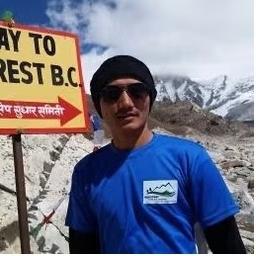
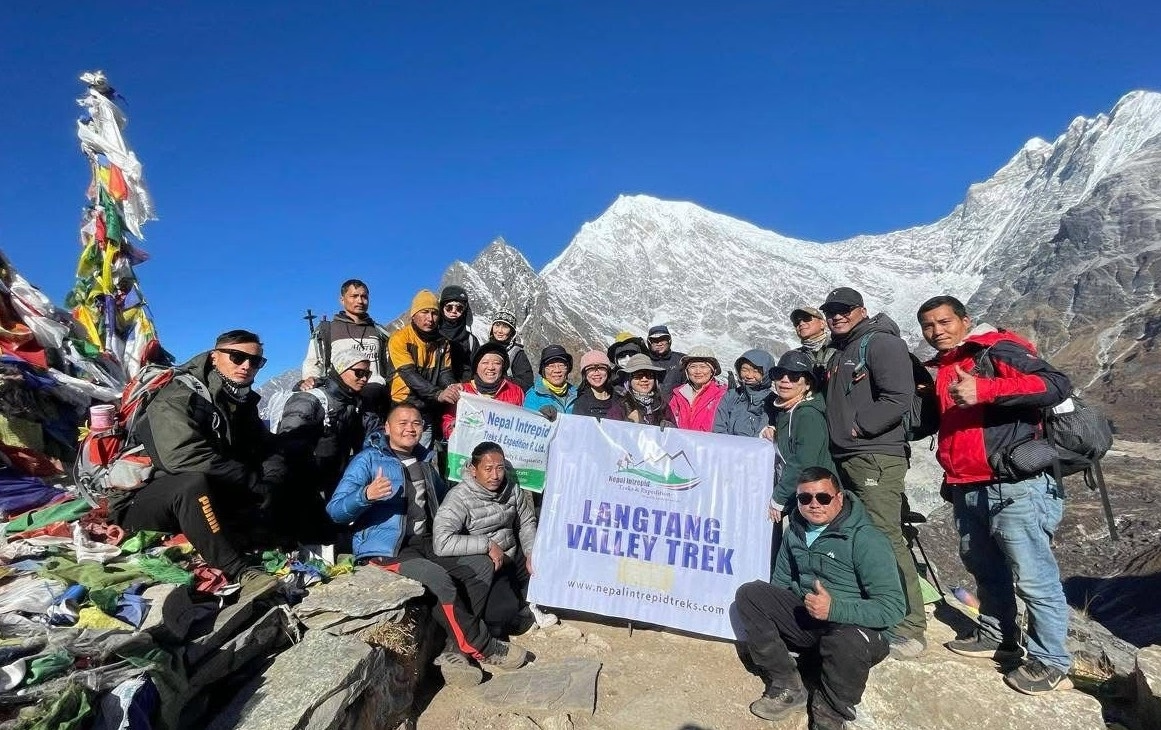
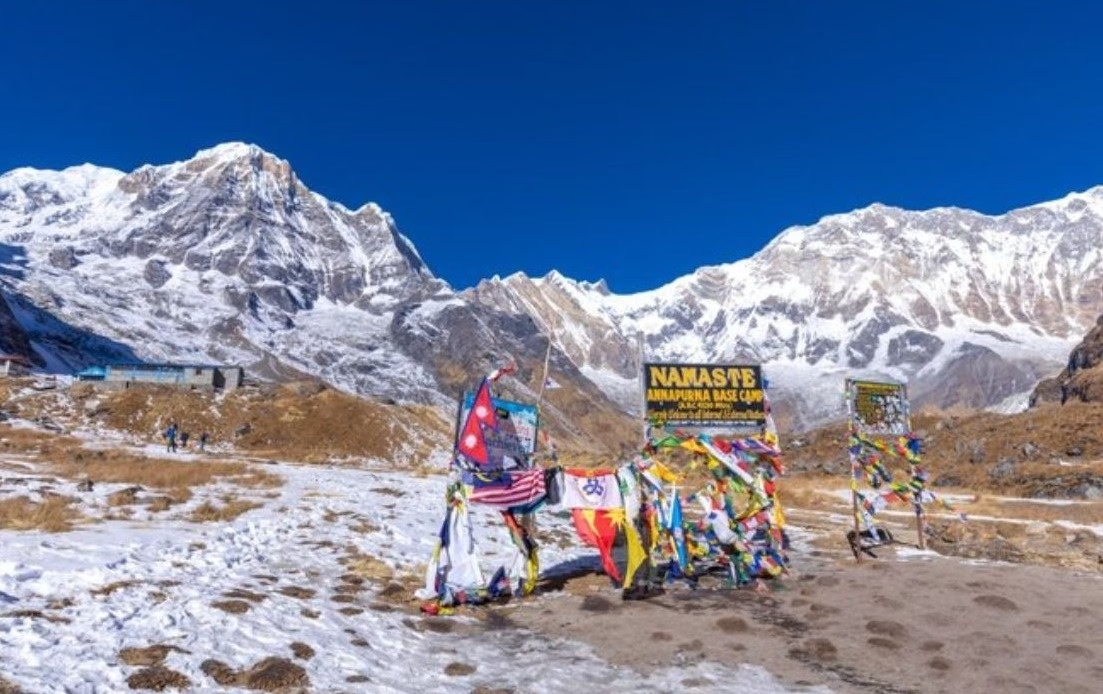
Nepal is a Himalayan travel destination defined by extreme vertical geography, dense cultural heritage, and unusually high experiential diversity within a compact national footprint. Anchored by the world’s highest peak, Mount Everest, and shaped by the cultural and historical core of the Kathmandu Valley, the country combines alpine trekking routes, ancient temple cities, and living spiritual traditions of Hinduism and Buddhism. Its landscape transitions rapidly from snow-covered high-altitude passes to subtropical forests and river valleys, creating one of the most geographically compressed adventure regions in the world.
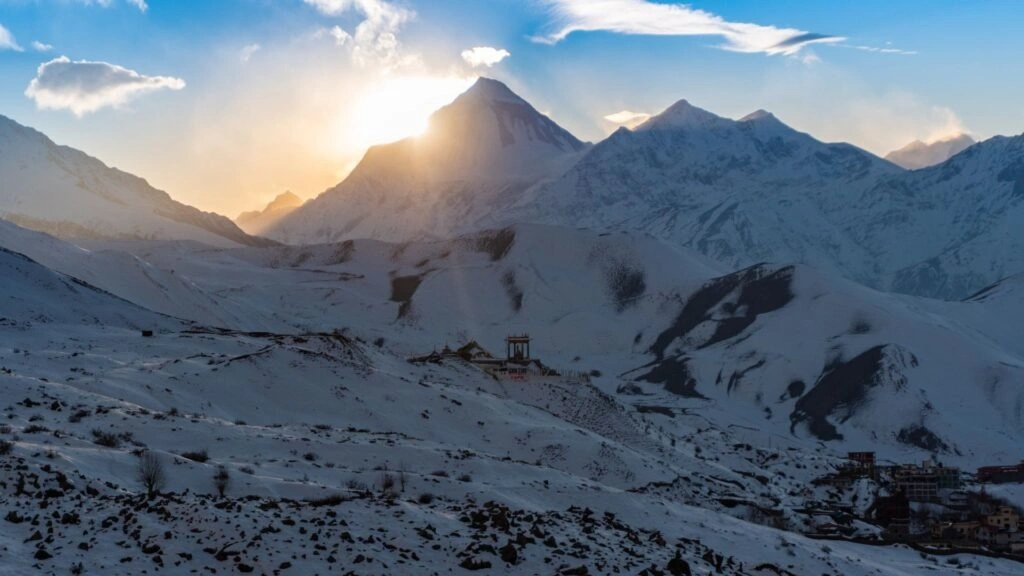
In 2026, Nepal remains a high-value global destination for travelers seeking both structured trekking experiences and cultural immersion at accessible cost levels. Regions such as Chitwan National Park and Lumbini extend the journey beyond the Himalayas into wildlife ecosystems and spiritual heritage circuits. Combined with established trekking infrastructure, seasonal travel windows, and strong visa accessibility, Nepal offers a complete multi-experience itinerary where adventure, culture, and nature operate within a single connected travel system.
What Makes Nepal a Popular Travel Destination in 2026?
Nepal remains one of Asia's most visited destinations because it offers 3 distinct categories of experience, high-altitude adventure, ancient cultural immersion, and subtropical wildlife, within a single country the size of Arkansas. Tourist arrivals reached 1,014,882 in 2023, a 65% jump from 2022 (Nepal Tourism Statistics 2023, Ministry of Culture, Tourism & Civil Aviation), driven by improved infrastructure, stable visa-on-arrival access for most nationalities, and growing interest in sustainable travel.
Why Is Nepal Still One of the Top Adventure Destinations?
Nepal is home to 8 of the world's 14 peaks above 8,000 meters, including Mount Everest (8,848.86m), Kangchenjunga (8,586m), Lhotse (8,516m), and Makalu (8,485m). No other country concentrates this density of extreme altitude in a single geographic region. The Himalayas stretch across Nepal's entire northern border, creating a gradient of trekking terrain from forested foothills at 1,000 meters to high-altitude passes above 5,400 meters.
Adventure travelers choose Nepal because the access model is direct. You fly into Kathmandu, obtain a trekking permit, and reach major trailheads within hours. Base camps, high passes, and remote valleys that once required weeks of approach are now accessible via domestic flights and well-maintained trail networks. The combination of world-record altitude, accessible logistics, and low cost makes Nepal irreplaceable on the global adventure travel map.
What Cultural Experiences Can Travelers Expect in Nepal?
Nepal hosts 142 distinct caste and ethnic groups nationwide according to the 2021 national census (Nepal Atlas: Caste and Ethnic Groups), and this diversity produces a cultural landscape unlike anywhere else in Asia. Travelers encounter 3 major religious traditions, Hinduism, Buddhism, and Bon, practiced side by side, often in the same temple complex. Pashupatinath Temple in Kathmandu is one of the holiest Hindu sites in the world. Boudhanath Stupa is one of the largest Buddhist stupas on earth, drawing pilgrims from Tibet, Bhutan, and across Nepal daily.
Festivals run year-round. Dashain (September–October) transforms the country with family gatherings, animal offerings, and kite flying. Tihar (October–November), Nepal's festival of lights, rivals Diwali in its street-level spectacle. Indra Jatra in Kathmandu and Bisket Jatra in Bhaktapur are living medieval carnivals that draw thousands of participants from surrounding villages.
What most travelers overlook: the cultural density is highest in the Kathmandu Valley, where 3 UNESCO World Heritage Cities, Kathmandu, Bhaktapur, and Patan, sit within 15 kilometers of each other, each with distinct architecture, festivals, and craft traditions.
Nepal hosts over 125 ethnic groups speaking 124 documented mother tongues, 13 of them newly identified in the 2021 national census (Insights from the 2021 Census, NepJOL), and this diversity produces a cultural landscape unlike anywhere else in Asia.
How Does Nepal Compare to Other South Asian Destinations?
Nepal occupies a specific position in the South Asian travel landscape. The table below outlines 4 key comparison points:
Factor | Nepal | India | Sri Lanka | Bhutan |
Visa Cost | USD 30–50 (on arrival) | USD 25 (e-visa) | USD 40 (ETA) | USD 200/day (minimum) |
Trekking Access | Extensive, self-guided | Limited | Moderate | Government-guided only |
UNESCO Sites | 10 | 40 | 8 | 2 |
Daily Budget (mid-range) | USD 40–60 | USD 35–55 | USD 50–80 | USD 250+ |
Nepal delivers the best combination of trekking access, cultural density, and affordability among South Asian destinations. Bhutan offers a premium, controlled experience. India offers scale and historical breadth. Nepal offers depth and accessibility at a price point that suits both backpackers and mid-range travelers.
What Is the Best Time to Visit Nepal in 2026?
The best time to visit Nepal is October through November for trekking and cultural exploration, and March through May for spring trekking with rhododendron blooms. Both windows offer clear skies, stable trail conditions, and comfortable daytime temperatures across elevations.
Which Seasons Offer the Best Weather for Travelers?
Understanding the best season to visit Nepal helps you plan around 4 defined seasons, each with distinct travel implications:
Autumn (October–November): Post-monsoon clarity makes this the most popular season. Skies are washed clean, Himalayan views are sharp, and temperatures at altitude range from 5°C to 15°C during the day. Kathmandu averages 18°C in October. Trail congestion on Everest Base Camp and Annapurna Circuit routes is highest during this period, so booking teahouses 3–4 weeks in advance is standard practice.
Spring (March–May): Rhododendron forests below 3,500 meters bloom across the Annapurna and Langtang regions, creating a visually distinctive trekking experience. Temperatures rise through May, and pre-monsoon haze begins building in late April. This is the primary Everest summit season, making Base Camp routes busier than in autumn.
Winter (December–February): Lower elevations remain accessible and tourist-free. Kathmandu and Pokhara see daytime temperatures of 10°C–18°C. High passes above 4,000 meters accumulate snow, making routes like Thorong La and Renjo La technically demanding without proper gear. Winter trekking in lower Mustang and Ghorepani offers solitude at minimal cost.
Monsoon (June–September): The monsoon runs from mid-June through mid-September, bringing 80% of Nepal's annual rainfall concentrated in this 3-month window. Kathmandu receives 1,400mm of rain annually; the southern Terai plains receive 2,500mm or more.
When Is Trekking Most Popular in Nepal?
October and November are the 2 peak trekking months. Annapurna Base Camp, Everest Base Camp, Langtang Valley, and Gokyo Lakes routes all see maximum traffic during this window. Permits issued by the Nepal Tourism Board consistently peak in these months, with Annapurna Conservation Area seeing 70,000+ annual trekking permits, a large portion concentrated in autumn.
Spring (March–April) represents the second trekking peak. Experienced trekkers often prefer spring for the floral scenery and thinner crowds on routes other than Everest.
How Does Monsoon Season Affect Travel Plans?
The monsoon runs from mid-June through mid-September, bringing 80% of Nepal's annual rainfall concentrated in this 3-month window. Kathmandu receives 1,400mm of rain annually; the southern Terai plains receive 2,500mm or more.
Monsoon travel challenges include 4 specific disruptions: landslides on mountain roads blocking key routes like the Prithvi Highway; leech infestation on forest trails below 2,500 meters; domestic flight cancellations due to poor visibility over mountain airstrips; and flooded river crossings making remote trekking routes genuinely dangerous.
What experienced travelers know: the rain shadow regions of Upper Mustang and Dolpo remain dry during monsoon, sitting on the Tibetan plateau's leeward side. These areas are accessible with special restricted area permits (USD 500 for 10 days in Upper Mustang) and offer a viable high-quality trekking option when the rest of Nepal is wet.
Which Places Should You Visit in Nepal in 2026?
Nepal's 5 essential destinations are Kathmandu, the Everest region, Pokhara, Chitwan National Park, and Lumbini. Each serves a different traveler purpose and occupies a distinct geographic and cultural zone.
Why Is Kathmandu Worth Exploring?
Kathmandu is Nepal's capital, cultural core, and logistical hub. It sits at 1,400 meters in a valley surrounded by forested hills, with a metropolitan population of approximately 3 million. The city holds 7 UNESCO World Heritage Sites within a 15-kilometer radius, including Pashupatinath Temple (largest Hindu pilgrimage complex in Nepal), Boudhanath Stupa (the largest stupa in Asia by platform diameter), Swayambhunath (the ancient hilltop Buddhist complex), and the Durbar Squares of Kathmandu, Patan, and Bhaktapur.
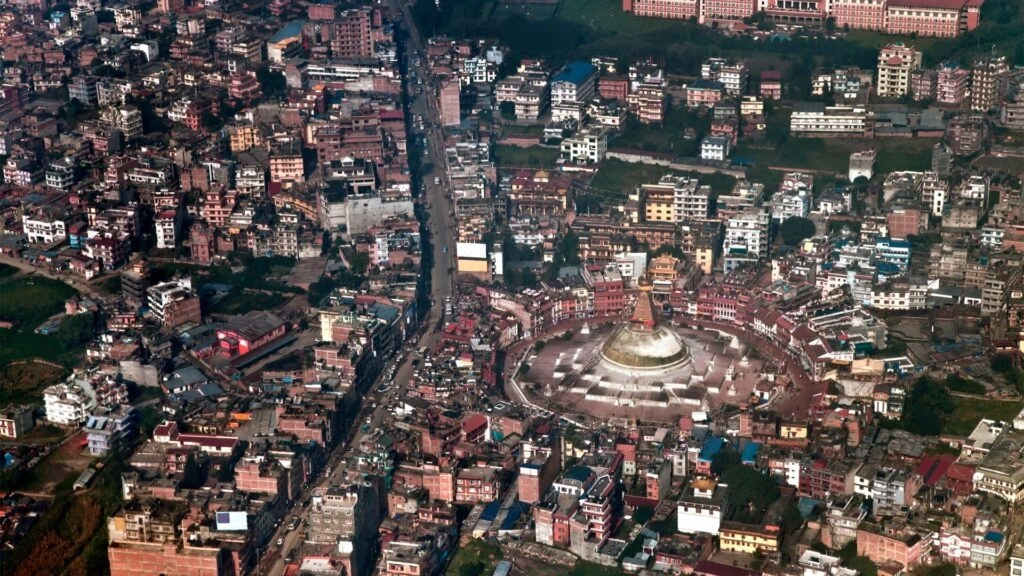
Beyond the monuments, Kathmandu's Thamel district functions as the main traveler hub, a dense grid of trekking gear shops, guesthouses, restaurants, and rooftop cafes. Patan's Durbar Square hosts the finest medieval Newari architecture in the Kathmandu Valley, with intricately carved wooden windows and bronze statuary that predate European Renaissance by centuries.
Allocate a minimum of 3 full days to explore the Kathmandu Valley meaningfully. Day-tripping to all 3 Durbar Squares plus Boudhanath and Pashupatinath in a single day produces a shallow experience.
What Makes Mount Everest a Bucket-List Destination?
Mount Everest (Sagarmatha in Nepali, Chomolungma in Tibetan) stands at 8,848.86 meters, the highest point on earth as measured from sea level. The Everest region in Nepal's Khumbu district offers 3 distinct travel experiences: Everest Base Camp Trek (17–21 days round trip from Kathmandu), Everest view flights (1-hour scenic mountain flights from Kathmandu airport), and full summit expeditions (60+ day commercial climbs costing USD 30,000–65,000).
The Everest Base Camp (EBC) Trek at 5,364 meters is the most popular long-distance trek in Nepal. The route passes through Sherpa villages including Namche Bazaar (3,440m) and Tengboche (3,860m), offering direct cultural contact with one of the world's most celebrated mountain peoples. The trek is achievable for travelers with average fitness, provided they allow proper acclimatization days at Namche and Dingboche.
What most travelers underestimate: the EBC trek is not technically difficult but is aerobically demanding. Altitude acclimatization at 3,500 meters and above is the primary challenge, not trail steepness.
Why Do Travelers Visit Pokhara?
Pokhara is Nepal's second-largest city and its most photogenic lakeside destination. It sits at 822 meters on the shore of Phewa Lake, with the Annapurna range, including Machhapuchhre (Fish Tail, 6,993m), rising directly behind the city to the north.
Travelers visit Pokhara for 4 primary reasons: it serves as the gateway for the Annapurna Circuit and Annapurna Base Camp treks; it offers the best paragliding in Asia from Sarangkot hill; it provides lakeside relaxation after multi-week treks; and its Lakeside district offers the best concentration of international restaurants and guesthouses in Nepal outside Kathmandu.
The Pokhara International Airport opened in 2023, and direct international connections are expanding, making it increasingly possible to fly directly into Pokhara from select regional hubs rather than transiting through Kathmandu.
What Can You Experience in Chitwan National Park?
Chitwan National Park occupies 952 square kilometers of subtropical floodplain in Nepal's southern Terai lowlands at 100–200 meters elevation. It is a UNESCO World Heritage Site and home to Nepal's largest single population of one-horned rhinoceros - 694 individuals as of the National Rhino Count 2021 (NTNC/DNPWC), part of a national total of 752 - alongside Bengal tigers, gharial crocodiles, Gangetic dolphins, and over 600 bird species.
Travelers access Chitwan via a 4–5 hour bus from Kathmandu to Sauraha village, or via domestic flights to Bharatpur. Jungle activities include canoe rides on the Rapti River, elephant-back safari (though ethical wildlife operators now prefer jeep safaris), guided walking safaris, and birdwatching in the buffer zones. A standard Chitwan itinerary covers 2–3 nights.
Chitwan's animal density is highest from October to March when vegetation thins after monsoon and wildlife concentrates around water sources.
What Activities Can You Enjoy in Nepal?
Nepal's activity range spans trekking, mountaineering, paragliding, white-water rafting, bungee jumping, mountain biking, and cultural tourism. No other country in this price bracket offers equivalent breadth of outdoor activity.
Which Trekking Routes Are Most Recommended?
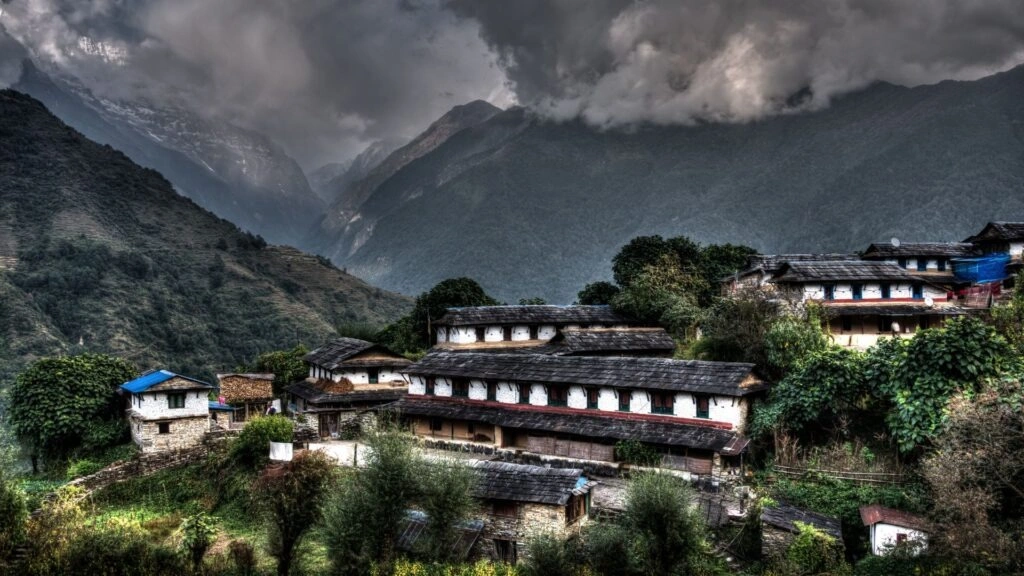
Nepal has 4 iconic trekking routes and dozens of secondary trails. Exploring the top trekking destinations in Nepal reveals far more options beyond these 4 primary routes:
Everest Base Camp Trek (EBC): 130km, 17–21 days, maximum elevation 5,364m. Requires TIMS card and Sagarmatha National Park entry permit.
Annapurna Circuit: 160–230km depending on variant, 12–21 days, maximum elevation 5,416m at Thorong La pass. One of the world's great long-distance walks, combining subtropical forests, arid high-altitude terrain, and Tibetan-influenced villages.
Annapurna Base Camp (ABC): 110km, 7–12 days, maximum elevation 4,130m. More accessible than EBC, suitable for first-time high-altitude trekkers. Rhododendron-dense forest below 3,500m makes it exceptionally scenic in March and April.
Langtang Valley: 65km, 7–10 days, maximum elevation 4,984m at Tsergo Ri. The closest major trek to Kathmandu (2 hours by road to trailhead), offering high alpine scenery and Tamang cultural villages with minimal trail congestion.
What Adventure Sports Are Popular in Nepal?
Beyond trekking, Nepal offers 6 well-developed adventure sports:
Paragliding in Nepal: Pokhara's Sarangkot launch site sends 100+ tandem flights daily during peak season, with 30-minute flights over Phewa Lake and Annapurna views.
White-water rafting: The Trishuli, Bhote Koshi, and Sun Koshi rivers offer Grade 3–5 rapids suitable for beginner to expert paddlers.
Bungee jumping: The Last Resort on the Bhote Koshi River operates a 160-meter drop, one of the highest commercially operated bungee jumps globally.
Rock climbing: Nagarjun Forest and Hattiban near Kathmandu offer established sport climbing routes.
Mountain biking: Trails around Pokhara, the Kathmandu Valley rim, and Mustang's jeep tracks provide multi-day bikepacking routes.
Zip-lining: Pokhara's Zip Flyer runs a 1.8km cable across a 600-meter vertical drop, among the longest and steepest zip lines in Asia.
How Can You Experience Nepalese Food and Local Traditions?
Nepalese cuisine centers on dal bhat, a twice-daily meal of lentil soup, steamed rice, vegetable curry, and pickled condiments. Dal bhat is the primary fuel for both trekkers and locals, and most teahouses provide unlimited refills. At altitude, where caloric demands run 3,500–4,500 kcal/day, this unlimited-refill policy is nutritionally significant.
Beyond dal bhat, Nepal offers momo (steamed dumplings, reflecting Tibetan influence), thukpa (noodle soup), sel roti (ring-shaped rice bread fried during Tihar), and tongba (fermented millet beer, consumed hot, specific to the eastern highlands).
Food experiences are best pursued in 3 settings: local bhattis (roadside eateries) for authentic regional cooking; Thamel rooftop restaurants for international fusion; and home-stay programs operated through community tourism initiatives in Ghandruk, Bandipur, and other villages, where families prepare meals and explain their food traditions directly.
How Affordable Is Nepal for Travelers in 2026?
Nepal is one of the 10 most affordable travel destinations in Asia for mid-range travelers. The Nepalese rupee (NPR) remains weak against the US dollar, euro, and British pound, creating strong purchasing power for foreign visitors. As of 2026, 1 USD equals approximately 150 NPR.
What Does a Typical Nepal Travel Budget Look Like?
The table below presents realistic daily budget estimates across 3 spending tiers:
Category | Budget (USD/day) | Mid-Range (USD/day) | Luxury (USD/day) |
Accommodation | 5–12 | 25–60 | 100–250 |
Food | 5–10 | 15–30 | 40–80 |
Transport | 3–8 | 10–20 | 30–80 |
Activities | 5–15 | 20–50 | 80–200+ |
Total (approx.) | 18–45 | 70–160 | 250–600 |
Trekking adds permit costs: Annapurna Conservation Area Permit costs NPR 3,000 (approx. USD 23), Sagarmatha National Park entry costs NPR 3,000 per person, and the TIMS card (Trekkers' Information Management System) costs USD 10–20. These are one-time permit fees per trek, not daily costs.
Is Nepal Suitable for Budget Travelers?
Nepal is exceptionally well-suited for budget travelers. Teahouse trekking, Nepal's standard accommodation system on major trekking routes, provides a bed and dal bhat dinner for USD 5–15 per night combined, often dropping to USD 3–8 at lower elevations where competition is highest. This structure makes multi-week trekking financially accessible for travelers with limited budgets.
Kathmandu and Pokhara offer dormitory guesthouses from USD 4–8 per night in the Thamel and Lakeside districts respectively. Street food, momos, samosas, and sel roti, costs USD 0.50–1.50 per serving.
The practical minimum daily spend for a trekking-focused trip, covering accommodation, food, and permits, runs USD 25–35 per day outside of Kathmandu transit days.
What Luxury Experiences Are Available in Nepal?
Nepal's luxury travel sector has grown significantly since 2018. 5 luxury travel categories now operate at international standards:
Luxury lodges: Tiger Mountain Pokhara Lodge, Dwarika's Hotel in Kathmandu, and the Hyatt Regency Kathmandu offer internationally benchmarked accommodation from USD 200–500 per night.
Helicopter trekking: Chartered helicopter flights to Everest Base Camp (day trip, USD 1,100–1,500 per person), Annapurna Base Camp, and Langtang offer the Himalayan experience without the 17-day commitment.
Private guided treks: Customized itineraries with private guides, porters, and pre-booked premium teahouses cost USD 150–300 per person per day all-inclusive.
Luxury river safaris: Chitwan private lodges including Meghauli Serai (Taj Hotels) and Barahi Jungle Lodge provide premium wildlife experiences from USD 300–500 per person per night.
Yoga and wellness retreats: The Dhulikhel area east of Kathmandu hosts dedicated Ayurvedic and meditation retreat centers operating 7–21 day programs.
How Safe Is Nepal for Tourists in 2026?
Nepal is one of the safest destinations in Asia for tourists, with violent crime against travelers remaining rare. Political stability has improved since the 2015 peace process, and the tourism infrastructure in major destinations is specifically designed around traveler safety and support.
What Health and Safety Tips Should Travelers Know?
Travelers visiting Nepal face 4 primary health considerations:
Altitude sickness (Acute Mountain Sickness, AMS) is common at altitude: a peer-reviewed field study of Everest-trail trekkers found 25% had manifest AMS and 72% reported at least one symptom (Solu-Khumbu trekker health study, PMC/NIH). Prevention follows the standard rule: ascend no more than 500 meters per day above 3,000 meters, with a rest day every 3 days. Diamox (acetazolamide) is available at pharmacies in Kathmandu and Namche Bazaar and is widely used for prevention.
Food and water safety: Tap water is not potable anywhere in Nepal. Travelers use purification tablets (iodine or chlorine), UV sterilizers (SteriPen), or filter bottles. Cooked food from established teahouses and restaurants carries low risk. Raw vegetables and unpeeled fruit from street stalls carry moderate risk.
Travel insurance: Standard travel insurance is insufficient for Nepal. A policy covering helicopter evacuation from altitude (minimum USD 100,000 coverage) is mandatory for all trekking itineraries above 3,000 meters. Helicopter evacuations from Everest Base Camp cost USD 5,000–8,000.
Vaccinations: Recommended vaccinations for Nepal include Hepatitis A, Typhoid, Tetanus, and Japanese Encephalitis (for Chitwan and Terai visits). Rabies vaccination is advisable for travelers spending extended time in rural areas or working with animals.
How Safe Is Trekking in Remote Areas?
Remote trekking in Nepal carries specific and manageable risks distinct from general tourism. The 3 primary risk factors are: altitude-related medical emergencies, trail navigation errors in poor visibility, and equipment failure in sub-zero conditions at high passes.
All 3 risks are substantially reduced by hiring a licensed guide. The Nepal Tourism Board mandates guides for trekking in restricted areas. For popular routes like EBC and Annapurna, guides are not legally required but are strongly recommended for solo travelers. A licensed guide costs USD 25–40 per day and performs 3 safety functions: navigation, emergency communication, and altitude symptom monitoring.
The Himalayan Rescue Association (HRA) maintains aid posts at Manang (on Annapurna Circuit) and Pheriche (on EBC route), staffed by volunteer physicians during peak trekking season. These posts provide free altitude consultations and are a critical safety resource.
What Local Customs Should Visitors Respect?
Nepal's cultural customs reflect both Hindu and Buddhist traditions. 6 key practices travelers observe:
Remove shoes before entering temples, monasteries, and private homes.
Walk clockwise around stupas, mani walls, and prayer wheels.
Use both hands or the right hand only when giving or receiving items.
Dress modestly at religious sites, covered shoulders and knees are required at Pashupatinath.
Ask permission before photographing religious ceremonies or individuals.
Do not touch anyone's head, considered the spiritually highest part of the body.
Failure to observe these customs rarely results in confrontation but consistently produces a less respectful exchange with local communities.
How Easy Is It to Travel Around Nepal?
Internal travel in Nepal ranges from straightforward in major corridors to genuinely challenging in remote mountain districts. The infrastructure gap between Kathmandu Valley and the high mountain regions remains significant, and understanding this gap is essential for realistic itinerary planning.
What Transportation Options Are Available for Tourists?
Nepal offers 5 primary transportation modes for travelers:
Domestic flights: Buddha Air, Yeti Airlines, and Tara Air operate networks connecting Kathmandu to Pokhara (25 min), Lukla (35 min, gateway to Everest), Bharatpur (Chitwan gateway), Jomsom (Mustang gateway), and Tumlingtar (Makalu region). Domestic flight costs range from USD 80–200 one-way.
Tourist buses: Air-conditioned tourist buses connect Kathmandu–Pokhara (5–6 hrs, USD 10–15), Kathmandu–Chitwan (4–5 hrs, USD 8–12), and Pokhara–Chitwan (4–5 hrs, USD 8–12). These are the most reliable overland options.
Local buses: Government and private local buses cover the same routes at lower cost (USD 2–5) with longer travel times and no comfort guarantees.
Jeep/4WD hire: Necessary for travel beyond paved roads, Upper Mustang, Humla, Dolpo, and far-eastern regions require jeep transport on dirt tracks, costing USD 100–200 per day.
Motorcycles: Available for rent in Kathmandu and Pokhara from USD 10–20 per day. International driving license required; appropriate for valley exploration but not high-altitude mountain roads.
How Reliable Are Domestic Flights and Roads?
Domestic flights in Nepal carry the highest cancellation rate of any major travel mode. Mountain airstrips including Lukla (Tenzing-Hillary Airport) and Jomsom operate under visual flight rules only, meaning cancellations occur whenever cloud or fog reduce visibility. During peak season, a 1–2 day Lukla flight delay is common and must be factored into itineraries.
The practical rule: build 2 buffer days at the end of any trekking itinerary that depends on a Lukla or similar mountain airstrip departure. Travelers who book tight international connections out of Kathmandu immediately after a mountain trek miss flights at a disproportionate rate.
Roads connecting Kathmandu to the Terai and Pokhara are paved and generally reliable in dry season. Monsoon season introduces significant landslide risk on mountain roads, with the Prithvi Highway (Kathmandu–Pokhara) and Arniko Highway (Kathmandu–Tibet border) both subject to blockages lasting hours to days.
What Should First-Time Visitors Know About Nepal Travel Logistics?
First-time visitors benefit from understanding 4 logistical realities before arrival:
Visa: Nepal visa is available on arrival at Tribhuvan International Airport (Kathmandu) and at land border crossings. Cost: USD 30 for 15 days, USD 50 for 30 days, USD 125 for 90 days. Bring USD cash and a passport photo, the on-arrival forms require both.
Currency: ATMs are available in Kathmandu, Pokhara, and Namche Bazaar. Withdraw sufficient NPR before heading to remote trekking areas, no ATMs exist beyond Namche on the EBC route. US dollars are accepted at some Kathmandu hotels and gear shops, but NPR is standard everywhere else.
SIM cards: Ncell and Nepal Telecom offer tourist SIM cards at Kathmandu airport from USD 3–5, including data packages. Coverage extends to most lower-altitude trekking routes but drops above 4,000 meters.
Power and charging: Standard voltage is 230V, 50Hz. Power cuts (load-shedding) still occur in some regions. Carry a power bank for trekking days, most teahouses charge USD 1–2 per device charge.
What Challenges Should You Consider Before Visiting Nepal?
Every destination has limitations. Nepal presents 4 specific challenges that travelers address with preparation rather than avoidance.
How Can Altitude Affect Your Trip?
Altitude affects every traveler differently, regardless of physical fitness. Understanding altitude sickness prevention is critical because elite athletes and sedentary individuals develop Acute Mountain Sickness (AMS) at similar rates at equivalent elevations. The critical elevation thresholds for AMS onset are 2,500 meters (early symptoms possible), 3,500 meters (moderate risk zone), and 4,500+ meters (high risk zone where High Altitude Pulmonary Edema, HAPE, and High Altitude Cerebral Edema, HACE, become possible).
The descent rule is absolute: any worsening neurological or respiratory symptoms at altitude require immediate descent of 500–1,000 meters. No itinerary, summit ambition, or financial investment justifies delaying descent in the presence of HAPE or HACE symptoms.
Travelers who have never trekked above 3,000 meters benefit from scheduling an acclimatization day in Kathmandu (1,400m) before flying to Lukla (2,860m) or driving to higher elevations.
What Internet and Connectivity Issues Might Travelers Face?
Internet access in Nepal follows an elevation gradient. Kathmandu and Pokhara offer fast fiber connections in most accommodations and cafes. Namche Bazaar (3,440m) on the EBC route has WiFi at most teahouses, typically 1–3 Mbps, adequate for messaging and email. Above Namche, WiFi speeds drop sharply and become unreliable above Tengboche (3,860m).
Travelers relying on digital navigation, satellite communication, or remote work above 4,000 meters use Garmin inReach or SPOT satellite communicators. These are available for rent in Kathmandu from USD 3–8 per day, providing two-way messaging and SOS capability independent of cellular networks.
How Can Weather Disrupt Travel Plans in Nepal?
Weather disruption is the single most common itinerary challenge in Nepal. 3 specific disruption types are relevant:
Flight cancellations at mountain airstrips occur on 30–40% of all scheduled departures at Lukla and similar airstrips during peak season due to morning fog. Plan for delays by building buffer days.
Trail closure due to snowfall affects high passes (Thorong La, Cho La, Renjo La) primarily between December and February and occasionally in early May and late October. Check pass conditions with local teahouse operators or via Nepal Meteorological Forecasting Division reports before attempting a crossing.
Road blockage from landslides occurs primarily between June and September but isolated events happen in May and October in the central and eastern mountains. Check road conditions before bus journeys on mountain highways.
How Should You Plan Your Nepal Trip in 2026?
Effective Nepal trip planning involves 5 sequential decisions: duration, primary focus, season timing, permit procurement, and logistical sequencing. A minimum of 10 days is required to do Nepal meaningfully; 3 weeks allows for both Kathmandu cultural exploration and a full trekking route.
A practical 14-day first-time Nepal itinerary covers: 3 days in Kathmandu Valley, 1 day transit to Pokhara, 7 days on the Annapurna Base Camp Trek, 2 days in Pokhara, and 1 day return transit. This structure delivers cultural immersion, high-altitude experience, and lakeside relaxation within a standard 2-week vacation window.
Permits require 2–4 days to obtain in Kathmandu or Pokhara at the Nepal Tourism Board office, though TIMS cards and Annapurna Conservation Area permits are also available at entry checkpoints for some routes.
Can a Nepal Travel Service Help You Build a Better Itinerary?
A professional Nepal travel service provides 3 concrete advantages over self-planned itineraries: permit procurement handled in advance, accommodation pre-booking during peak season (critical for Everest and Annapurna routes in October–November), and licensed guide assignment matched to your trek difficulty and language preference.
For remote or restricted area travel, Upper Mustang, Dolpo, Kanchenjunga Circuit, a registered trekking agency is legally required to obtain restricted area permits. Independent access to these regions is not permitted.
Self-planned trips work well for standard routes in Kathmandu, Pokhara, and Chitwan. Custom or remote itineraries consistently benefit from professional support.
What Are the Key Takeaways About Visiting Nepal in 2026?
Nepal in 2026 is accessible, affordable, culturally rich, and logistically manageable for travelers who plan with accurate expectations. The 7 core conclusions are:
Visit in October–November or March–April for optimal trekking and weather conditions.
Budget USD 40–60 per day for a comfortable mid-range experience including accommodation, food, and activities.
Secure trekking permits (TIMS + national park/conservation area entry) before or at the start of your trek.
Prioritize altitude acclimatization above 3,000 meters, no itinerary is worth risking AMS.
Build 2 buffer days around mountain airstrip flights to absorb weather-related cancellations.
Purchase helicopter evacuation insurance before any trek above 3,000 meters.
Combine 3 zones, Kathmandu Valley (culture), mountain region (trekking), Terai (wildlife), for the fullest Nepal experience in a 2–3 week window.
Nepal remains one of the most genuinely rewarding destinations in the world. The mountains are real, the culture is living, and the value is unmatched. Visiting in 2026 places you in a country that has invested meaningfully in tourism infrastructure while retaining the raw, unfiltered character that has drawn travelers for decades.