Nepal is home to some of the world's most celebrated trekking destinations, offering everything from short scenic hikes and classic Himalayan base camp adventures to remote wilderness expeditions and culturally immersive trekking routes. Each trekking destination provides a different combination of mountain scenery, altitude, trekking duration, cultural experiences, wildlife, accessibility, and physical challenge, making the best choice dependent on your fitness level, trekking experience, available time, and travel goals rather than popularity alone.
This guide compares the top 10 trekking destinations in Nepal through the factors that matter most when planning a Himalayan adventure. You'll discover what makes each trek unique, its major attractions, maximum altitude, difficulty level, ideal trekking season, permit requirements, route highlights, and the type of trekker it best suits. Whether you're planning your first trek to Poon Hill or Langtang Valley, a classic journey to Everest Base Camp or Annapurna Base Camp, or a challenging expedition through Manaslu, Upper Mustang, Kanchenjunga, Tsum Valley, Rara Lake, or the Gokyo Lakes, this guide provides the information needed to choose the trekking destination that best matches your adventure objectives.
1. Everest Base Camp Trek: Nepal's Most Iconic Adventure
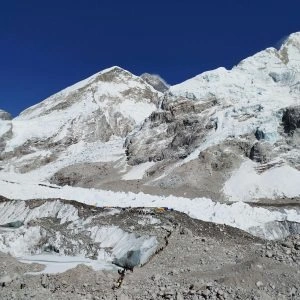
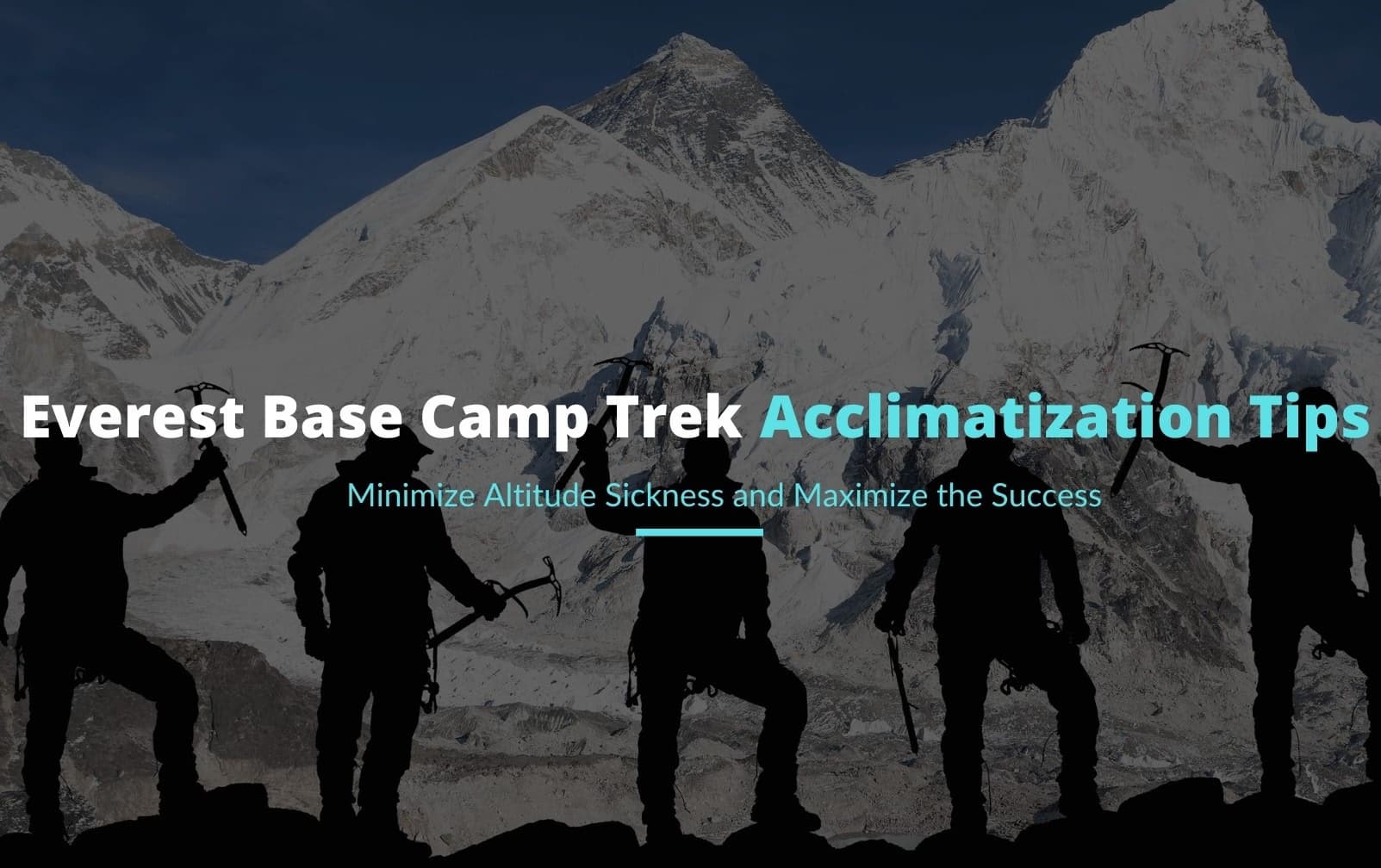
The Everest Base Camp (EBC) Trek ascends to 5,364 meters at the base of Mount Everest (8,848.86 m), the world's highest peak. The standard circuit covers 130 kilometers over 12–14 days through Sagarmatha National Park, a UNESCO World Heritage Site that protects 114,800 hectares of Khumbu ecosystem. Over 50,000 trekkers complete the EBC route annually, making it Nepal's most visited trekking corridor.
What Is the Everest Base Camp Trek Route?
The Everest Base Camp trek route starts at Lukla (2,860 m) and progresses through 8 major checkpoints: Phakding (2,610 m), Namche Bazaar (3,440 m), Tengboche (3,867 m), Dingboche (4,410 m), Lobuche (4,910 m), Gorak Shep (5,170 m), Everest Base Camp (5,364 m), and Kala Patthar (5,545 m). Namche Bazaar serves as the commercial hub of the Khumbu region and the mandatory 2-day acclimatization stop. The Khumbu Glacier, 17 kilometers in length and the world's highest glacier, covers the final approach to base camp from Gorak Shep.
Tengboche Monastery (3,867 m), established in 1916, marks the spiritual center of the route. Its courtyard frames Everest, Lhotse (8,516 m), and Ama Dablam (6,812 m) in a single unobstructed view, a composition that landscape photographers rank among the top 5 Himalayan vistas on Earth. The route passes through Sherpa villages, Khumjung, Khunde, and Pangboche, where ancient Buddhist chortens and mani stone walls line the trail, each carved by hand over generations.
What Are the Major Highlights of the Everest Base Camp Trek?
The 6 major highlights of the Everest Base Camp trek are: Namche Bazaar bazaar and acclimatization hub, Tengboche Monastery, Kala Patthar summit views, the Khumbu Glacier terminus, Gorak Shep plateau, and Everest Base Camp itself at 5,364 meters. Each waypoint delivers a distinct visual and cultural experience.
Kala Patthar (5,545 m) stands as the highest non-technical viewpoint in Nepal accessible to trekkers. Its summit delivers direct line-of-sight to Everest's south face, Nuptse's west wall, and the entire Khumbu icefall, a view unavailable from base camp itself, which sits lower and is partially obstructed by lateral moraine. What most trekking guides overlook: the Khunde Hospital (3,840 m), established by Sir Edmund Hillary in 1966, sits directly above Namche and is a 45-minute detour that adds irreplaceable historical context to the Sherpa-Everest story.
How Difficult Is the Everest Base Camp Trek?
The Everest Base Camp trek rates as moderately challenging, requiring no technical climbing skills but demanding 6–8 hours of trail walking daily at altitudes between 2,860 meters and 5,545 meters. Acute mountain sickness (AMS) affects 50% of trekkers who ascend above 3,500 meters without following the recommended 300–500 meter-per-day ascent rate. The itinerary's 2 built-in acclimatization days at Namche and Dingboche reduce AMS incidence to below 15% for properly paced trekkers.
Fitness preparation of 8–12 weeks before departure, emphasizing cardiovascular endurance, stair climbing, and leg strength, measurably improves performance above 4,000 meters. The trail surface varies from compacted earth paths to cobblestone village lanes and rocky moraine ridges above 5,000 meters.
When Is the Best Time to Trek to Everest Base Camp?
The best time to trek Everest Base Camp is October–November and March–May. October delivers post-monsoon clarity with visibility extending 80–100 kilometers, stable daytime temperatures of 5–15°C at Namche, and dry trail conditions throughout the Khumbu valley. March through May offers warmer overnight temperatures and rhododendron blooms from Lukla to Tengboche below 4,000 meters.
December–January treks remain feasible but temperatures at Gorak Shep drop to -20°C overnight. Monsoon season (June–August) produces daily snowfall above 4,500 meters and trail hazards from glacial runoff, conditions that experienced guides characterize as high-risk for unprepared trekkers.
2. Annapurna Base Camp Trek: Nepal's Most Popular Trek
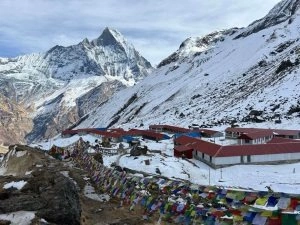
The Annapurna Base Camp (ABC) Trek ascends to 4,130 meters at the glacial amphitheater base of Annapurna I (8,091 m), the world's 10th highest peak and historically the mountain with the highest fatality-to-summit ratio among 8,000-meter peaks. The route covers 110 kilometers over 10–12 days through the Modi Khola river valley, starting from Nayapul or Phedi, 45 minutes by road from Pokhara.
What Makes the Annapurna Base Camp Trek Special?
The Annapurna Base Camp trek is special because the summit amphitheater delivers 360-degree close-range views of 13 Himalayan peaks above 6,000 meters within a single glacial basin, a mountain immersion that no other base camp trek in Nepal replicates. The basin walls rise to Annapurna I (8,091 m), Annapurna South (7,219 m), Hiunchuli (6,441 m), Machhapuchhre (6,993 m), and Gangapurna (7,455 m) simultaneously.
The trail transitions through 5 distinct ecological zones, subtropical forest, oak-rhododendron forest, alpine meadow, highland shrubland, and glacial moraine, within 10 consecutive trekking days. This ecological gradient distinguishes ABC from altitude-focused routes and makes it the most biologically diverse trekking corridor in Nepal's Annapurna Conservation Area.
What Can You Expect Along the Annapurna Base Camp Route?
Along the ABC route, trekkers pass through 12 major teahouse settlements, including Ghandruk (1,940 m), Chhomrong (2,170 m), Sinuwa (2,360 m), Deurali (3,230 m), and Machhapuchhre Base Camp (3,700 m). Ghandruk is a traditional Gurung village, the Gurung people are an indigenous Tibeto-Burman community who historically served in the British and Indian Gurkha regiments. The Ghandruk Gurung Museum documents 400 years of local cultural history and is one of Nepal's most accessible ethnographic collections.
Machhapuchhre Base Camp (3,700 m) marks the final staging point before ABC. "Fishtail Mountain" (Machhapuchhre) visible from MBC holds a permanent climbing restriction issued in 1957, it remains the only major Himalayan peak Nepal has designated permanently off-limits to all climbing expeditions, preserving it as a sacred Hindu summit.
How Challenging Is the Annapurna Base Camp Trek?
The Annapurna Base Camp trek rates as moderate, with a maximum altitude of 4,130 meters, 1,234 meters lower than EBC, which reduces AMS risk and makes it the most accessible high-alpine base camp trek in Nepal. The trail involves 5–7 hours of walking daily. The steepest section falls between Chhomrong and Sinuwa, where stone staircases descend 700 vertical meters before re-ascending through bamboo forest.
Trekkers with 4–6 weeks of cardiovascular preparation complete the ABC route without supplemental oxygen or altitude medication at the standard itinerary pace. Teahouse infrastructure with hot meals, Wi-Fi, and charging facilities operates throughout the route.
When Should You Visit Annapurna Base Camp?
The optimal months to visit Annapurna Base Camp are October–November and March–May. The rhododendron forests below 3,500 meters bloom from mid-March through late April, transforming the Chhomrong-to-Deurali section into corridors of red, pink, and white Rhododendron arboreum, Nepal's national flower. This 6-week spring window attracts botanical photographers specifically for the floral-and-summit composition. Monsoon season (June–September) makes trails slippery between Jhinu Danda and Chhomrong, and leeches become prevalent below 2,500 meters from July through September.
3. Langtang Valley Trek
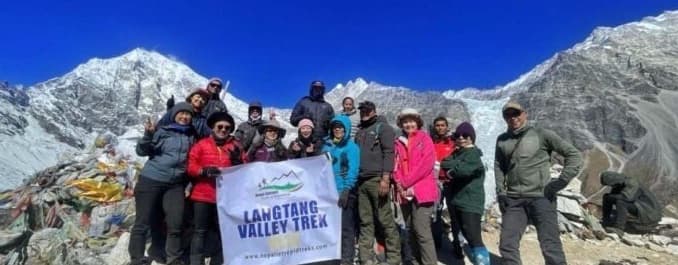
The Langtang Valley Trek ascends into Langtang National Park, Nepal's first Himalayan national park, established in 1976, covering 1,710 square kilometers of protected Himalayan ecosystem. The valley sits 52 kilometers north of Kathmandu, making it the closest major trekking region to Nepal's capital. The route reaches a maximum altitude of 4,984 meters at Tserko Ri and covers 60–70 kilometers over 7–10 days.
What Makes Langtang Valley Different from Other Treks?
Langtang Valley differs from Nepal's other major treks through 3 defining characteristics: its 3–4 hour road access from Kathmandu (versus flights to Lukla or Pokhara), its Tamang ethnic cultural heritage, and its direct geographical border with Tibet's Shishapangma (8,027 m) to the north. The accessibility advantage reduces total trip logistics cost by 30–40% compared to Everest or Annapurna treks, making Langtang the most cost-efficient Himalayan trekking option from Kathmandu.
Langtang also carries a specific post-disaster significance. The 2015 Gorkha earthquake triggered an avalanche that buried Langtang village and killed 243 residents and trekkers. The rebuilt village, completed in 2017–2018, now draws trekkers who want to support reconstruction-linked tourism directly, each trekker's teahouse expenditure contributes to the Tamang community's ongoing economic recovery.
Which Villages and Attractions Will You Visit?
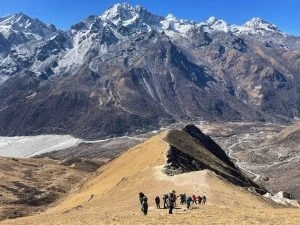
The 5 major villages and attractions along the Langtang Valley trek are: Syabrubesi (1,503 m), Lama Hotel (2,470 m), Langtang Village (3,430 m), Kyanjin Gompa (3,870 m), and Tserko Ri summit (4,984 m). Kyanjin Gompa is the cultural epicenter of the valley, a working Tibetan Buddhist monastery surrounded by yak pastures and unobstructed views of Langtang Lirung (7,227 m).
The Kyanjin Cheese Factory, operating since the 1950s with Swiss technical assistance, produces yak cheese sold across Nepal. Trekkers visit the factory year-round; the cheese-making process uses traditional wooden presses and stone-cooled aging rooms, a craft production method unchanged since inception.
Is the Langtang Valley Trek Suitable for Beginners?
The Langtang Valley trek is suitable for beginners with 3–4 weeks of preparatory conditioning, a comfortable daily walking pace of 5–6 hours, and awareness of AMS symptoms above 3,500 meters. The gradual elevation gain from Syabrubesi (1,503 m) to Kyanjin Gompa (3,870 m) across 5 days allows the body to acclimatize without the pressure of a compressed itinerary.
First-time trekkers frequently pair Langtang with the 3-day Gosaikunda Lake extension, adding Nepal's most sacred Hindu high-altitude lake (4,380 m), one of the 108 sacred sites of Shaivism, to the itinerary for a total of 13 days.
When Is the Best Season for Langtang Valley Trekking?
The best seasons for Langtang Valley trekking are March–May and October–November. The valley receives significant snowfall between December and February, which closes the Gosaikunda pass at 4,610 meters and restricts upper-valley access. Autumn delivers clear mountain visibility extending north to Shishapangma in Tibet, and spring activates rhododendron blooms from 1,800 to 3,500 meters. June–September monsoon rains create muddy trail sections below 2,000 meters but rarely disrupt the upper Kyanjin zone.
4. Ghorepani Poon Hill Trek
The Ghorepani Poon Hill Trek is Nepal's most-frequented short trek, completing a round circuit within 4–5 days from Pokhara. The route reaches Poon Hill (3,210 m) in the Annapurna Conservation Area and delivers the most accessible Himalayan sunrise panorama in Nepal, requiring only 3 days of acclimatization-free hiking to reach the viewpoint.
Why Is Poon Hill Famous for Sunrise Views?
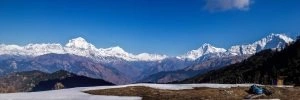
Poon Hill (3,210 m) delivers unobstructed east-facing sunrise views of 20 Himalayan peaks above 6,000 meters, including Dhaulagiri I (8,167 m), Annapurna I (8,091 m), Machhapuchhre (6,993 m), and Nilgiri North (7,061 m), accessible in a 45-minute walk from Ghorepani village (2,874 m). The observation tower at the summit sits on a ridgeline with no obstructing terrain to the northeast, creating a panoramic window that captures the first golden light on Dhaulagiri's southwest face at precisely the moment of local sunrise. No other viewpoint in Nepal combines this altitude, this proximity to a trailhead village, and this peak-count within a half-day effort.
What Are the Main Highlights of the Ghorepani Poon Hill Trek?
The 4 main highlights of the Ghorepani Poon Hill trek are: the Poon Hill sunrise panorama over 8 major peaks, the Ghorepani rhododendron forest corridor (2,874 m), the traditional Gurung village of Ghandruk (1,940 m), and the Annapurna Conservation Area landscape between Tikhedunga and Ulleri. The rhododendron forest ascending from Tikhedunga (1,540 m) to Ghorepani ranks among Nepal's most concentrated Rhododendron arboreum groves, spanning 6 continuous kilometers of trail.
The village of Tadapani (2,590 m), an intermediate camp between Ghorepani and Ghandruk, offers north-facing Annapurna South and Hiunchuli views that the main valley-level approach from Pokhara never provides.
How Difficult Is the Ghorepani Poon Hill Trek?
The Ghorepani Poon Hill trek rates as easy to moderate, with a maximum elevation of 3,210 meters that keeps altitude sickness risk minimal for trekkers ascending from Pokhara (820 m). The aerobically demanding section is the ascent from Tikhedunga to Ulleri, a 3,000-step stone staircase climbed in 2 hours, which challenges beginners cardiovascularly without creating altitude complications. Daily walking time ranges from 4–6 hours.
The trek is specifically suited for 3 trekker profiles: families with teenagers, adults over 60 years in good cardiovascular health, and trekkers re-entering Himalayan trails after injury or long absences.
How Many Days Does the Trek Usually Take?
The Ghorepani Poon Hill trek takes 4 days for the classic circuit and 5–6 days for the extended loop via Ghandruk and Tadapani. The 4-day itinerary runs: Nayapul → Tikhedunga → Ghorepani → Poon Hill (pre-dawn) → Tadapani → Ghandruk → Nayapul. A 2-day extension through Chhomrong connects directly to the Annapurna Base Camp route, making Poon Hill a natural entry segment for trekkers planning the full ABC circuit.
5. Upper Mustang Trek: Nepal's Hidden Kingdom
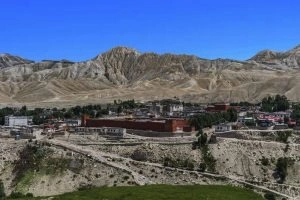
The Upper Mustang Trek explores the former Kingdom of Lo, an ancient Tibetan Buddhist enclave within Nepal's northern border. The region occupies the rain shadow north of the Dhaulagiri and Annapurna ranges at an average elevation of 3,500–4,200 meters. Its capital, Lo Manthang (3,840 m), is a walled medieval city with a 15th-century royal palace that remained the seat of the Mustang kingdom until Nepal's government abolished the monarchy in 2008.
What Makes Upper Mustang a Restricted Area?
Upper Mustang is a Restricted Area under Nepal's Department of Immigration because of its sensitive geo-political position along the China-Nepal border and its preservation of a pre-modern Bon and Tibetan Buddhist cultural ecosystem largely unchanged for 500 years. Nepal established the restricted zone in 1992 to control annual visitor numbers and protect the Lo-ba community's traditional agriculture, religious practice, and archaeological heritage from unregulated tourism impact.
The landscape is geographically unlike any other in Nepal, ochre and crimson-banded sedimentary cliffs carved by the Kali Gandaki river over 50 million years, sky caves (sekhar) excavated into cliff faces 20–50 meters above ground level, and ancient trade route markers connecting Lo Manthang to Lhasa across the Himalayan plateau.
What Cultural and Historical Sites Can You Explore?
The 5 most significant cultural and historical sites in Upper Mustang are: Lo Manthang walled city (15th century), Thubchen Gompa (1447 AD), Jampa Lhakhang (1387 AD), Chungsi Cave Monastery, and Ghar Gompa, Nepal's oldest active monastery at 1,200 years. Thubchen Gompa houses 30 meters of original thangka scroll paintings dated to the 15th century, among the most complete collections of Tibetan Buddhist mural art outside Lhasa. The Mustang Eco Museum inside Lo Manthang displays sky burial instruments, ancient Tibetan manuscripts, and traditional Lo-ba costume from the 13th–17th centuries.
What Permits Are Required for the Upper Mustang Trek?
Upper Mustang requires 2 mandatory permits: the Restricted Area Permit (RAP) costing USD 500 per person for the first 10 days (USD 50 per additional day) and the Annapurna Conservation Area Permit (ACAP) at NPR 3,000 per person. The RAP is issued exclusively through a licensed Nepali trekking agency, individual applications are not accepted under Nepal's restricted area policy. A minimum group size of 2 trekkers applies. Both permits require valid passport copies and agency endorsement at the time of application in Kathmandu.
When Is the Best Time to Visit Upper Mustang?
The best time to visit Upper Mustang is May–June and September–October. Upper Mustang's high-altitude desert position behind the Annapurna barrier blocks 90% of monsoon precipitation, making June–August treks viable, unlike all other major Nepal routes that close during monsoon season. The annual Tiji Festival, the Lo-ba's 3-day masked dance ceremony celebrating the defeat of a demon who threatened the kingdom, occurs in May and draws pilgrims and international visitors to Lo Manthang simultaneously.
6. Rara Lake Trek: Nepal's Most Peaceful Adventure
The Rara Lake Trek reaches Nepal's largest freshwater lake, Rara Lake (2,990 m), set within Rara National Park in the Mugu district of far-western Nepal. The lake covers 10.8 square kilometers at 2,990 meters elevation and sits within a protected area of 106 square kilometers. The region receives fewer than 2,000 trekkers annually, the lowest visitor volume among Nepal's major trekking destinations, creating a wilderness experience unmatched in the country.
What Makes Rara Lake So Unique?
Rara Lake's uniqueness derives from 3 measurable characteristics: Nepal's largest lake surface at 10.8 square kilometers, a maximum depth of 167 meters with Nepal's clearest recorded freshwater visibility, and a protected ecosystem that supports 214 bird species within a single national park boundary. The lake's color shifts from turquoise blue in morning light to deep sapphire under afternoon cloud cover, a chromatic range produced by the high-altitude clarity of water carrying no agricultural or industrial runoff from the surrounding Mugu district. Mount Chhauwa (4,087 m) reflects on the lake surface during still mornings, producing a mirror image visible from the south shoreline trail.
What Wildlife and Landscapes Can You Experience?
Rara National Park hosts 11 confirmed mammal species including red pandas, Himalayan black bears, grey wolves, barking deer, and rhesus macaques, alongside 214 recorded bird species active across 4 forest types. Spring months (April–May) activate bar-headed goose migration, these geese cross the Himalayas at altitudes exceeding 9,000 meters and use Rara Lake as a seasonal staging waypoint on the Central Asian flyway. The surrounding landscape features rolling highland meadows at 3,000–4,000 meters, Himalayan cedar and blue pine forest corridors, and panoramic views of Kanjiroba Himal (6,883 m), a range inaccessible by any other trekking route in Nepal.
How Difficult Is the Rara Lake Trek?
The Rara Lake trek rates as moderate in altitude difficulty, with a maximum elevation of 4,620 meters at Ghurchi Lagna Pass, but strenuous in logistical remoteness, the trek's primary challenge is distance from emergency services rather than technical trail difficulty. Daily walking time ranges from 5–7 hours. The trailhead at Jumla (2,370 m) connects to Kathmandu via a 35-minute domestic flight or a 2-day road and jeep journey. Teahouse infrastructure operates at Gamgadhi and Rara lakeside, but above-camp equipment, sleeping bags rated to -15°C, trekking poles, and a first aid kit, is essential given 90-minute helicopter evacuation time from the upper zone.
When Should You Trek to Rara Lake?
Trek Rara Lake between March–May or October–November for optimal weather and wildlife conditions. October delivers the clearest lake reflections, autumn forest colors from oak and maple groves encircling the southern shore, and stable temperature windows of 5–15°C during the day. Winter treks (December–January) are technically possible but temperatures drop to -15°C overnight, and Ghurchi Lagna Pass accumulates 60–80 centimeters of snow.
7. Manaslu Circuit Trek
The Manaslu Circuit Trek circumnavigates the world's 8th highest mountain, Mount Manaslu (8,163 m), through the Gorkha district of central Nepal. The circuit spans 177 kilometers over 14–18 days and crosses the Larkya La Pass (5,106 m), one of Nepal's 3 highest trekking passes. The route attracts 8,000–10,000 trekkers annually, a fraction of the Everest and Annapurna circuits, preserving trail quality and teahouse capacity throughout the season.
What Makes the Manaslu Circuit Trek Special?
The Manaslu Circuit is Nepal's most comprehensively rewarding circuit trek because it combines a full 8,000-meter peak circumnavigation, 3 distinct ethnic cultural zones (Gurung, Tibetan-influenced Nubri, and Tsum), and Nepal's most dramatic high-pass crossing at Larkya La (5,106 m) within a single 14–18 day route. The Budhi Gandaki river valley defines the first 8 trekking days, narrowing to gorges 200–300 meters deep before opening onto Tibetan-style plateau terrain above 3,500 meters. This transition from subtropical river gorge to high-altitude Buddhist plateau within a single trek is unmatched on any other Nepal circuit.
What Are the Major Attractions Along the Route?
The 5 major attractions of the Manaslu Circuit are: the Manaslu north face view from Sama Gaon (3,530 m), Birendra Glacial Lake, Tibetan plateau settlements at Samdo (3,860 m), the Larkya La Pass crossing at 5,106 meters, and the descent into Annapurna Conservation Area. Sama Gaon delivers the closest accessible trekker view of Manaslu's north face, the face rises 4,633 meters directly above the village floor in a single uninterrupted sweep. Birendra Lake (3,521 m), a glacial lake directly below Manaslu's north face, reflects the peak on calm mornings and is accessible on a 3-hour round-trip from Sama Gaon.
How Challenging Is the Manaslu Circuit Trek?
The Manaslu Circuit rates as strenuous, with the Larkya La Pass (5,106 m) crossing demanding a 5-hour pre-dawn ascent in sub-zero temperatures. The pass carries permanent snowpack, with deep accumulation between December and March that requires crampons and ice axe competency. Daily walking time averages 6–8 hours, and 3 sections involve 1,000+ meters of cumulative elevation gain within a single day. Trekkers with prior experience above 4,500 meters, such as a completed Langtang or Everest Base Camp trek, manage the circuit's demands more effectively.
What Permits Are Required for the Manaslu Circuit Trek?
The Manaslu Circuit requires 3 mandatory permits: the Manaslu Restricted Area Permit (MRAP) at USD 100 per person per week (September–November) or USD 75 per person per week (December–August), the Manaslu Conservation Area Permit (MCAP) at NPR 3,000, and the Annapurna Conservation Area Permit (ACAP) at NPR 3,000. A licensed Nepali guide is legally mandatory under restricted area regulations, solo trekking without agency-provided guidance violates MRAP conditions and results in permit cancellation at checkposts. Minimum group size of 2 trekkers applies.
8. Tsum Valley Trek
The Tsum Valley Trek enters a sacred Tibetan Buddhist pilgrimage corridor sealed from international visitors until 2008, when Nepal's government opened it as a restricted trekking zone. The valley occupies a northeast pocket of the Gorkha district, framed by the Ganesh Himal and Sringi Himal ranges. The Tsum people, an ethnic community of Tibetan origin, have maintained unbroken Buddhist monastic traditions in this valley for 1,400 years.
What Is Unique About the Sacred Tsum Valley?
Tsum Valley preserves 25 active gompas (monasteries) and 4 functioning retreat caves across a single valley system, representing one of the most concentrated Tibetan Buddhist monastic landscapes outside the Tibet Autonomous Region. The valley's geographic isolation, ringed by passes above 5,000 meters on 3 sides, protected its cultural integrity until the 21st century. The Tsum people practice sky burial (jhator), a Tibetan Buddhist tradition of ritual body exposure at designated mountain sites within the valley, a practice maintained continuously for over 1,000 years.
Which Ancient Monasteries Can You Visit?
The 4 most significant monasteries in Tsum Valley are: Mu Gompa (3,700 m), Rachen Gompa (3,750 m), Ngak Gompa (4,000 m), and Milarepa Cave Monastery. Mu Gompa, the valley's largest, houses 45 resident monks and maintains a collection of 15th-century sacred texts in the original Tibetan woodblock print format. Rachen Gompa operates as Nepal's only active Buddhist nunnery at high altitude, sheltering 40 resident nuns who follow the Nyingma school curriculum. Milarepa Cave, where the 11th-century Tibetan saint Jetsun Milarepa meditated during his teachings in the Himalayan region, draws Buddhist pilgrims from Nepal, Tibet, and Bhutan throughout the trekking season.
How Difficult Is the Tsum Valley Trek?
The Tsum Valley trek rates as moderate to strenuous, with a maximum altitude of 5,093 meters at the Ngula Dhojyang Pass near the Tibetan border, and daily walking times of 5–8 hours on unmaintained stone and earth paths. Trail remoteness amplifies the difficulty: emergency helicopter evacuation from the upper valley to Kathmandu takes 45–60 minutes, making pre-trek health screening and self-sufficiency in first aid more critical than on mainstream routes. Teahouse infrastructure operates in the lower and mid-valley but becomes sparse above 3,500 meters; trekkers carry supplemental food supplies above Chhokangparo.
Can You Combine Tsum Valley with the Manaslu Circuit Trek?
Yes, Tsum Valley and the Manaslu Circuit share the Budhi Gandaki valley approach and connect at Lokpa junction, enabling a combined 21–24 day itinerary that covers 260+ kilometers across 2 restricted permit zones and 5 distinct ethnic communities. This combined circuit is Nepal's highest-density cultural trekking experience: trekkers encounter Gurung, Nubri, Tsum, Sherpa-adjacent, and Tibetan-refugee communities in sequence, each with distinct language, monastery architecture, agricultural practice, and ritual calendar. The Manaslu-Tsum combination requires a single MRAP permit with a multi-zone extension, arranged through a licensed agency before departure.
9. Kanchenjunga Base Camp Trek
The Kanchenjunga Base Camp Trek approaches the world's 3rd highest mountain, Kanchenjunga (8,586 m), in the Taplejung district of far-eastern Nepal. The full circuit accesses both the North Base Camp (5,143 m) and South Base Camp (4,600 m), requiring 21–28 trekking days from Taplejung. Fewer than 1,500 trekkers complete this route annually, the lowest visitor count among Nepal's base camp treks, preserving an absolute wilderness character throughout the circuit.
What Makes Kanchenjunga Base Camp So Remote?
Kanchenjunga Base Camp's remoteness is produced by 4 compounding logistical barriers: a 45-minute domestic flight or 2-day road journey from Kathmandu to Taplejung trailhead, a 21–28 day route duration, mandatory restricted area permits, and the complete absence of teahouse accommodation above Ghunsa (3,595 m). Above Ghunsa, trekkers sleep in camping tents on glacier moraine and ridge sites, no lodge or teahouse infrastructure exists on the upper Kanchenjunga circuit. Full camping self-sufficiency in cooking equipment, sleeping systems rated to -25°C, and wilderness first aid supply is mandatory above this point.
What Wildlife and Mountain Views Can You Expect?
The Kanchenjunga Conservation Area hosts snow leopards, red pandas, Himalayan black bears, clouded leopards, and 289 recorded bird species, the highest bird-species count within any single protected area in Nepal's far-eastern Himalaya. The park's old-growth bamboo and rhododendron forests between 2,500 and 4,000 meters support red panda populations with higher density than Langtang National Park. The north face view of Kanchenjunga from the North Base Camp at 5,143 meters displays 6 technical ridgelines converging at the summit, the most structurally complex 8,000-meter face accessible to non-climbing trekkers in Nepal. Makalu (8,485 m) and Jannu (7,711 m) appear simultaneously in the eastern panorama on clear autumn mornings.
How Long Does the Kanchenjunga Base Camp Trek Take?
The standard Kanchenjunga North Base Camp trek takes 21 days from Taplejung, while the full double-base-camp circuit connecting North and South camps takes 28 days and crosses the Sele La Pass (4,290 m) and Mirgin La Pass (4,663 m). The 28-day circuit traverses the Ghunsa and Yalung valleys sequentially, making it Nepal's longest single-mountain base camp circuit by total distance. Trek days run 7–9 hours on average with 900–1,200 meters of daily elevation gain on the approach sections.
Who Should Choose This Trek?
Experienced trekkers with prior high-altitude completion above 4,500 meters, strong route-finding competency, and tolerance for 10+ consecutive camping nights above 4,000 meters match the Kanchenjunga Base Camp profile. This trek delivers maximum wilderness remoteness and minimum trail crowding among all base camp routes in Nepal. Trekkers who completed EBC, ABC, or the Manaslu Circuit and seek a fundamentally different, more demanding and less traveled, Himalayan experience find Kanchenjunga the clear next progression.
10. Gokyo Lake Trek
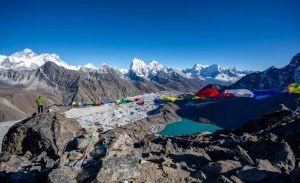
The Gokyo Lake Trek reaches the world's highest freshwater lake system, 6 glacially formed lakes collectively designated the Gokyo Lakes, in the Khumbu region of northeastern Nepal. The lakes occupy elevations between 4,700 and 5,000 meters alongside the Ngozumpa Glacier, Nepal's longest glacier at 36 kilometers. The primary summit, Gokyo Ri (5,357 m), delivers what geographers classify as the only non-technical summit viewpoint in Nepal where 4 eight-thousanders are simultaneously visible.
What Makes the Gokyo Lakes So Famous?
The Gokyo Lakes are famous for 3 globally significant designations: Ramsar Wetland status under the Convention on Wetlands of International Importance, their position along the Ngozumpa Glacier's lateral moraine, and the mirror-surface reflection of Cho Oyu (8,201 m) on the 4th lake's surface on calm mornings. Ramsar designation, awarded in 2007, protects the 6-lake ecosystem's aquatic biodiversity, including bar-headed geese populations that use the lakes as a migration waypoint. At 4,700–5,000 meters elevation, the Gokyo Lakes represent the world's highest Ramsar-designated wetland system.
Why Should You Climb Gokyo Ri?
Gokyo Ri (5,357 m) delivers a 4-eight-thousander panorama, Everest (8,848 m), Lhotse (8,516 m), Makalu (8,485 m), and Cho Oyu (8,201 m), visible simultaneously from a single non-technical summit that trekkers reach via a 2-hour ascent from Gokyo village (4,790 m). No other non-technical summit in Nepal places trekkers within direct line-of-sight of 4 separate 8,000-meter peaks in a single compass sweep. The ascent from Gokyo village gains 567 meters on a steady scree slope, demanding but technically straightforward with prior acclimatization at Namche and Dole.
How Does the Gokyo Lake Trek Compare with Everest Base Camp?
The Gokyo Lake trek reaches a marginally lower maximum altitude (5,357 m on Gokyo Ri vs. 5,545 m on Kala Patthar for EBC), covers 20% fewer total kilometers (105 km vs. 130 km), and encounters 40% fewer trekkers on the trail during peak season. Gokyo is the superior route for trekkers prioritizing wilderness trail quality, panoramic summit views, and a glacial lake experience. The Cho La Pass (5,420 m) connection, a technical ice-section crossing available between October and November, links Gokyo directly to the EBC route for experienced trekkers planning an 18–21 day Khumbu combination circuit.
When Is the Best Time for the Gokyo Lake Trek?
The best time for the Gokyo Lake trek is October–November and April–May. October delivers the Khumbu region's clearest atmospheric conditions, with Everest's summit ridge and Cho Oyu's glaciated face visible without cloud interruption. The Cho La Pass, if included, is iciest and most dangerous between December and February. March offers reduced trail congestion relative to October, a meaningful advantage for trekkers who want the Ngozumpa Glacier perspective without peak-season teahouse queues.
How Can Nepal Intrepid Treks Help You Experience Nepal's Best Treks?
Nepal Intrepid Treks is a Kathmandu-based, government-licensed trekking company operating across all 9 trekking regions of Nepal. The company provides end-to-end trek management covering permit acquisition, NMA-certified guide assignment, porter welfare compliance, route-specific gear consultation, and acclimatization-adjusted itinerary planning for all 10 destinations covered in this guide.
Why Choose Nepal Intrepid Treks for Your Himalayan Adventure?
Nepal Intrepid Treks delivers 5 core operational advantages: government-licensed guiding teams trained by the Nepal Mountaineering Association (NMA), transparent itemized pricing with zero hidden surcharges, TIMS (Trekkers' Information Management System) card processing included in all packages, altitude sickness emergency protocols with helicopter evacuation coordination, and post-trek route feedback sessions with senior guides. All guides carry wilderness first aid certifications and satellite communication devices on restricted-area routes. The company maintains direct relationships with teahouse networks on all 10 listed routes, guaranteeing accommodation accuracy and meal confirmation during peak season, a service gap that self-booking trekkers routinely encounter.
Which Trekking Packages Does Nepal Intrepid Treks Offer?
Nepal Intrepid Treks offers packages across 4 trek duration categories: short treks (4–7 days: Poon Hill, lower Langtang Valley), classic treks (10–14 days: Everest Base Camp, Annapurna Base Camp), restricted area treks (14–21 days: Upper Mustang, Manaslu Circuit, Tsum Valley), and extended expedition-style treks (21–28 days: Kanchenjunga circuit, Manaslu-Tsum combination). Each package includes permit acquisition, government-certified guide, trained porter, teahouse or camping accommodation, airport transfers, and comprehensive pre-departure documentation. Group packages for 4 or more trekkers receive a 12% pricing reduction from the standard per-person rate.
How Can Nepal Intrepid Treks Customize Your Trekking Experience?
Nepal Intrepid Treks customizes trekking itineraries across 6 dimensions: route length, daily walking pace, accommodation grade, side-trip additions, cultural encounter scheduling, and return transportation preferences. Custom itineraries accommodate specific dietary restrictions, photography timing priorities (golden-hour summit positioning, peak reflection scheduling at glacial lakes), and medical acclimatization profiles for trekkers with prior health considerations. Trekkers with documented cardiovascular history, asthma, or prior knee injury receive modified route planning with lower daily elevation gain targets and pre-identified rest-day insertion points.
Contact Nepal Intrepid Treks to discuss your fitness level, target destination, and available dates. A 20-minute consultation with a senior route planner produces a personalized itinerary document with daily elevation profiles, teahouse confirmation status, total permit cost breakdown, and gear checklist for your specific route.
What Are the Key Takeaways About the Top 10 Trekking Destinations in Nepal?
Nepal's top 10 trekking destinations span 5 ecological zones, 9 trekking regions, and 6 distinct ethnic communities, from Sherpa and Gurung villages in the Khumbu and Annapurna to Lo-ba, Tsum, and Tamang communities in the restricted northern corridors. Each route combines a unique altitude range, cultural encounter profile, and logistical demand that makes direct comparison across all 10 impossible without matching each to a specific trekker profile.
The 4 decisive criteria for selecting your Nepal trek:
-
Altitude target: EBC (5,545 m) and Gokyo Ri (5,357 m) are Nepal's highest non-technical viewpoints; Poon Hill (3,210 m) and ABC (4,130 m) serve lower-altitude goals.
-
Available trekking days: Routes range from 4 days (Poon Hill) to 28 days (Kanchenjunga full circuit); your window eliminates options before fitness assessment begins.
-
Permit category: Upper Mustang, Manaslu, Tsum Valley, and Kanchenjunga require restricted area permits through a licensed agency. Due to nationwide regulations updated in 2023, routes like ABC, Langtang, and Poon Hill now legally require a government-licensed guide, effectively ending independent trekking in these conservation areas. The Everest regions (EBC, Gokyo) operate under distinct local municipal permits but strongly recommend guides for safety.
-
Prior experience level: Poon Hill and lower Langtang suit beginners; Kanchenjunga, Tsum Valley, and the Manaslu Circuit require verified experience above 4,500 meters.
Nepal's Himalayan trail network has no exact equivalent anywhere on Earth. The combination of 8,000-meter proximity, living Buddhist culture, and ecological diversity across a 700-kilometer arc of mountains creates trekking experiences that altitude records alone cannot capture. The right destination is the one that aligns your preparation with your ambition, and the right partner is the one who has walked every meter of trail before you.
Plan with expertise. Trek with confidence. Nepal Intrepid Treks builds your route from the first consultation to the final summit morning.