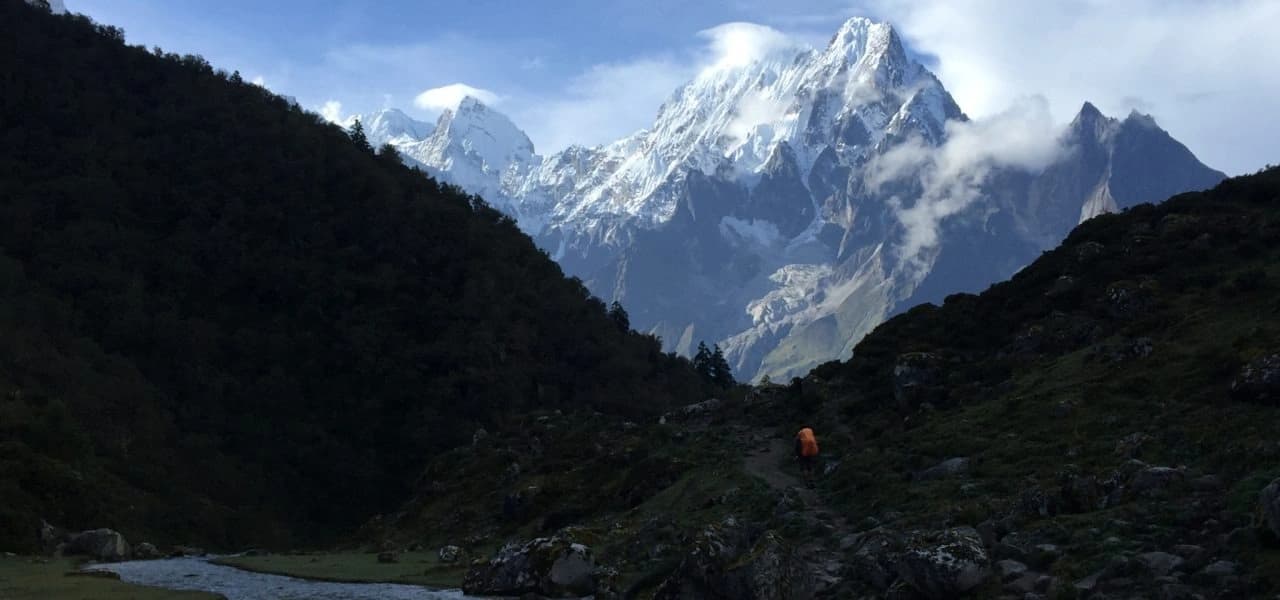
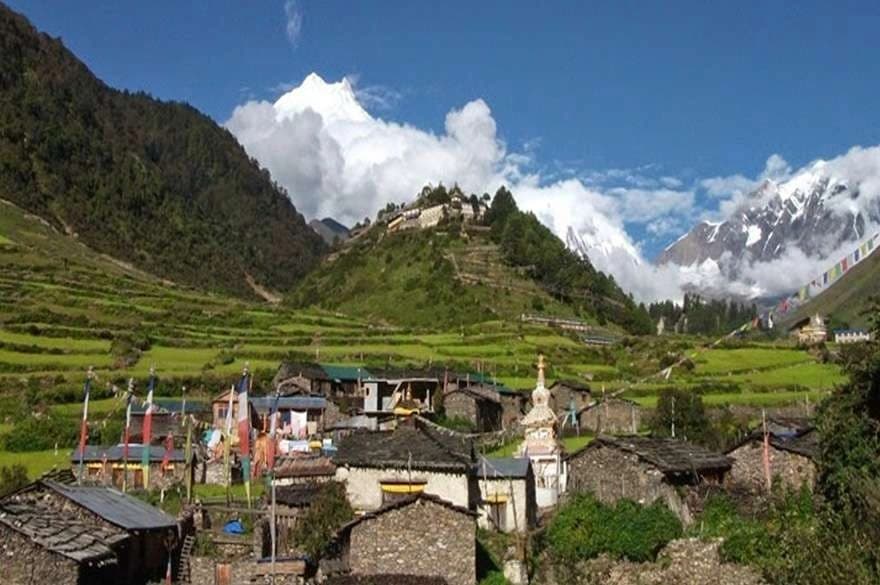
The Tsum Valley with Manaslu Trek is a 21-day Himalayan trekking adventure that combines the remote cultural landscape of Tsum Valley with the spectacular mountain scenery of the Manaslu Circuit. Organized by Nepal Intrepid Treks, this extended journey takes you through traditional Himalayan villages, ancient Buddhist monasteries, forested river valleys, high-altitude settlements, and rugged mountain terrain before crossing Larke La Pass at approximately 5,106 m.
Unlike the standard Manaslu Circuit Trek, which follows the main route around Mount Manaslu, this combined itinerary first explores Tsum Valley, a remote Himalayan region known for its Tibetan-influenced Buddhist traditions and distinctive village culture. The route enters the valley through Lokpa and continues toward Chumling, Chokhangparo, Nile, and Mu Gompa before returning toward the main Manaslu trail.
After exploring Tsum Valley, the trek continues through Deng, Namrung, Shyala, and Sama Gaon, where you have a scheduled exploration and acclimatization day. The journey then progresses toward Samdo and Dharamsala before the challenging crossing of Larke La Pass. From the pass, the trail descends toward Bhimtang and continues through Goa and Tilije before the return journey to Kathmandu.
This combined trekking package is particularly suitable for travellers who want more than a conventional mountain trek. It offers time to experience Tsum Valley's cultural heritage, explore remote settlements, observe traditional ways of life, and complete the high-altitude Manaslu Circuit within one coordinated itinerary.
The route is physically demanding and requires preparation for consecutive walking days, increasing elevation, basic teahouse accommodation, and variable mountain weather. With the main logistics arranged through Nepal Intrepid Treks, you can prepare for the journey with a clear itinerary, guided trekking support, planned accommodation, and the services specified in your confirmed package.
What Is the Tsum Valley with Manaslu Trek?
The Tsum Valley with Manaslu Trek combines two distinct trekking experiences in Nepal's Manaslu region.
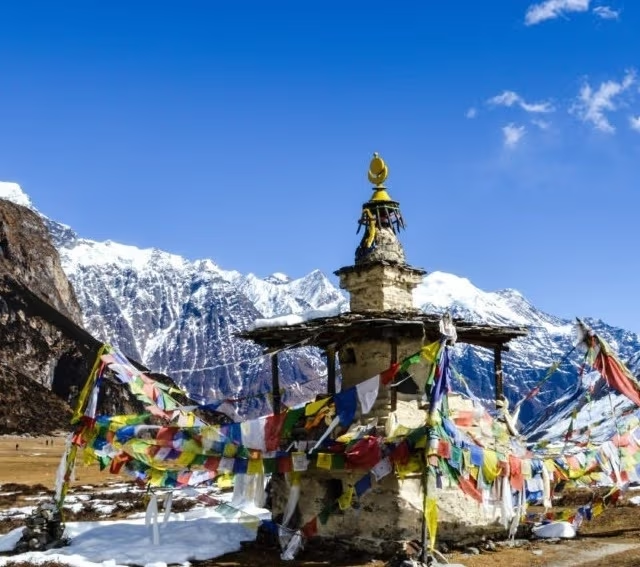
The first part explores Tsum Valley, sometimes referred to as the Hidden Valley of Happiness. The valley is known for its remote settlements, Tibetan-influenced culture, Buddhist monasteries, chortens, mani walls, prayer flags, and traditional stone houses. Its position away from Nepal's major urban centres has helped preserve distinctive cultural practices and a quieter mountain environment.
The Tsum Valley route branches away from the main Manaslu trail near Lokpa. From there, the journey enters a narrower mountain valley and continues through settlements such as Chumling and Chokhangparo before reaching Nile and Mu Gompa. The landscape becomes increasingly alpine as you progress, with mountain views, forested slopes, and high-altitude terrain shaping the walking experience.
After visiting Mu Gompa, the itinerary returns through the valley toward Chumling and reconnects with the main Manaslu route near Deng. The second part of the journey follows the Budhi Gandaki Valley toward Namrung, Shyala, and Sama Gaon, then continues to Samdo and Dharamsala.
The final major challenge is crossing Larke La Pass, the highest point of the itinerary at approximately 5,106 m. The pass connects the upper Manaslu region with the route toward Bhimtang, where the landscape changes as the trail descends toward lower elevations.
Combining these routes creates a longer journey that includes both cultural exploration and a demanding high-altitude crossing. Rather than visiting only the main circuit villages, you have additional time to explore the settlements and religious heritage of Tsum Valley before continuing around Mount Manaslu.
Tsum Valley with Manaslu Trek at a Glance
The following table summarizes the main details of the Nepal Intrepid Treks package.
Trekking detail | Information |
Trek name | Tsum Valley with Manaslu Trek |
Duration | 21 days |
Destination | Manaslu region, Nepal |
Starting point | Kathmandu |
Ending point | Kathmandu |
Maximum elevation | Approximately 5,106 m at Larke La Pass |
Main cultural region | Tsum Valley |
Major cultural destination | Mu Gompa |
Main mountain destination | Manaslu Circuit |
Highest trekking challenge | Crossing Larke La Pass |
Trekking difficulty | Challenging to strenuous |
Daily walking duration | Approximately 3–8 hours on many stages, with longer days possible |
Trekking style | Guided, teahouse-based trekking |
Accommodation | Hotel in Kathmandu and mountain teahouses |
Meals | Breakfast, lunch, and dinner during trekking, according to confirmed inclusions |
Transportation | Scheduled private ground transportation, according to the package |
Guide and porter support | Included according to the published package arrangements |
Permit arrangements | Manaslu and Tsum Valley restricted-area permits and other applicable permits |
Recommended seasons | Spring and autumn are generally preferred |
Suitable for | Physically prepared trekkers interested in culture, remote villages, and high-altitude landscapes |
The figures above provide a general overview of the package. Confirm the final itinerary, walking times, transportation details, group arrangements, permit requirements, and inclusions with Nepal Intrepid Treks before booking.
Why Choose the Combined Manaslu and Tsum Valley Trek?
The main advantage of this itinerary is the opportunity to explore two different parts of the Manaslu region during one extended trekking holiday.
The Tsum Valley section focuses on traditional settlements, Buddhist cultural landmarks, and the remote landscape leading toward Mu Gompa. The Manaslu Circuit section introduces a wider range of Himalayan terrain, including the upper Budhi Gandaki Valley, the villages around Sama Gaon and Samdo, and the crossing of Larke La Pass.
For travellers with sufficient time, combining the two routes can provide a broader understanding of the region than completing either trek alone.
Discover Tsum Valley's Distinctive Cultural Heritage
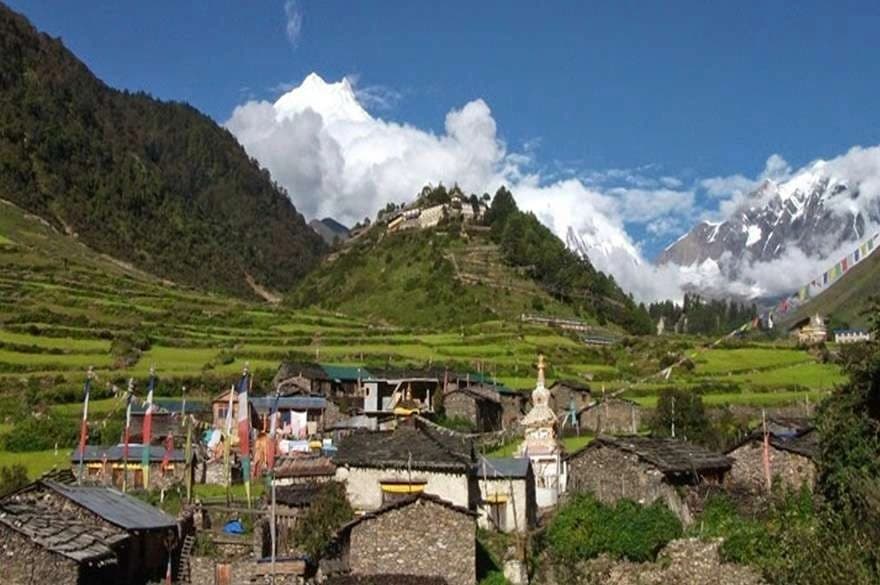
Tsum Valley is one of the major highlights of the combined itinerary. Its settlements are characterized by traditional stone houses, agricultural terraces, Buddhist landmarks, and Tibetan-influenced customs.
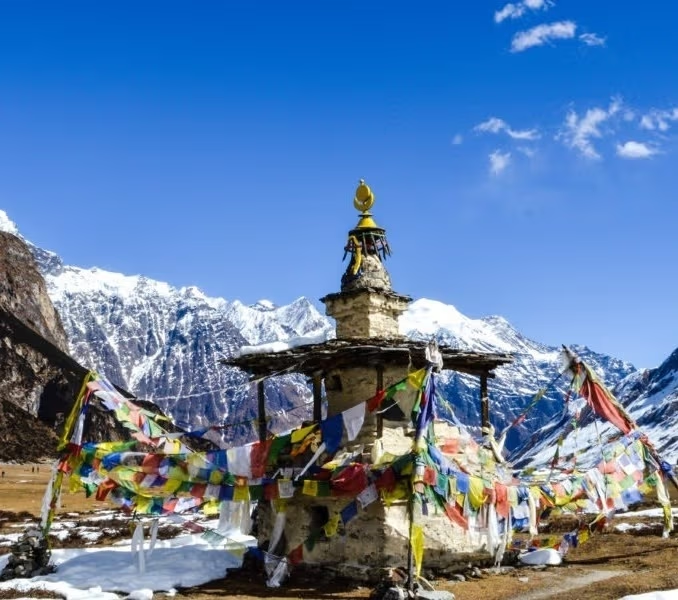
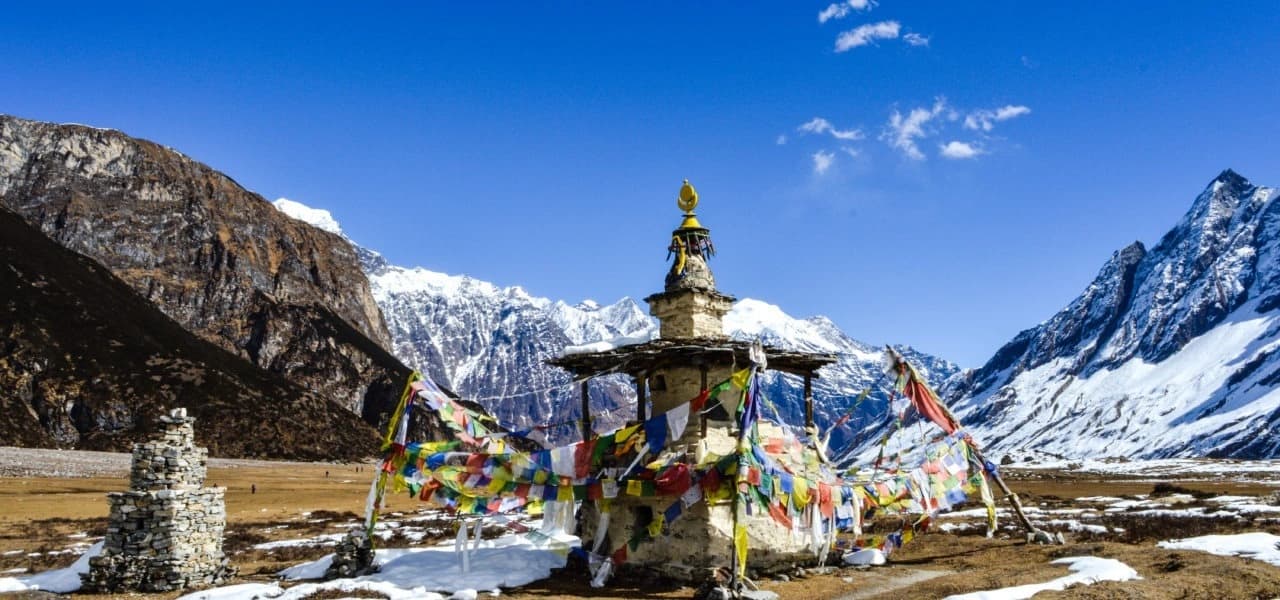
As you walk through Chumling, Chokhangparo, and Nile, the cultural character of the valley becomes increasingly apparent. Prayer flags, chortens, mani walls, and monasteries are part of the surrounding landscape and reflect the importance of Buddhist traditions in local life.
The journey toward Mu Gompa provides further opportunities to experience the high-altitude environment and cultural heritage of the upper valley. The monastery is one of the principal destinations of the Tsum Valley section and an important reason many trekkers choose the combined route.
Cultural experiences depend on local access, the itinerary, and the availability of opportunities to visit religious sites. Visitors should follow local customs, ask permission before photographing people, and respect monastery rules and community practices.
Experience the Main Manaslu Circuit
After returning from Tsum Valley, the route continues around the Manaslu region through a changing sequence of villages and landscapes.
The trail passes through Deng and Namrung before reaching Shyala and Sama Gaon. These settlements introduce trekkers to the upper Manaslu environment, where views of surrounding mountains become more prominent and the effects of increasing altitude become more noticeable.
Sama Gaon is a particularly important stop because it provides a scheduled day for exploration and acclimatization. From here, suitable activities may include exploring the village or undertaking an optional walk, depending on your condition, weather, and the guide's assessment.
The route then continues toward Samdo and Dharamsala, preparing you for the crossing of Larke La Pass.
Cross Larke La Pass at 5,106 m
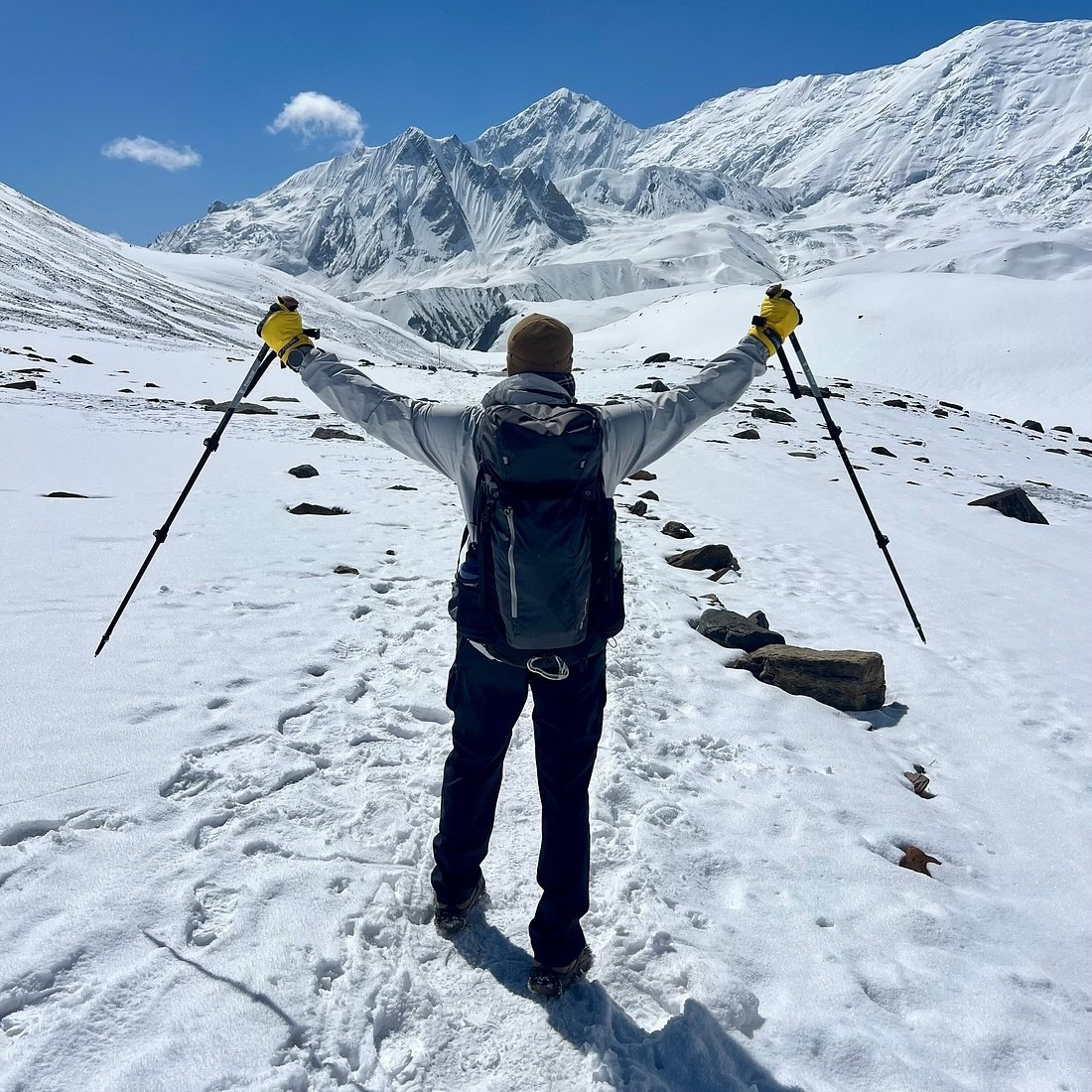
The crossing of Larke La Pass at approximately 5,106 m is the defining physical challenge of the combined trek. The day involves an early start from Dharamsala, a sustained ascent at high altitude, and a long descent toward Bhimtang.
The conditions can be cold and exposed, particularly before sunrise. Snow, ice, wind, visibility, and the physical condition of the group can influence the crossing and walking duration.
Although the route is generally approached as a trekking pass rather than a technical climbing objective under suitable conditions, it should not be underestimated. Good preparation, appropriate clothing, suitable footwear, gradual acclimatization, and the guidance of an experienced trekking professional are essential.
The crossing is subject to current trail and weather conditions. The guide may recommend adjusting the schedule when continuing would be unsafe.
Overview of the 21-Day Trekking Journey
The 21-day itinerary is designed to connect Tsum Valley with the main Manaslu Circuit, including the scheduled acclimatization day and return transportation to Kathmandu.
The route starts with preparation in Kathmandu and a road journey to Machha Khola. From there, trekking follows the Budhi Gandaki Valley toward Jagat and Chiso Pani before entering Tsum Valley.
The trail continues through Chumling and Chokhangparo toward Nile and Mu Gompa. After visiting the upper valley, the itinerary returns toward Chumling and reconnects with the main Manaslu route near Deng.
The journey then progresses through Namrung and Shyala to Sama Gaon. The scheduled exploration day provides time to rest and adjust before continuing through Samdo to Dharamsala.
The high-altitude crossing of Larke La Pass follows, with the route descending toward Bhimtang before continuing to Goa and Tilije. The final planned travel arrangements return you to Kathmandu for departure.
Trekking phase | Main destinations | Primary experience |
Arrival and preparation | Kathmandu | Hotel transfer, sightseeing, and trekking preparation |
Initial approach | Machha Khola, Jagat, Chiso Pani | River valleys, suspension bridges, and traditional settlements |
Entry into Tsum Valley | Chumling, Chokhangparo | Remote villages, cultural landmarks, and mountain terrain |
Upper Tsum Valley | Nile, Mu Gompa | High-altitude landscapes and Buddhist heritage |
Return to the main route | Chumling, Deng, Namrung | Forested trails and traditional Himalayan settlements |
Upper Manaslu region | Shyala, Sama Gaon | Mountain scenery and acclimatization |
Approach to the pass | Samdo, Dharamsala | High-altitude walking and preparation for Larke La |
Pass crossing | Larke La Pass, Bhimtang | The highest trekking point and a demanding descent |
Return journey | Goa, Tilije, Kathmandu | Descending landscapes and transportation back to the city |
Walking durations and route details depend on the confirmed itinerary. The combined journey includes some long stages, particularly when returning from the upper Tsum Valley, so the complete route should be reviewed carefully before booking.
What Makes Tsum Valley Special?
Tsum Valley is not simply an additional group of villages on the way around Manaslu. It provides a distinct cultural and geographical experience that changes the focus of the first part of the trek.
The valley is known for its Tibetan-influenced Buddhist heritage, traditional settlements, and remote mountain setting. Its cultural landmarks include monasteries, chortens, mani walls, and prayer flags, while its villages reflect ways of life shaped by the surrounding terrain and agricultural conditions.
The journey offers opportunities to observe these features while walking between settlements. It is not a guaranteed cultural performance or organized encounter at every stop, but rather an opportunity to experience a traditional mountain region respectfully.
The upper section toward Nile and Mu Gompa also introduces trekkers to a more alpine environment. The scenery changes as the route climbs, with wider mountain views and fewer of the comforts associated with lower villages.
Adding Tsum Valley before completing the main Manaslu Circuit allows travellers to experience both the valley's cultural landscape and the higher mountain terrain around Larke La Pass within one itinerary.
What to Expect From the Manaslu Circuit Section
The second main part of the journey follows the Manaslu Circuit through a series of villages, gradually increasing elevations, and changing landscapes.
After leaving the Tsum Valley route and returning toward Deng, the trek continues through the Budhi Gandaki corridor and reaches Namrung. The landscape becomes increasingly mountainous as the itinerary progresses toward Shyala and Sama Gaon.
At Sama Gaon, you have time to rest and undertake appropriate local exploration before moving farther into the upper valley. The route continues through Samdo to Dharamsala, where basic accommodation and colder conditions are part of the experience.
The following day is dedicated to crossing Larke La Pass and descending toward Bhimtang. This stage requires more preparation than a typical walking day because of its elevation, duration, and exposure to changing weather.
After the pass, the route descends toward Goa and Tilije, completing the main walking portion before the return journey to Kathmandu.
The Manaslu Circuit therefore adds a significant high-altitude trekking challenge to the cultural exploration of Tsum Valley. Travellers should prepare for the complete journey rather than assessing the route only on the basis of its most famous highlights.
Accommodation and Meals During the Trek
The published package includes hotel accommodation in Kathmandu and the best available twin-sharing teahouse or lodge accommodation during the trekking stages. The precise arrangements should be confirmed in your final booking.
Mountain teahouses are generally simple and practical, providing a place to sleep, eat, and rest between walking days. Facilities vary by settlement, and accommodation becomes more basic in the upper valley and around Dharamsala.
The package lists breakfast, lunch, and dinner during the trekking period, with the specified tea allowance and seasonal fruit according to the published inclusions. Meals generally consist of traditional Nepali dishes and simple foods available locally.
Food choices and facilities may be more limited around remote settlements, so travellers should not expect extensive menus or hotel-style amenities throughout the route. Extra drinks, bottled water, personal snacks, Wi-Fi, charging, and other personal purchases may involve additional costs.
If you have dietary restrictions, communicate them before departure. Remote teahouses may have limited ingredients and preparation facilities, so specific meals cannot always be guaranteed.
Difficulty and Preparation for the Combined Trek
The Tsum Valley with Manaslu Trek is best suited to travellers who are physically prepared for a long trekking holiday and comfortable with basic mountain accommodation.
The full itinerary involves repeated walking days, uneven trails, sustained ascents and descents, and a high-altitude pass crossing. The return from Mu Gompa toward Chumling is a substantial stage in the published itinerary, while the Larke La crossing is demanding because of the high elevation and long descent.
Previous multi-day hiking experience is useful, although a fit beginner may be able to complete the trek after appropriate preparation. Training should include regular walking, uphill hiking, stair climbing, and longer practice hikes before departure.
Altitude adaptation is equally important. The scheduled acclimatization day in Sama Gaon provides time for adjustment, but it does not eliminate the possibility of altitude sickness.
Travellers should seek individualized medical advice before departure if they have relevant health concerns, and they should report symptoms promptly during the trek. The route should be approached with realistic expectations and flexibility rather than a commitment to complete every stage regardless of conditions.
Who Should Consider This Trek?
The combined Manaslu and Tsum Valley route is particularly appropriate for travellers who have enough time for a 21-day itinerary and want to experience both cultural exploration and high-altitude trekking.
It may suit experienced hikers, physically prepared beginners, couples, friends, and solo travellers using the required guided arrangements. The route is especially appealing to visitors interested in traditional settlements, Buddhist cultural sites, mountain landscapes, and a longer journey away from the busiest trekking corridors.
However, the trip may not suit travellers seeking luxury accommodation throughout, an easy walking holiday, or dependable mobile connectivity in every village. The remoteness of the region requires flexibility and acceptance of basic facilities.
Travellers with limited preparation or very restricted holiday dates should discuss their circumstances before booking. A suitable itinerary must account for the full route, the Larke La crossing, and the possibility of delays.
Why Book the Combined Trek as One Package?
Organizing the Tsum Valley and Manaslu Circuit as one package allows the two trekking sections to be planned around a coordinated itinerary.
The journey requires appropriate restricted-area permit arrangements, accommodation across multiple settlements, guide and porter support, meal arrangements, and road transportation at the beginning and end of the trek. These elements are easier to review when the route and inclusions are confirmed together.
The published Nepal Intrepid Treks package includes the main services listed in its current inclusions, including specified transportation, Kathmandu accommodation and sightseeing, mountain accommodation, trekking meals, guide and porter support, selected equipment, and permit arrangements. Confirm the complete list before making a payment.
This does not mean every expense is included. International airfare, travel insurance, Nepal visa fees, tips, drinks, personal purchases, and other exclusions remain the traveller's responsibility unless explicitly stated otherwise.
Before booking, request a written quotation covering the full 21-day itinerary, group arrangements, included permits, payment conditions, and any optional extensions or additional services.
Plan Your Tsum Valley with Manaslu Trek
The 21-day Tsum Valley with Manaslu Trek offers a combined journey through the culturally distinctive Tsum Valley and the high-altitude landscapes of the Manaslu Circuit. From traditional villages and Buddhist monasteries to Sama Gaon, Samdo, and the crossing of Larke La Pass, the route brings together cultural discovery and sustained Himalayan trekking.
With Nepal Intrepid Treks, you can review the standard itinerary and confirm the services required for your trip before departure. The right preparation includes understanding the trekking difficulty, checking the current permit requirements, arranging high-altitude travel insurance, and allowing enough time for possible weather or transportation disruptions.
Before confirming your booking, review the detailed day-by-day itinerary, package price, accommodation, meal arrangements, guide and porter services, inclusions, exclusions, and applicable booking terms.
Request a quotation for the Tsum Valley with Manaslu Trek from Nepal Intrepid Treks with your preferred travel dates, group size, and any specific requirements. A confirmed itinerary and clear package details will help you prepare for this extended Himalayan journey with realistic expectations about the route, facilities, cost, and physical demands.
Tsum Valley with Manaslu Trek Highlights
The Tsum Valley with Manaslu Trek combines the cultural richness of a remote Himalayan valley with the mountain scenery and high-altitude challenges of the Manaslu Circuit. This 21-day trekking package with Nepal Intrepid Treks takes you through traditional settlements, Buddhist monasteries, forested river valleys, high-altitude villages, and the demanding crossing of Larke La Pass at approximately 5,106 m.
The journey begins in Kathmandu and continues by road toward Machha Khola before following the Budhi Gandaki Valley. From the main trekking corridor, the route enters Tsum Valley, where traditional settlements such as Chumling, Chokhangparo, and Nile introduce you to the region's distinctive cultural landscape. The journey continues toward Mu Gompa before returning to the main Manaslu route.
The second part of the trek passes through Deng, Namrung, Shyala, and Sama Gaon before continuing to Samdo and Dharamsala. After the high-altitude crossing of Larke La Pass, the route descends toward Bhimtang and continues through the lower mountain settlements before the scheduled return to Kathmandu.
Combining these two trekking experiences gives you more time to explore the region's cultural heritage while retaining the challenge of a classic Himalayan circuit. The extended itinerary is particularly suitable for travellers who have enough time to experience both remote village life and the changing landscapes of the Nepal Himalayas.
Explore the Remote and Culturally Distinctive Tsum Valley
Tsum Valley is one of the principal reasons to choose this combined trekking package instead of the standard Manaslu Circuit. Located within the broader Manaslu region, the valley is known for its traditional settlements, Buddhist heritage, Tibetan-influenced customs, and remote mountain environment.
The trail branches away from the main Manaslu route and leads into a valley where village life, agricultural land, monasteries, and mountain scenery shape the trekking experience. As you progress through the lower and upper settlements, the landscape gradually changes from forested slopes and cultivated terraces to more open alpine terrain.
The cultural environment is an important part of the journey. Stone-built houses, prayer flags, chortens, mani walls, and religious landmarks appear along the route, reflecting longstanding Buddhist traditions and local ways of life.
Tsum Valley also provides opportunities to observe how communities maintain their daily routines in a geographically remote setting. Farming, animal husbandry, traditional architecture, and religious practices are part of the wider cultural landscape, although individual experiences and interactions depend on local circumstances.
For travellers interested in more than mountain views, this section adds depth to the overall trek. It provides time to explore a distinct Himalayan valley before returning to the main route around Mount Manaslu.
Visit Mu Gompa in the Upper Tsum Valley
Mu Gompa is one of the principal cultural destinations of the Tsum Valley section. Situated at approximately 3,700 m, this high-altitude monastery area lies near the upper end of the valley and provides a destination beyond the main village trail.
Reaching Mu Gompa takes you farther into the mountain environment, where the settlements become more remote and the surrounding landscape increasingly alpine. The walk introduces a quieter side of the Himalayas, with open mountain views, rugged terrain, and a stronger sense of distance from the lower valley communities.
The monastery is important to the region's Buddhist heritage and attracts travellers interested in traditional religious sites as well as mountain scenery. A visit may provide an opportunity to observe the setting and architecture of the monastery, subject to local access, religious activities, and the arrangements permitted on the day.
The route toward Mu Gompa requires appropriate preparation because of its elevation and the walking involved. Conditions may differ according to season, and accommodation in the upper valley is generally basic. The final itinerary should confirm whether the visit includes an overnight stay in the Mu Gompa area or a return to a lower village.
For the combined Tsum Valley with Manaslu Trek, Mu Gompa represents the transition from village-based cultural exploration to the remote upper reaches of the valley.
Experience Traditional Villages Along the Tsum Valley Route
The Tsum Valley section takes you through several settlements that contribute to the region's cultural and geographical character. Each village forms part of the walking route and provides a different perspective on life in the upper Budhi Gandaki region.
Chumling
Chumling is one of the first significant settlements encountered after entering Tsum Valley. Traditional houses, cultivated land, village paths, and surrounding hillsides form part of the landscape.
The village offers an introduction to the local environment before the route climbs toward higher settlements. Depending on the itinerary and available time, there may be opportunities to explore local cultural landmarks and observe the architectural features of the village.
Chokhangparo
Chokhangparo, also written as Chhokangparo, is an important settlement in the upper Tsum Valley. The village lies in a broader landscape of cultivated fields, traditional houses, and mountain surroundings.
As the trail gains elevation, the scenery and settlement patterns change, creating a stronger sense of the valley's remote Himalayan character. The walk toward Chokhangparo also introduces trekkers to the effects of increasing altitude, making a steady pace and sufficient hydration important.
Nile
Nile is one of the upper settlements on the route toward Mu Gompa. Its high-altitude setting places it closer to the remote upper valley landscape and the religious destinations beyond the village.
The surrounding terrain is more open than in some lower sections, and temperatures can be colder, particularly in the morning and evening. Accommodation and food options are generally simpler than those available in larger trekking settlements.
Spending time in these villages helps make the Tsum Valley section more than a journey between overnight stops. It gives trekkers opportunities to appreciate traditional settlement patterns, cultural landmarks, and the gradual transformation of the mountain landscape.
Discover Buddhist Monasteries and Sacred Landmarks
Buddhist cultural landmarks are among the defining features of the combined Manaslu and Tsum Valley trekking experience. Throughout the region, monasteries, chortens, prayer flags, and mani walls reflect the importance of Buddhist traditions in local life.
Mu Gompa is a principal destination in the upper Tsum Valley, while Rachen Gompa is another important monastic site associated with the valley. Depending on the final itinerary and available time, visits to these and other cultural landmarks may be possible.
Along the walking route, you may encounter stone structures, carved mani stones, and prayer flags positioned near village paths, bridges, and mountain trails. These features are part of the living religious landscape and should be approached with respect.
When visiting monasteries, follow local instructions regarding photography, access to buildings, religious activities, and appropriate behaviour. Some areas may not be open to visitors at all times, and the availability of a visit should never be assumed without confirmation.
The cultural value of these landmarks lies not only in their appearance but also in their place within local traditions. Travelling with a knowledgeable guide can help you understand their significance while ensuring that visits remain respectful and compatible with community practices.
Follow the Budhi Gandaki Valley Through Dramatic Mountain Landscapes
The journey into Tsum Valley begins along the broader Budhi Gandaki trekking corridor. The trail passes through river valleys, forested slopes, cultivated land, suspension bridges, and traditional settlements before entering the more remote valley.
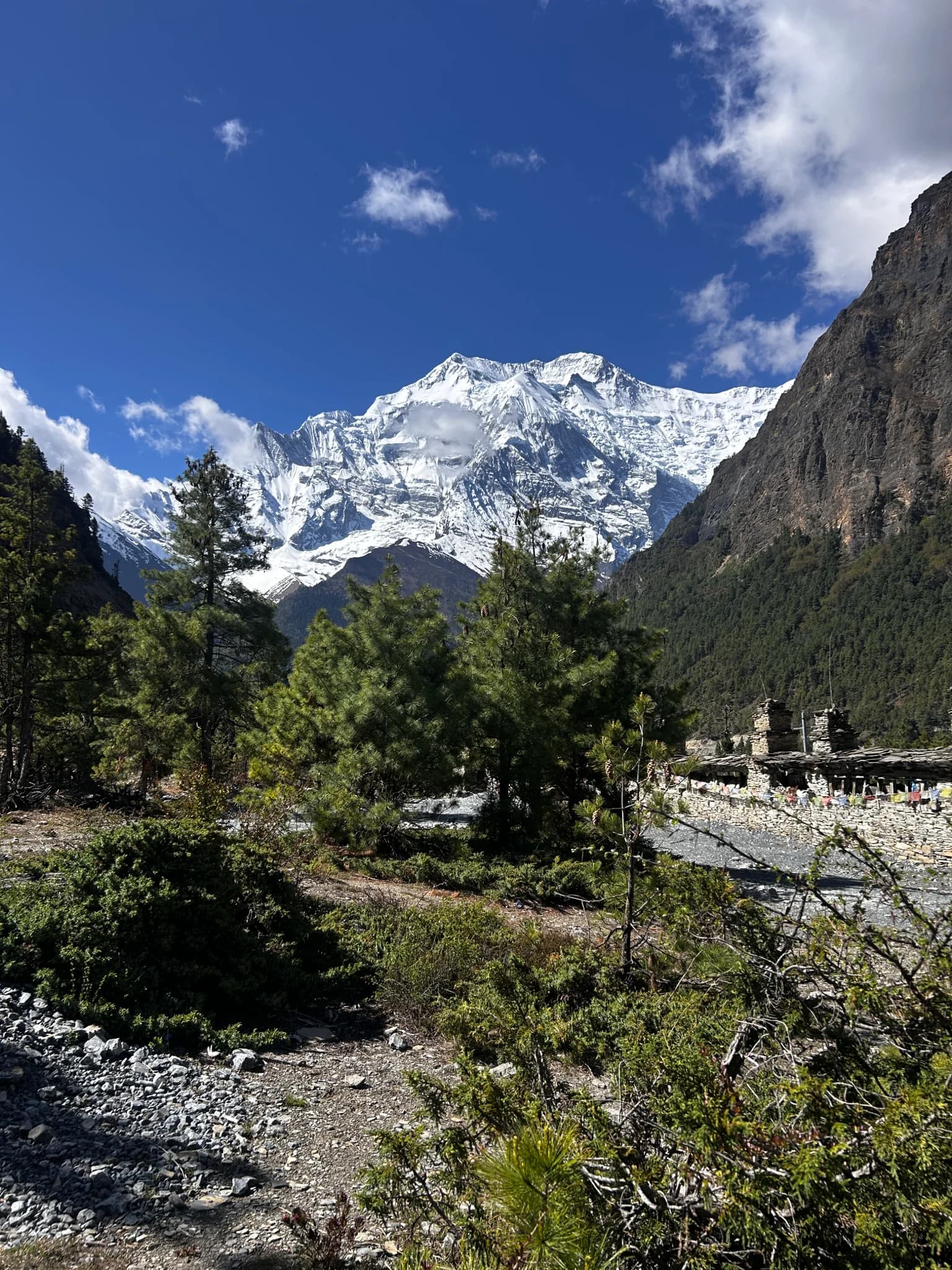
Lower sections are generally greener, with flowing rivers, terraced hillsides, and vegetation along the trail. As the route climbs, the terrain becomes more rugged, the villages are farther apart, and the surrounding mountain landscapes take on a more prominent role.
The walking experience is varied rather than uniformly uphill or flat. You may encounter stone steps, steep sections, uneven paths, and bridges, requiring suitable footwear and careful attention to the trail.
The river corridor also helps connect the cultural and geographical experiences of the journey. Trekkers move through villages where daily life remains closely connected to the surrounding landscape, then continue into areas where elevation and limited access influence the pace of travel.
For travellers who enjoy changing environments, this progression makes the combined route especially engaging. The first part leads into Tsum Valley's cultural setting, while the second part continues toward the high-altitude landscape of the main Manaslu Circuit.
Experience the Upper Manaslu Region and Its Traditional Settlements
After returning from Tsum Valley, the trek reconnects with the main Manaslu route and continues through villages such as Deng, Namrung, Shyala, and Sama Gaon.
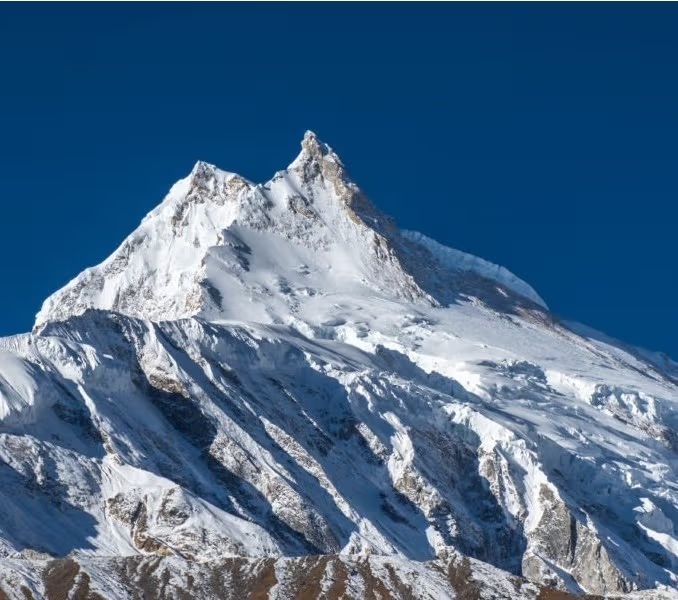
These settlements introduce you to another aspect of the region. The terrain becomes increasingly mountainous, the views expand toward the surrounding peaks, and Tibetan-influenced cultural features become more prominent in the upper villages.
The route passes through landscapes shaped by altitude, local settlement patterns, and the transition from forested valleys toward alpine terrain. Walking between villages provides opportunities to observe traditional houses, cultivated land where present, and the religious landmarks that form part of the local environment.
Namrung and Shyala are important stages on the approach to Sama Gaon. Their surroundings provide increasingly dramatic mountain scenery, although visibility depends on weather and seasonal conditions.
This part of the journey also marks the transition toward the more physically demanding stages of the circuit. As sleeping elevations rise, trekkers need to pay greater attention to pace, hydration, rest, and symptoms that may indicate altitude illness.
The combination of cultural villages and high-mountain scenery makes the main Manaslu section a fitting counterpart to the earlier exploration of Tsum Valley.
Enjoy the Scheduled Exploration and Acclimatization Day in Sama Gaon
Sama Gaon, at approximately 3,530 m, is one of the most important overnight destinations on the Manaslu Circuit. The scheduled exploration and acclimatization day gives trekkers time to rest, adjust to the elevation, and experience the village before continuing toward Samdo and Dharamsala.
The village is surrounded by an impressive mountain landscape and provides opportunities to observe local architecture, Buddhist cultural landmarks, and everyday life in the upper Manaslu region.
Depending on your physical condition, available time, weather, and the guide's assessment, you may choose a gentle village walk or an appropriate optional excursion. Birendra Tal, Pungyen Gompa, and a walk toward Manaslu Base Camp are possible activities to discuss when planning the trip, but their suitability and inclusion should be confirmed separately.
An acclimatization day should not automatically become a demanding hiking day. Some trekkers may benefit more from a gentle walk and sufficient rest than from a long excursion at higher elevations.
The purpose of the scheduled day is to provide time for adjustment before the route continues upward. It does not eliminate altitude-related risks, and anyone experiencing concerning symptoms should inform the guide immediately.
For the combined trek, Sama Gaon is both a cultural destination and a practical preparation point before entering the highest part of the Manaslu Circuit.
Admire the Mountain Scenery Around Samdo
Samdo is a high-altitude settlement at approximately 3,860 m, situated on the route toward Dharamsala and Larke La Pass. The village forms an important stage between Sama Gaon and the overnight stop before the pass crossing.
The journey toward Samdo follows a changing landscape, with the forested valleys of the lower route giving way to more open terrain and broad mountain views. The village environment reflects the challenges of living at elevation, where weather, access, and the availability of supplies can shape daily life.
Samdo offers an opportunity to rest before the next stage while becoming familiar with the high-altitude conditions of the upper Manaslu region. Walking may feel more strenuous here than it did in lower villages, making a steady pace and adequate hydration particularly important.
Depending on the itinerary, weather, and physical condition of the group, a local walk may be possible. Such excursions should be chosen carefully because nearby viewpoints can involve additional elevation gain and may increase fatigue before the Larke La crossing.
The planned overnight stay in Samdo helps break up the approach to the high pass, creating a more structured progression through the upper valley.
Prepare for the Remote Overnight Stay at Dharamsala
Dharamsala, also known as Larke Phedi, lies at approximately 4,460 m and serves as the staging point before the crossing of Larke La Pass.
The accommodation here is generally basic, with more limited facilities than those in lower trekking villages. Temperatures can be low, especially at night and before sunrise, while the exposed setting requires preparation for changing weather.
Arriving at Dharamsala marks the transition into the most demanding stage of the itinerary. The following day's crossing normally begins early and involves a sustained climb, the pass itself, and a long descent toward Bhimtang.
Trekkers should use the evening to organize their daypacks, prepare warm clothing, check headlamps and essential equipment, and confirm the departure time with the guide. Water, snacks, gloves, waterproof layers, and personal medication should be accessible.
Facilities for hot showers, charging, and reliable internet may be limited or unavailable, so it is important to prepare before reaching this point.
The overnight stay is a key logistical part of the Manaslu Circuit. Its purpose is to position the group for the crossing while allowing the guide to consider the current weather, trail conditions, and readiness of the trekkers.
Cross Larke La Pass at Approximately 5,106 m
Crossing Larke La Pass at approximately 5,106 m is the highest and most physically demanding highlight of the combined trek. After exploring Tsum Valley and completing the approach through the Manaslu region, this stage provides the defining high-altitude challenge of the journey.
The day generally begins before sunrise from Dharamsala. Trekkers follow the trail upward through high-altitude terrain before reaching the pass and beginning the descent toward Bhimtang.
The ascent can feel slow because of the reduced availability of oxygen at this elevation. Cold temperatures, wind, snow, ice, or poor visibility may increase the difficulty, depending on the season and recent weather.
The pass can offer expansive mountain views in favourable conditions, and its elevation makes it a significant milestone for trekkers. However, the descent after the pass is also physically demanding and should not be underestimated.
The route continues downward toward Bhimtang, at approximately 3,710 m, over uneven terrain. Trekking poles may help with balance and controlled movement, while suitable footwear and steady pacing are essential.
The crossing should only proceed when conditions and the group's physical state make it appropriate. A planned departure time cannot override a safety assessment, and delays may be necessary if the weather or trail is unsuitable.
Enjoy the Dramatic Descent Toward Bhimtang
After crossing Larke La Pass, the route descends toward Bhimtang, marking a significant change in elevation and landscape.
The descent is a major part of the day's effort. By the time you reach the pass, you will already have completed several hours of high-altitude walking, and your legs may be tired from the climb.
The trail passes through rugged mountain terrain, with views that can include surrounding peaks and glacial landscapes when visibility is favourable. As you lose elevation, the environment gradually changes toward the valley around Bhimtang.
Careful footing is important, particularly on loose, rocky, snowy, or slippery sections. Move at a controlled pace and avoid rushing downhill simply because the highest point has been reached.
Bhimtang provides a place to recover after the demanding crossing. Once you arrive, you can settle into the available accommodation, eat, and prepare for the next stage toward Goa and Tilije.
For many trekkers, the transition from the exposed high pass to the Bhimtang valley is one of the most memorable parts of the Manaslu Circuit section.
Observe the Changing Landscapes of the Combined Route
The combined Tsum Valley with Manaslu Trek offers a varied progression through different Himalayan environments. This diversity is one of its principal attractions for travellers who enjoy multi-day walking and changing scenery.
The journey begins in the warmer lower valleys, where rivers, forested hillsides, cultivated land, and village settlements dominate the landscape. Entering Tsum Valley introduces narrower mountain terrain, traditional settlements, and cultural landmarks.
The upper Tsum Valley provides a more open alpine setting around Nile and Mu Gompa. After the return to the main trail, the Manaslu Circuit continues toward Sama Gaon and Samdo, where the effects of altitude become more noticeable and the surrounding mountains occupy a greater part of the view.
The landscape changes again on the approach to Larke La Pass and the descent toward Bhimtang. The contrast between the remote upper valley, exposed high-altitude terrain, and lower mountain forests gives the combined route a strong sense of progression.
Weather and visibility influence what you see on any given day, so particular views cannot be guaranteed. Nevertheless, the route offers varied opportunities to appreciate the relationship between mountain geography, village settlements, and local culture.
Experience a Longer Himalayan Journey With Time for Cultural Exploration
The 21-day itinerary is designed for travellers who want to explore both Tsum Valley and the main Manaslu Circuit within a single trekking holiday.
The additional days create time for the route into the upper Tsum Valley, a visit to Mu Gompa, the return toward the main Manaslu trail, and the subsequent approach to Larke La Pass.
This longer structure allows you to experience different cultural and geographical settings rather than concentrating exclusively on the pass crossing. It also requires a greater overall commitment than the standard Manaslu Circuit, with more consecutive days on the trail and additional nights in basic mountain accommodation.
The extra time should not be interpreted as permission to rush the route or add every possible excursion. Walking stages, rest needs, weather, and altitude must still be considered when deciding how to use the available days.
If you want to explore additional sites around Tsum Valley or Sama Gaon, discuss them before booking. The trekking team can assess whether the requested excursions are practical within the proposed schedule and explain any changes in costs or services.
Explore an Extended Route Through Two Distinct Cultural Landscapes
The combined journey creates a broader experience of the Manaslu region by linking the cultural environment of Tsum Valley with the settlements and mountain terrain of the main circuit.
In Tsum Valley, visitors encounter traditional villages, Buddhist monasteries, and a landscape where cultural practices remain closely connected to local communities. The later Manaslu section offers a different sequence of settlements and views as the trail climbs toward Sama Gaon, Samdo, and Larke La Pass.
This contrast is a major reason to select the combined package. Travellers can explore traditional village life and religious landmarks before continuing into the high-altitude environment of the main circuit.
The experience is best approached with curiosity and respect. Local settlements are living communities, not simply sightseeing locations, and access to cultural sites depends on local conditions and customs.
Allow time to observe your surroundings, follow your guide's advice, and engage with local people respectfully. Avoid assuming that every village will provide the same facilities or that a specific cultural encounter will be available on a particular day.
Benefit From a Planned Acclimatization Schedule and Professional Trekking Support
The combined route requires coordination across two trekking sections with different daily stages and accommodation locations. The standard itinerary includes a scheduled acclimatization day in Sama Gaon and an overnight stay in Dharamsala before the pass crossing.
These arrangements provide a structured progression toward the highest point of the trek. However, acclimatization is not guaranteed simply by following a timetable, and individual responses to altitude vary.
Nepal Intrepid Treks arranges the guide and porter support specified in the package. The guide coordinates the daily walking plan, helps manage practical arrangements, and communicates changes when weather, trail conditions, or the group's condition affects progress.
Travellers should still take responsibility for their personal preparation, including suitable clothing, footwear, prescribed medication, and insurance. Report concerning symptoms promptly, follow the guide's instructions, and accept itinerary changes when needed to protect safety.
A coordinated package provides the framework for the journey, while sound decisions and realistic expectations remain essential throughout the trek.
Main Highlights of the 21-Day Combined Trek
Highlight | What makes it significant |
Tsum Valley | A remote Himalayan valley known for traditional settlements and Tibetan-influenced Buddhist culture |
Chumling | One of the principal villages encountered after entering Tsum Valley |
Chokhangparo | An upper-valley settlement surrounded by traditional houses, cultivated land, and mountain terrain |
Nile | A high-altitude village on the route toward Mu Gompa |
Mu Gompa | A key cultural and geographical destination in the upper Tsum Valley |
Buddhist landmarks | Monasteries, chortens, mani walls, and prayer flags along the route |
Budhi Gandaki Valley | A scenic trekking corridor through river valleys, forested slopes, and village settlements |
Namrung and Shyala | Important stages on the approach to the upper Manaslu region |
Sama Gaon | A major mountain village with a scheduled exploration and acclimatization day |
Samdo | A high-altitude settlement on the approach to Dharamsala |
Dharamsala | The overnight staging point before crossing Larke La Pass |
Larke La Pass | The highest point of the itinerary at approximately 5,106 m |
Bhimtang | A mountain valley reached after the pass crossing, providing a contrast with the exposed high-altitude terrain |
Extended trekking experience | A longer journey combining cultural exploration, village life, and challenging mountain terrain |
The exact availability of optional excursions and cultural visits depends on the confirmed itinerary, local access, weather, and the group's condition.
Make the Most of the Tsum Valley with Manaslu Trek
The Tsum Valley with Manaslu Trek with Nepal Intrepid Treks combines the traditional villages and Buddhist heritage of Tsum Valley with the mountain scenery, remote settlements, and demanding pass crossing of the main Manaslu Circuit.
The route offers an opportunity to visit Mu Gompa, explore villages such as Chumling and Chokhangparo, spend time in Sama Gaon, and cross Larke La Pass at approximately 5,106 m before descending toward Bhimtang.
The extended itinerary is most suitable for travellers who have sufficient time, prepare physically for consecutive walking days, and accept the basic facilities and variable conditions associated with remote Himalayan trekking.
Before booking, review the complete daily itinerary, package inclusions, required permits, accommodation, meal arrangements, and final cost. Confirm any optional excursions or additional days in writing, and allow flexibility for changes caused by weather, altitude, or road conditions.
Request a quotation from Nepal Intrepid Treks for the Tsum Valley with Manaslu Trek with your preferred dates, group size, and any specific requirements. A clearly confirmed itinerary will help you plan the cultural exploration, mountain trekking, and Larke La crossing as one coordinated Himalayan journey.
Why Choose Nepal Intrepid Treks for the Tsum Valley with Manaslu Trek?
Choosing the right trekking package for the Tsum Valley with Manaslu Trek involves more than comparing prices. This 21-day Himalayan journey combines two trekking regions with different cultural settings, restricted-area permit requirements, remote accommodation, and a demanding high-altitude crossing of Larke La Pass at approximately 5,106 m. A well-organized itinerary helps bring these arrangements together so you can concentrate on preparing for the trek and experiencing the landscapes and communities along the route.
Nepal Intrepid Treks offers the combined journey as a structured trekking package, with transportation, accommodation, meals, guide and porter support, and permit arrangements according to the confirmed inclusions. The itinerary connects Tsum Valley's traditional settlements and Buddhist heritage with the upper Manaslu region, Sama Gaon, Samdo, Dharamsala, and the trail across Larke La Pass toward Bhimtang.
The additional Tsum Valley section makes advance planning particularly important. The route branches away from the main Manaslu trail, travels toward Nile and Mu Gompa, and returns to the main circuit before continuing around Mount Manaslu. Accommodation, walking stages, and the required restricted-area permits must therefore be coordinated across both parts of the journey.
With Nepal Intrepid Treks, you can review the standard 21-day route, clarify the package inclusions, and discuss practical requirements before confirming your booking. The following factors explain what to consider when choosing this combined trekking arrangement.
A Combined Itinerary Covering Tsum Valley and the Manaslu Circuit
One of the main advantages of this package is that it brings the Tsum Valley trek and the Manaslu Circuit together within one planned itinerary. Instead of arranging the two trekking sections separately, you can review the complete journey, including the route connection, overnight stops, transportation, and required permit arrangements.
The first part explores Tsum Valley, with trekking through settlements such as Chumling, Chokhangparo, and Nile before reaching Mu Gompa. This section emphasizes cultural exploration, traditional village life, and the remote mountain environment.
After returning toward the main route, the itinerary continues through Deng, Namrung, Shyala, and Sama Gaon. The journey then progresses to Samdo and Dharamsala before crossing Larke La Pass and descending toward Bhimtang.
Planning both sections together helps you understand how the cultural exploration fits into the wider trekking schedule. It also makes it easier to evaluate the total walking duration, accommodation requirements, meal arrangements, and additional costs before booking.
The 21-day itinerary is intended for travellers who want a longer Himalayan experience rather than only the standard Manaslu Circuit. Exact daily routes, walking times, and overnight locations should be checked against the final itinerary supplied with your quotation.
Structured Planning for a Longer Himalayan Journey
A 21-day trek requires careful coordination across several villages, changing elevations, and different stages of the route. The Tsum Valley section includes an extended journey toward Mu Gompa and a return toward the main Manaslu trail, while the second section continues toward the high-altitude environment around Larke La Pass.
The package provides a planned sequence of destinations and overnight stops, giving you a framework for preparing your equipment, estimating walking effort, and organizing your travel dates.
This structure is particularly useful when arranging accommodation in remote settlements where availability may be limited. It also helps identify the stages that require additional attention, including the return from the upper Tsum Valley, the acclimatization day in Sama Gaon, and the crossing of Larke La.
However, a published itinerary remains a plan rather than a guarantee that every stage will take exactly the estimated time. Trail conditions, weather, individual fitness, and other local factors can affect daily progress.
Before making a reservation, review the complete itinerary and confirm that the route, walking duration, and total time commitment match your expectations. If you need extra rest days or a different overnight arrangement, discuss these requirements before the package is finalized.
Guide Support for Restricted-Area Trekking
The Tsum Valley with Manaslu Trek passes through restricted trekking areas that require the appropriate permits and professional trekking arrangements under the regulations in force for the route.
A trekking guide helps coordinate daily progress, explain the route, manage practical arrangements with local teahouses, and communicate changes when conditions affect the planned schedule. Guide support can also help you understand local customs and cultural landmarks along the way.
This role is especially relevant in Tsum Valley, where visitors travel through remote settlements and may wish to visit monasteries or other cultural sites. Following local guidance helps ensure that visits are respectful and compatible with the community's practices.
In the upper Manaslu region, the guide also coordinates the approach to Dharamsala and the crossing of Larke La Pass. These stages require attention to weather, trail conditions, altitude, group pace, and the physical condition of individual trekkers.
The exact guide services are determined by the confirmed package. Before booking, clarify the guiding arrangements, the applicable restricted-area requirements, and how the trekking team responds if someone becomes unwell or the itinerary needs to change.
Professional support does not eliminate the risks associated with remote trekking. Travellers should still prepare physically, arrange suitable high-altitude travel insurance, and report concerning symptoms promptly.
Porter Support for a More Manageable Trekking Experience
Carrying a heavy backpack over several consecutive trekking days can add unnecessary physical strain, particularly during steep climbs and long descents. Porter support allows the group to transport the agreed main luggage while trekkers carry a lighter daypack.
The published package generally lists one porter for every two clients, subject to the final service arrangements. Confirm the applicable baggage allowance, weight limits, and any provisions for solo travellers or groups with additional luggage.
Your daypack should contain the essentials needed while walking, including water, snacks, warm layers, waterproof protection, personal medication, sun protection, and a headlamp when required. Important documents and personal valuables should remain accessible to you.
Porter support is particularly useful on the longer stages and during the approach to the Larke La crossing, when conserving energy and managing equipment become important. Nevertheless, trekkers must remain prepared for the physical demands of the route and should not depend on porters to carry items that need to be available immediately.
Pack efficiently, follow the agreed luggage limits, and treat trekking staff respectfully throughout the journey. Clear expectations before departure help the porter arrangement work smoothly for everyone.
Time to Explore Tsum Valley's Cultural Heritage
The Tsum Valley section gives the combined trek a cultural dimension that extends beyond the main Manaslu Circuit. It takes you through traditional settlements and toward religious sites that reflect the valley's Tibetan-influenced Buddhist heritage.
Villages such as Chumling, Chokhangparo, and Nile provide opportunities to observe traditional architecture, agricultural landscapes, prayer flags, mani walls, and other features of local life. The route toward Mu Gompa introduces a more remote, high-altitude setting and provides access to one of the valley's notable monastic destinations.
Organizing the Tsum Valley section within the full package allows time for the planned cultural stops while maintaining a route connection back to the Manaslu Circuit. It also gives you an opportunity to discuss whether additional time is appropriate for particular visits.
Access to cultural sites and opportunities to interact with local communities depend on the itinerary, local conditions, and current access arrangements. Not every visit or cultural activity can be guaranteed, so the final plan should identify the intended destinations and any associated costs.
Respectful travel is an essential part of the experience. Ask permission before photographing people, follow guidance at monasteries, and observe local customs when entering religious or community spaces.
A Planned Approach to Altitude and Acclimatization
The combined trek involves a gradual progression from lower river valleys toward the high-altitude settlements of the Manaslu region. The itinerary must account for both the elevation gained during the Tsum Valley section and the later approach to Larke La Pass.
The scheduled exploration day in Sama Gaon at approximately 3,530 m provides time to rest and adjust before continuing toward Samdo and Dharamsala. Depending on your condition and the guide's assessment, you may undertake a suitable local walk or use the day primarily for recovery.
The purpose of acclimatization is to allow time for adjustment to increasing elevation. It does not guarantee that altitude illness will not occur, and individual responses vary even among physically fit travellers.
A planned itinerary provides a framework for managing altitude, but safe progress also depends on how each trekker feels during the journey. Report headaches, nausea, dizziness, unusual fatigue, or other concerning symptoms promptly. Serious symptoms require urgent assessment and may mean that continuing to ascend is unsafe.
Before booking, consider your previous trekking experience, current fitness, and any health concerns. Seek individualized advice from a qualified healthcare professional if you have questions about high-altitude exertion. The trekking team can help explain the planned stages and practical arrangements, but personal medical suitability must be assessed individually.
Transportation Arrangements From Kathmandu to the Trail
The combined journey begins in Kathmandu, where the published package includes the specified airport transfers, hotel accommodation, sightseeing, and preparation arrangements. The trekking route then begins with ground transportation toward Machha Khola.
At the end of the trek, the itinerary includes the planned return transportation from the lower Manaslu region to Kathmandu. These transfers connect the city-based arrangements with the remote trekking sections.
Planning transportation as part of the overall package helps coordinate the route's start and finish with accommodation and the intended trekking schedule. It also gives travellers a clear starting point for reviewing travel dates and the time required for the complete journey.
Mountain-road travel can be affected by traffic, construction, rainfall, landslides, and other local conditions. The estimated duration should therefore be treated as a guide rather than a guaranteed arrival time.
Before booking, confirm which vehicle services are included, whether the transfers are private for your group, and how additional transport costs would be handled if road disruptions require a change. Allow flexibility in your wider Nepal travel schedule, particularly before an international departure.
Planned Accommodation Along the Combined Route
Accommodation is an important consideration because the itinerary covers more than three weeks and includes remote mountain settlements with limited facilities.
The published package includes three nights in a three-star-category hotel in Kathmandu, on a bed-and-breakfast basis, together with mountain teahouse accommodation during the trek. Confirm the exact hotel nights and all additional accommodation arrangements in your final booking.
Teahouses provide a practical place to sleep, eat, and rest between walking stages. Rooms and facilities vary by location, and accommodation may become more basic in the upper Tsum Valley, around Mu Gompa, and near Dharamsala.
Heating, private bathrooms, hot showers, Wi-Fi, and charging facilities are not guaranteed at every stop. Travellers should be comfortable with shared facilities and a simpler mountain lifestyle, particularly at higher elevations.
Review the expected overnight locations and ask about room-sharing preferences before booking. Single-room requests may involve extra costs and cannot necessarily be guaranteed in remote villages.
Clear accommodation arrangements help you understand the comfort level of the trip and prepare for the differences between Kathmandu hotels and mountain lodges.
Meal Arrangements for the 21-Day Trek
The published package includes breakfast, lunch, and dinner during the trekking period, along with the specified tea allowance and seasonal fruit according to the inclusions. Meals are arranged at teahouses along the route, where available options vary by village.
Typical choices include dal bhat, rice, noodles, soup, potatoes, porridge, eggs, pancakes, and other simple dishes. The supply of ingredients can be more limited in remote settlements, so travellers should expect practical mountain meals rather than extensive restaurant menus.
Planning meals through the package helps you understand the main food arrangements across both Tsum Valley and the Manaslu Circuit. However, extra beverages, bottled water, additional snacks, specialty drinks, and personal purchases are generally separate expenses unless the confirmed inclusions state otherwise.
If you have food allergies or dietary restrictions, inform the trekking team before departure. Small mountain kitchens may have limited ingredients and preparation facilities, so specific meals cannot always be guaranteed.
Before booking, review the meal plan and clarify which meals are covered in Kathmandu and which are included during the trekking stages. This distinction helps you estimate your additional spending more accurately.
A Package Designed Around the Main Trekking Highlights
The combined itinerary includes several distinct stages, from the cultural exploration of Tsum Valley to the high-altitude crossing of the Manaslu Circuit.
Rather than treating every day as simply a walk to the next overnight stop, the itinerary provides opportunities to appreciate traditional settlements, mountain scenery, and the cultural landmarks that make the two regions distinctive.
The Tsum Valley section includes the approach toward Mu Gompa and time in traditional villages. The Manaslu Circuit section introduces the upper valley around Sama Gaon and Samdo, followed by Dharamsala and the Larke La crossing.
The scheduled acclimatization day provides a planned opportunity to rest and explore before moving farther into the upper valley. Additional excursions may be considered when time, health, weather, and access make them appropriate.
This structure suits travellers who want a mixture of cultural experiences and demanding mountain trekking. It remains important to distinguish the standard itinerary from optional side trips, because additional excursions may require extra days and services.
Ask for a clearly defined itinerary if particular villages, monasteries, or viewpoints are important to your travel plans.
Clear Package Inclusions and Cost Planning
Comparing combined trekking packages requires looking beyond the advertised starting price. The total value depends on the services arranged, the number of trekking days, the permit requirements, and the logistics needed to cover both Tsum Valley and the main Manaslu Circuit.
The published Nepal Intrepid Treks package lists the specified transportation, Kathmandu accommodation and sightseeing, mountain lodging, trekking meals, guide and porter support, selected equipment, permit arrangements, and applicable taxes or service charges. Your final quotation should identify which of these services are included in your booking.
Costs that are generally excluded include international airfare, Nepal visa fees, travel insurance, personal purchases, tips, extra drinks, and optional services not included in the package.
A customized itinerary can also affect the final price. Extra acclimatization days, single-room requests, additional porter services, extended accommodation, or longer side trips may involve additional costs.
Before making a payment, obtain a written quotation that clearly states the price, group size, travel dates, inclusions, exclusions, payment conditions, and any relevant cancellation or amendment terms. Do not assume that a discussed optional service is included unless it appears in the confirmed package.
A transparent review of these details helps you budget for the complete journey rather than considering only the initial package figure.
Flexibility for Private Treks and Customized Arrangements
Travellers may have different priorities when combining Tsum Valley with the Manaslu Circuit. Some want to follow the standard itinerary, while others prefer a slower pace, additional cultural exploration, or a private guided arrangement.
Discussing these preferences before booking allows the itinerary to be reviewed for practical feasibility. Possible changes may include extra time in Sama Gaon, an additional night in a suitable village, or a longer Tsum Valley exploration, subject to access and availability.
Private arrangements may offer more flexibility in group pace and coordination, but they do not remove the physical demands of the trek or the restricted-area requirements. A longer itinerary can provide additional recovery time, although it may also add more walking days and expenses.
Every proposed modification should be assessed for its impact on permits, accommodation, meals, staffing, transportation, and total cost. The final itinerary should show the agreed changes clearly so that you understand which services will be provided.
When requesting a customized package, explain your available time, group size, trekking experience, and main interests. This information helps the trekking team evaluate a suitable arrangement without assuming that every optional destination can be accommodated.
Practical Preparation and Pre-Trip Coordination
A longer combined trek benefits from preparation that begins well before your arrival in Kathmandu. Organizing travel documents, insurance, equipment, and personal arrangements early gives you time to resolve outstanding details before entering the remote mountain region.
Before departure, review the confirmed itinerary and understand the expected walking stages, overnight locations, meal arrangements, and transport services. Check which equipment is provided and prepare the personal items that remain your responsibility.
Arrange travel insurance that explicitly covers high-altitude trekking to at least 5,106 m, including applicable emergency evacuation and medical coverage. Carry enough Nepalese cash for personal purchases because ATMs and card payments cannot be relied upon along the entire route.
Prepare for intermittent mobile coverage and limited internet access by saving essential documents and contact information offline. Bring a suitable power bank and the equipment required to maintain essential communication devices.
A pre-trek briefing should be used to confirm the departure time, the journey to Machha Khola, the equipment arrangements, and any final questions about the route. If health, dietary, or accommodation requirements may affect your trip, communicate them before leaving Kathmandu.
These preparations do not eliminate the possibility of weather or road delays, but they help you approach the journey with clearer expectations and fewer avoidable complications.
Understand the Limits of a Remote Trekking Package
Choosing an organized package provides a framework for the main trekking arrangements, but it cannot guarantee favourable weather, uninterrupted road access, medical evacuation availability, or a fixed arrival time at every destination.
The Tsum Valley and Manaslu region are remote, and some sections have limited access to medical facilities, banking, mobile coverage, and alternative accommodation. Weather and trail conditions can also require changes to the itinerary.
The guide and trekking team coordinate the services and respond to conditions within the scope of the confirmed arrangements. However, travellers remain responsible for suitable preparation, appropriate insurance, personal medication, and following safety guidance.
If the pass crossing becomes unsuitable, a trekker develops concerning altitude symptoms, or a road disruption affects the return journey, the itinerary may need to change. Additional costs can arise depending on the circumstances and the booking terms.
Before booking, understand the procedures for changes, cancellations, refunds, and extra expenses. A well-planned trek combines organized logistics with realistic expectations and a willingness to adapt when circumstances require it.
Book the Tsum Valley with Manaslu Trek With Confidence
The Tsum Valley with Manaslu Trek with Nepal Intrepid Treks combines a culturally rich journey through Tsum Valley with the demanding mountain route around Manaslu. Its 21-day structure provides time to explore traditional settlements and Buddhist landmarks, return to the main circuit, acclimatize in Sama Gaon, and cross Larke La Pass before descending toward Bhimtang.
The value of the package lies in having the main itinerary and specified trekking services coordinated across both regions. Transportation, accommodation, trekking meals, guide and porter support, and permit arrangements are covered according to the confirmed package inclusions.
Before confirming your reservation, review the full itinerary, the final price for your group size, the included and excluded services, the permit requirements, and the applicable payment and cancellation terms. Discuss any additional days, optional excursions, or private arrangements in advance.
Request a quotation from Nepal Intrepid Treks for the Tsum Valley with Manaslu Trek with your preferred travel dates, group size, and any specific requirements. A written itinerary and clearly defined package inclusions will help you prepare for this extended Himalayan journey with realistic expectations about its cultural experiences, physical demands, and practical arrangements.
Tsum Valley with Manaslu Trek 21-Day Itinerary
The 21-day Tsum Valley with Manaslu Trek itinerary combines the cultural exploration of Tsum Valley with the high-altitude adventure of the Manaslu Circuit. Organized by Nepal Intrepid Treks, this extended journey follows the Budhi Gandaki Valley, enters the remote settlements of Tsum Valley, visits the upper monastery area around Mu Gompa, and returns to the main Manaslu route before crossing Larke La Pass at approximately 5,106 m.
The itinerary begins with arrival and preparation in Kathmandu, followed by a road journey to Machha Khola. The first trekking stages pass through Jagat and Chiso Pani before entering Tsum Valley and continuing toward Chumling, Chokhangparo, Nile, and Mu Gompa. After exploring the upper valley, you return toward Chumling and reconnect with the main Manaslu Circuit.
The second half of the journey passes through Deng, Namrung, and Shyala before reaching Sama Gaon, where a scheduled acclimatization and exploration day provides time to adjust to the elevation. From there, the route continues through Samdo and Dharamsala, followed by the demanding Larke La Pass crossing and descent toward Bhimtang. The final trekking stages lead toward Goa and Tilije before the planned return to Kathmandu.
The itinerary includes a mixture of moderate walking stages, longer trekking days, cultural visits, and high-altitude challenges. Walking durations and distances are estimates, and the actual schedule may change according to weather, trail conditions, individual fitness, and local arrangements.