Kathmandu, the capital city of Nepal, is the country's political, cultural, historical, and tourism center, situated in the heart of the Kathmandu Valley at an elevation of approximately 1,400 meters (4,593 feet). Home to centuries-old palaces, sacred Hindu temples, iconic Buddhist stupas, vibrant Newari settlements, and seven UNESCO World Heritage Sites within the valley, Kathmandu preserves more than two millennia of living heritage while serving as Nepal's largest metropolitan city. Beyond its remarkable history and architecture, Kathmandu is the nation's administrative hub, the center of traditional arts and festivals, and the primary international gateway connecting travelers to the Himalayas.
Whether you are planning a cultural holiday, exploring Nepal's rich history, or preparing for a Himalayan trekking adventure, Kathmandu offers experiences that extend far beyond a typical capital city. From discovering ancient Durbar Squares, Pashupatinath Temple, Swayambhunath, and Boudhanath to experiencing authentic Newari cuisine, colorful festivals, bustling local markets, and world-class trekking preparation, the city brings together every aspect of Nepal in one destination. This comprehensive guide explores Kathmandu's geography, history, cultural significance, top attractions, food, transportation, seasonal travel advice, trekking opportunities, and practical information to help you experience the capital with greater knowledge and confidence.
Where Is Kathmandu Located in Nepal?
Kathmandu sits at the center of the Kathmandu Valley, a bowl-shaped basin in Nepal's central hilly region. The city is naturally enclosed by four major hills, Shivapuri to the north, Phulchowki to the southeast, Nagarjun to the west, and Chandragiri to the southwest, giving it a defensible geography that made it attractive to ancient settlers and successive dynasties alike.
Nepal itself is a landlocked nation bordered by China (Tibet Autonomous Region) to the north and India on its eastern, western, and southern flanks. Kathmandu lies at approximately 27.7°N latitude and 85.3°E longitude, placing it squarely in South Asia's mountainous interior. The broader Kathmandu Valley spans 665 square kilometers of valley floor, per Tribhuvan University's Institute of Engineering, and holds three of Nepal's ancient royal cities: Kathmandu, Bhaktapur, and Lalitpur (Patan).
Why Is Kathmandu the Gateway to the Himalayas?
Kathmandu is the primary, and essentially only, international entry point for Nepal. While Tribhuvan International Airport, sitting at an official elevation of 1,339.54 meters per CAAN's airport profile, remains Nepal's primary aviation hub, it is no longer the country's sole international airport as of 2026.
But the "gateway" designation is more than logistical convenience. Kathmandu is where trekkers obtain essential permits, TIMS cards, Annapurna Conservation Area Permits, Sagarmatha National Park entry documents, and where certified guides, experienced porters, and reliable gear outfitters are concentrated. The Thamel district has evolved over four decades into a purpose-built ecosystem for Himalayan adventure: expedition briefings happen here, gear is tested and adjusted here, and the mental shift from city traveler to mountain trekker begins here.
What most first-time visitors underestimate is the value of those transition days in Kathmandu. They are not dead time. They are preparation.
What Makes Kathmandu Geographically Important?
The Kathmandu Valley sits at the confluence of three significant river systems: the Bagmati, Bishnumati, and Manohara. These waterways supported agricultural communities for over two millennia and still carry deep religious meaning. The Bagmati River flows past Pashupatinath Temple, Nepal's holiest Hindu shrine, making its banks a sacred cremation ground and pilgrimage circuit.
Historically, Kathmandu's location between the Indian subcontinent and the Tibetan Plateau made it the most critical trans-Himalayan trade corridor in the region. Salt, raw wool, medicinal herbs, and spices moved through the valley's merchant streets in volumes that defined regional economies for centuries. That geographic centrality, between two of the world's great civilizational zones, explains why so many distinct cultural threads converge in one compact city.
Why Is Kathmandu the Political and Cultural Heart of Nepal?
Kathmandu carries both the full weight of Nepal's governance and the responsibility of keeping the country's cultural inheritance alive and functioning. Singha Durbar, a grand neoclassical palace complex built in 1908, now houses Nepal's Parliament, key cabinet ministries, and the Prime Minister's offices. The Supreme Court, Nepal Rastra Bank, and the majority of international embassies are also based in the capital.
Beyond government, seven UNESCO World Heritage Sites within the Kathmandu Valley make this one of the highest concentrations of recognized cultural heritage in the world relative to geographic area. These are not passive monuments, they are active pilgrimage sites, community gathering points, and living centers of religious practice visited by millions every year.
What Is the History Behind Kathmandu Becoming Nepal's Capital?
Kathmandu became Nepal's official capital following the unification campaign led by King Prithvi Narayan Shah of Gorkha. His forces captured the three kingdoms of the Kathmandu Valley, Kantipur, Lalitpur, and Bhaktapur, between 1768 and 1769, completing the consolidation of a new nation-state. The capital was shifted from Gorkha to Kathmandu shortly after.
What most accounts skip is the strategic logic behind that choice. The Kathmandu Valley had developed far ahead of other conquered territories: its merchant networks controlled trans-Himalayan commerce, its artisan guilds produced goods traded as far as Tibet and Bengal, its religious authority was unmatched (Pashupatinath, the national deity of Nepal, resided here), and its administrative structures were already sophisticated. Making Kathmandu the capital was as much economic pragmatism as symbolic assertion.
Why Is Kathmandu Important to Nepal's Identity?
Kathmandu is the keeper of Nepal's collective self-image. The Kumari living goddess tradition, the worship of a living child goddess, the Indra Jatra chariot festival, the Newari language and its distinctive architecture, and the ancient palace squares are not mere historical relics, they are living practices, maintained and participated in by Kathmandu's population as an expression of ongoing identity.
For Nepal's remarkable ethnic diversity, Newar, Brahmin-Chhetri, Tamang, Gurung, Magar, Rai, Limbu, and many others, the capital functions as a shared stage. Major festivals like Dashain and Tihar bring millions of Nepalis home to the city from across the diaspora, briefly reuniting a dispersed people around shared traditions. That magnetic pull is itself a measure of Kathmandu's centrality to what it means to be Nepali.
What Is the History of Kathmandu?
The documented history of Kathmandu stretches back over two thousand years, though geological and mythological evidence points to human engagement with the valley far earlier. The city's name is widely believed to derive from 'Kasthamandap', a remarkable wooden pagoda in Durbar Square historically believed to have been constructed from the timber of a single sal tree; While previously thought to date to the 12th century CE, post-earthquake OSL dating by University of Stirling researchers proved its foundations trace back to the 7th century CE, roughly 500 years earlier than long assumed.
How Did the Kathmandu Valley Develop?
Geological research confirms what Buddhist mythology long asserted: the Kathmandu Valley was once a vast lake. The legend holds that the Bodhisattva Manjushri drained the waters with a stroke of his sword, revealing the sacred lotus of Swayambhu at the center. Modern science concurs, lacustrine sediment deposits found throughout the valley floor confirm it was indeed a lake basin, gradually drained by tectonic activity and river erosion over tens of thousands of years.
By approximately 300 BCE, permanent agricultural communities had established themselves on the fertile valley floor. Early Buddhist texts reference the valley, and the 1st-century CE Licchavi inscriptions are among the oldest written records of organized Nepalese civilization. The Licchavis introduced systematic irrigation, stone sculpture of exceptional quality, and the foundations of Hindu temple culture that still define the valley's visual landscape.
Which Ancient Kingdoms Shaped Kathmandu?
Three dynastic periods left their decisive imprint on the city as it exists today:
The Licchavi Dynasty (c. 400–750 CE) established the religious and artistic foundations of valley civilization. Their stone sculptors produced work of a sophistication rarely matched elsewhere in South Asia, pieces that remain in their original temple courtyards rather than behind museum glass, still receiving daily offerings.
The Malla Dynasty (c. 1200–1769 CE) is responsible for the majority of what visitors see in Kathmandu's historic core. The Malla kings were prolific builders who constructed the three Durbar Squares, commissioned the extraordinarily detailed woodcarving on palace windows and temple struts, and institutionalized festivals, Indra Jatra, Bisket Jatra, Rato Machhindranath, that are still celebrated with full civic participation in 2026.
The Shah Dynasty (1769–2008 CE) unified Nepal and made Kathmandu its permanent capital. While the Shahs contributed fewer architectural landmarks than the Mallas, they preserved much of what existed and established the political and diplomatic frameworks on which modern Nepal was built.
What Are the Top Attractions in Kathmandu?
Kathmandu's density of significant sites is genuinely unusual. Within a few kilometers of the city center, you can move from a living goddess's carved palace to a 2,500-year-old Buddhist stupa to the sacred banks of a cremation river, and each of these is not a museum exhibit but an active, engaged part of daily life.
Why Should You Visit Kathmandu Durbar Square?
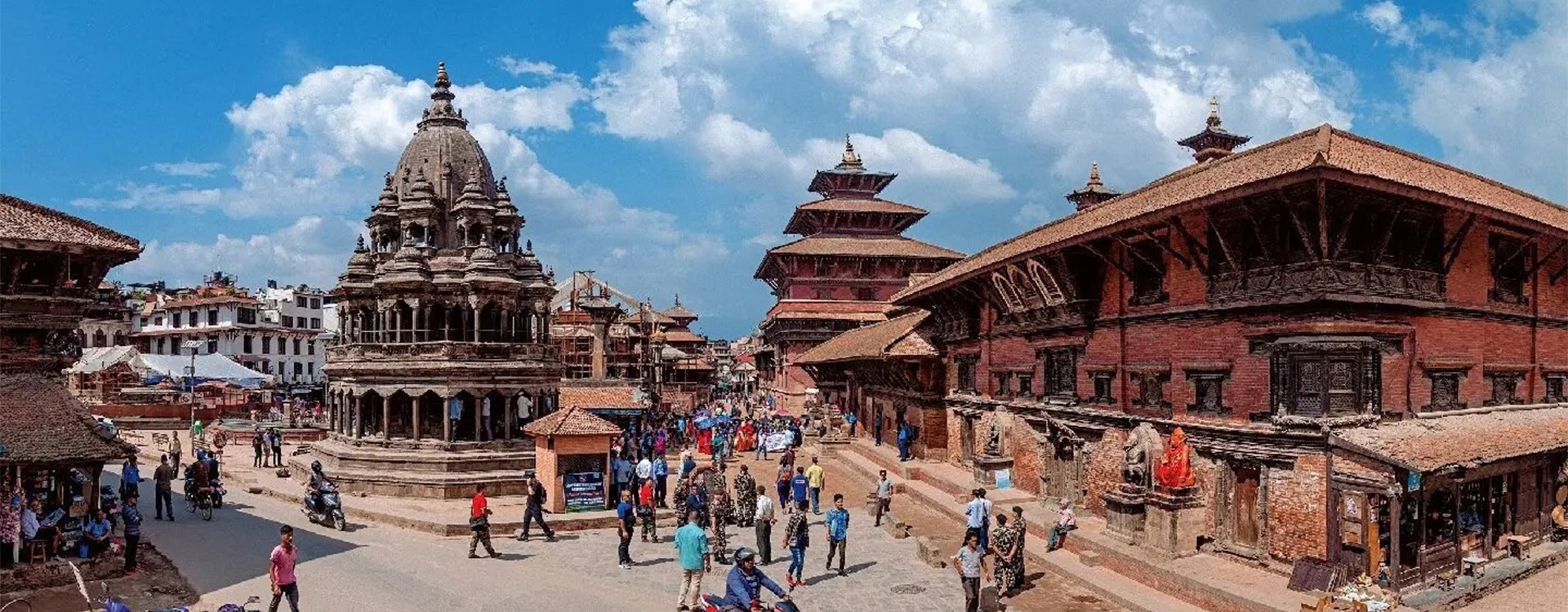
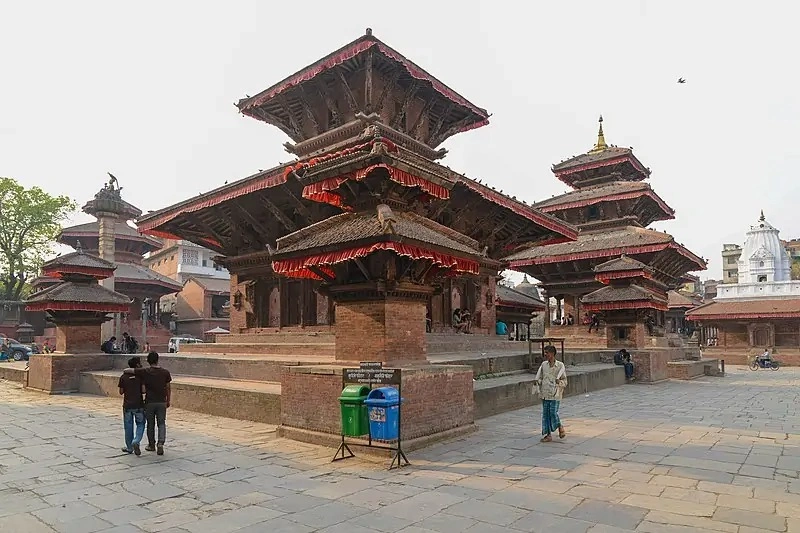
Kathmandu Durbar Square, formally known as Hanuman Dhoka, is the historic royal palace complex at the city's ceremonial and geographic heart. The courtyards, temples, and palaces within it were built predominantly by Malla kings between the 12th and 18th centuries, and the whole complex was recognized by UNESCO in 1979 as part of a seven-zone World Heritage property inscribed under criteria iii, iv, and vi.
What most visitors miss: the Kumari Ghar (Palace of the Living Goddess) sits within the square, and the reigning Kumari, a prepubescent girl selected through rigorous religious criteria, occasionally appears at her ornately carved upstairs window. Timing your visit to early morning or festival periods increases the chance of this rare sighting. The 2015 Gorkha earthquake damaged several structures significantly; ongoing restoration work, supported by Japanese and international heritage organizations, is visible and offers an unexpected window into how living heritage is actively preserved.
What Makes Swayambhunath Stupa So Famous?
Swayambhunath, informally known as the "Monkey Temple," crowns a wooded hill west of Kathmandu and is among the valley's oldest religious sites, with origins traced to at least the 5th century CE. The all-seeing eyes painted on the four sides of its white-domed tower have become Nepal's most widely recognized visual emblem.
But Swayambhunath delivers far more than an iconic photograph. The complex integrates Buddhist and Hindu shrines on a single hill, reflecting the syncretic religious culture that is genuinely distinct to the Kathmandu Valley. The eastern stairway, 365 steps flanked by stone Buddhas, stupa spires, and colonies of resident Rhesus macaques, is itself a ritual journey. Arriving at dawn, when butter lamps flicker and devotees begin their morning circumambulation as mist still fills the valley below, is one of Kathmandu's most quietly powerful experiences.
Why Is Boudhanath Stupa a UNESCO World Heritage Site?
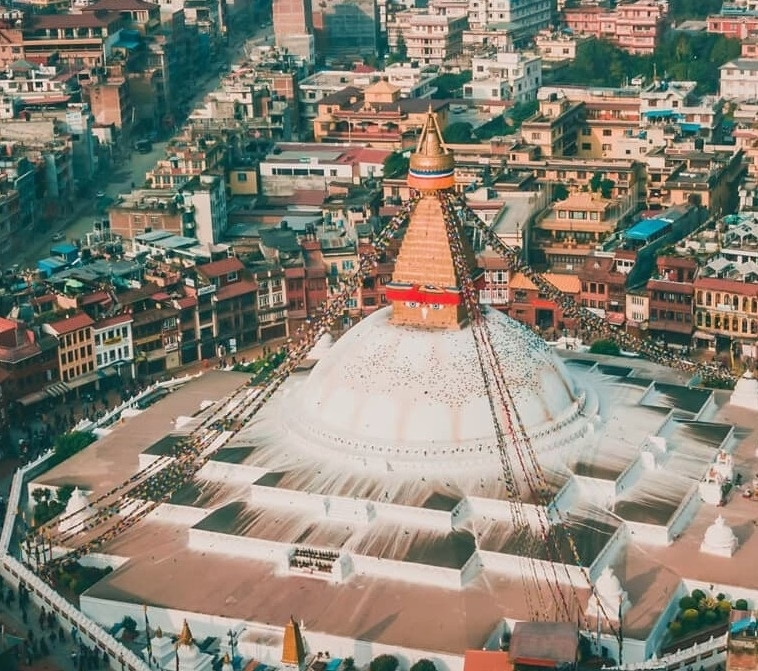
Boudhanath is one of the largest Buddhist stupas in the world and the undisputed spiritual center of Tibetan Buddhism outside Tibet itself. Its recognition as one of Nepal's UNESCO World Heritage Sites, as part of the broader Kathmandu Valley listing in 1979, reflects the outstanding universal value of its mandala-shaped design, its precise cosmological symbolism, expressed through 108 deity images, 147 prayer wheel alcoves, and the harmika tower from which the all-seeing eyes gaze in four directions, and its role as a living center of religious practice.
What makes Boudhanath particularly vital in 2026 is not just the stupa itself but the community it anchors: dozens of Tibetan Buddhist monasteries encircle the complex, alongside thangka painting schools, meditation centers, and Tibetan restaurants. Evening kora, the clockwise circumambulation of the stupa by local residents and monks, prayer wheels spinning and lips moving through mantras, offers the most grounding single hour Kathmandu can provide. Come during a puja or a Tibetan Buddhist festival and the atmosphere becomes extraordinary.
What Can You Experience at Pashupatinath Temple?
Pashupatinath is Nepal's most sacred Hindu temple and one of the subcontinent's most significant Shaivite shrines. Built beside the Bagmati River, itself considered sacred as a Ganges tributary, the complex has served as a pilgrimage destination for over 1,400 years. The main temple is accessible only to Hindus, but the surrounding complex, 83.55 hectares at its UNESCO-inscribed core, per the World Heritage Centre's official boundary data, containing over 500 mini-temples, its ghats, and its forest paths is open to all.
The riverside cremation platforms are the site's most contemplative dimension. Open-air cremations conducted on the Arya Ghats are deeply solemn, deeply public, and deeply humbling, a frank acknowledgment of impermanence that stands in almost surreal contrast to the tourist world of Thamel minutes away. Approach this aspect of the site with stillness and restraint. The sadhus (Hindu ascetics) who live within the complex grounds are another layer of living tradition worth respectful engagement. For a deeper look at its history and architecture, see our full guide to Pashupatinath Temple.
What Can You Do in Kathmandu?
The city's offering extends well beyond its headline heritage sites. For curious travelers willing to move beyond the main tourist circuit, Kathmandu reveals a layered urban life that rewards slow exploration.
Where Can You Experience Local Culture?
The Thamel neighborhood is internationally recognized, but the deepest cultural immersion happens elsewhere. Asan Tole, a centuries-old covered market junction where wholesale traders, incense sellers, and vegetable vendors converge before tourist hours, gives an unfiltered view of the city's genuine rhythm. Early mornings here, before 8 AM, feel like a city operating entirely for itself.
Patan (Lalitpur), just across the Bagmati from central Kathmandu, is arguably the finest intact concentration of Newari architecture and craftwork anywhere in the world. Patan Durbar Square surpasses even Kathmandu's in architectural refinement, and the city's metalworking workshops and thangka painting studios have earned international recognition. A half-day in Patan alongside a morning in Kathmandu's historic core delivers a far more complete cultural picture than Kathmandu alone.
Which Museums and Art Galleries Are Worth Visiting?
The National Museum of Nepal in Chhauni holds the country's most comprehensive institutional collection, spanning prehistoric artifacts, royal weaponry, fine Buddhist and Hindu sculpture, and natural history exhibits. It is genuinely undervisited relative to its quality.
The Patan Museum, housed within the restored Malla palace complex, is routinely cited as one of the finest small museums in Asia. Its curated presentation of the valley's Hindu and Buddhist art tradition is exceptional, and the restored palace courtyard in which it sits provides context that no conventional exhibit hall could replicate.
For contemporary Nepali art, the Siddhartha Art Gallery in Babarmahal runs rotating exhibitions of emerging and established Nepali artists, a space where traditional visual vocabulary meets contemporary inquiry, often with surprising results.
Where Can You Enjoy Shopping and Local Markets?
Kathmandu's best shopping is rarely found on Thamel's main commercial strip. For authentic handicrafts, hand-loomed Dhaka fabric, Lokta bark paper products, hand-cast bronze statues, and tuned singing bowls, the lanes around Indra Chowk and Asan Tole offer better craft quality and more reasonable pricing than the tourist-facing shops.
The Boudhanath area is the correct destination for Tibetan Buddhist art: genuine thangkas, Himalayan ritual objects, and Buddhist jewelry. Be aware that authentic antiques carry export restrictions; reputable shops will clarify legal parameters clearly. For trekking gear, Thamel remains practical, with a mix of licensed international brand shops and quality Nepali manufacturers whose gear has been tested on real expeditions.
What Is Kathmandu's Nightlife Like?
Kathmandu's evenings are convivial rather than raucous, and genuinely enjoyable for that reason. The Thamel district and the expat-popular Jhamsikhel neighborhood offer bars, rooftop venues, and live music spaces where local bands play across a surprisingly broad range, Nepali folk, jazz, rock, and fusion forms that blend Western and traditional instruments.
Rooftop bars overlooking the Thamel streetscape are particularly popular during the spring and autumn trekking seasons, when trekkers gather before and after expeditions to share stories over Everest beer or tongba (a warm millet-based Himalayan drink). Kathmandu winds down by midnight on most nights, but the hours between 7 and 10 PM are lively, genuine, and easy to navigate.
When Is the Best Time to Visit Kathmandu?
The timing of your Kathmandu visit matters more than most destination guides acknowledge, not just for weather, but for cultural access, festival alignment, and trekking conditions.
How Does the Weather Change Throughout the Year?
Kathmandu's climate follows a defined monsoon pattern across four seasons:
Spring (March–May): Warm days ranging 15–25°C, progressively clearing skies, and rhododendron forests in bloom across the surrounding hills. This is peak trekking season and also culturally active, Holi arrives in March, followed by Nepali New Year (Bisket Jatra) in April.
Monsoon (June–August): Heavy, often daily rainfall, high humidity, and lush green valleys. Mountain views from the city are frequently obscured by cloud. Crowds thin considerably, prices drop, and cultural immersion in the city itself, without the press of trekking crowds, takes on a different quality.
Autumn (September–November): By wide consensus, the optimal season. Post-monsoon clarity produces the sharpest mountain views of the year; Dashain (October) and Tihar (October–November) are Nepal's two most significant festivals; trekking conditions are ideal across most routes. Book accommodations well in advance.
Winter (December–February): Cold, dry, and crowd-light. Valley nights dip below 5°C and can feel raw, but mountain views from Kathmandu can be exceptionally crisp. For travelers prioritizing the city itself over trekking, winter offers a more genuinely local experience.
Which Festivals Offer the Best Cultural Experience?
If your travel schedule allows alignment with a major festival, it is worth building around:
Indra Jatra (August–September): An eight-day festival unique to Kathmandu, centered on chariot processions of the deities Kumari, Ganesh, and Bhairab through Durbar Square. One of the rare occasions when the living Kumari makes a formal public appearance. The street energy and ritual precision make this one of Asia's most distinctive civic festivals.
Dashain (October): Nepal's longest and most widely observed celebration, marking the goddess Durga's victory over the buffalo demon. Families reunite across the country, kites fill the Kathmandu sky for weeks beforehand, and the city is infused with a warmth and communal energy that is difficult to describe and impossible to forget. For the full mythology, rituals, and regional variations, explore our guide to Dashain Festival.
Tihar (October–November): Nepal's Festival of Lights unfolds over five days, each dedicated to different beings, crows, dogs, cows, and ultimately humans. The city illuminates entirely with oil lamps and marigold garlands. The logic behind worshipping animals as sacred messengers offers a window into a religious worldview that is distinctly Nepali. See our complete day-by-day breakdown of Tihar Festival for the rituals behind each celebration.
How Can You Travel Around Kathmandu?
Kathmandu's urban mobility requires patience and strategy in roughly equal measure. Road infrastructure improvements are ongoing, but traffic congestion, particularly during morning and evening peak hours, remains a defining feature of city navigation.
What Transportation Options Are Available?
Ride-hailing apps: Pathao and InDrive have become the most reliable transportation option in Kathmandu as of 2026, offering transparent pricing and eliminating the negotiation friction that characterized older taxi culture. For medium distances across the city, these apps are consistently the best choice.
Traditional taxis: Still widely available. Always agree on a fare before entering, or insist on the meter. The blue-and-white metered cabs are the safest conventional option.
Local microbuses: Cheap, authentic, and confusing for newcomers. Apps and local residents are generally patient in directing visitors to the right routes. Worth trying for at least one journey, the packed-in local experience is genuinely part of understanding how the city functions.
Electric scooter rentals: Growing meaningfully in popularity as Kathmandu's electric mobility infrastructure expands. Several rental shops in Thamel offer daily or multi-day scooter hire for travelers comfortable with city traffic.
Walking: For the historic core, Thamel, Durbar Square, Asan, and the lanes connecting them, walking is not only practical but necessary. The alleyways, courtyards, and shop fronts that define this part of the city are entirely invisible from a vehicle window.
What Should First-Time Visitors Know Before Exploring the City?
A few realities that help significantly:
Air quality varies by season and wind conditions. During winter dry months and the post-monsoon dust period, particulate levels in heavy traffic corridors can be significant. Carrying an N95 mask for dense traffic situations is practical rather than overcautious.
Altitude adjustment is relevant even at Kathmandu's moderate 1,400 meters. Visitors arriving directly from sea level sometimes experience mild headaches or fatigue on the first day. Drinking plenty of water, avoiding alcohol on arrival night, and keeping the first day's pace easy is genuinely sound advice, not travel-guide filler.
Cash and connectivity are both accessible. ATMs are widely available in Thamel and central areas. SIM cards from Ncell or Nepal Telecom are inexpensive and easy to obtain at the airport. Mobile data coverage in the valley is reliable.
What Foods Should You Try in Kathmandu?
Kathmandu's food scene in 2026 sits at a compelling crossroads: a deep indigenous culinary tradition alongside an internationally influenced restaurant culture shaped by decades of global traveler traffic. The best meals, without exception, require a short walk away from the main tourist drag.
Which Traditional Nepali Dishes Are Must-Try?
Dal Bhat: Nepal's foundational meal, lentil soup, steamed rice, vegetable curry, fermented pickle, and typically a meat or egg accompaniment, is served at virtually every Nepali restaurant. What distinguishes good dal bhat from great dal bhat is the lentil preparation and the quality of the accompanying dishes. Most establishments offer unlimited refills, making it as practical as it is authentic. Trekkers will eat this twice a day for weeks; experiencing it well in Kathmandu first is worthwhile.
Momo: Nepali dumplings, filled with buffalo, chicken, pork, or vegetables, served with a spiced tomato-sesame sauce. Kathmandu takes momos seriously enough that neighborhood debates over the best shops are a genuine social phenomenon. Steamed, pan-fried, or in broth (jhol momo), exploring the variations across different neighborhoods is one of Kathmandu's most enjoyable informal pursuits.
Newari Cuisine: A distinct culinary tradition entirely separate from standard Nepali fare and one that most visitors miss entirely. Bara (black lentil pancakes), Chatamari (thin rice crepe with toppings), Choila (spiced, charred buffalo meat), and Yomari (sweet steamed rice-flour dumplings served during festivals) represent a sophisticated kitchen culture developed over centuries within the valley. Once you try genuinely good Newari food, it reframes your understanding of what regional Himalayan cooking can be.
Sel Roti: Sweet, ring-shaped rice bread made from fermented rice batter, particularly prominent during festivals and at morning market stalls. Finding a good sel roti vendor before 9 AM is one of Kathmandu's simple, underrated pleasures.
Where Can You Find Authentic Local Cuisine?
For Newari cuisine, the neighborhoods of Patan and the lanes radiating from Asan Tole contain small family-run restaurants and local eateries cooking to traditional standards. These are not signposted for tourists and do not have English menus. That is precisely the point.
For dal bhat, mid-range local restaurants throughout the city serve consistently good versions. The benchmarks to apply: quality of lentil preparation (not watery, not over-salted), freshness of vegetable accompaniments, and whether the cook takes obvious pride in the offering.
For momos, ask your hotel staff or guide for the current neighborhood favorite. Local opinion on this changes with new openings, and the recommended spots in neighborhoods like Naxal, Jhamsikhel, and the Thamel side streets are consistently more interesting than the restaurants on the main drag.
Why Is Kathmandu the Starting Point for Himalayan Adventures?
Every significant trekking and mountaineering expedition in Nepal passes through Kathmandu. This is not simply logistical, the city is the intellectual, commercial, and organizational nerve center for Himalayan adventure travel globally.
Which Popular Trekking Routes Begin from Kathmandu?
Several of Nepal's most celebrated routes are accessed directly from or via the capital:
Everest Base Camp Trek: Fly Kathmandu to Lukla (Tenzing-Hillary Airport), then 12–14 days through the Khumbu region to the foot of the world's highest peak. The Kathmandu-to-Lukla flight itself, a 40-minute journey with stunning ridge-top views, is an experience in its own right.
Annapurna Circuit and Sanctuary: Access via Pokhara (a 6–7 hour drive or short flight from Kathmandu). The circuit is one of Nepal's most topographically diverse treks; the Sanctuary route leads into the inner Annapurna amphitheater.
Langtang Valley Trek: One of the most accessible major treks from Kathmandu, the primary trailhead at Syabrubesi begins after a 6 to 8-hour vehicle journey from the city. Ideal for trekkers with limited time, those testing altitude response before longer expeditions, or anyone who wants to bypass Lukla's notoriously weather-dependent flight schedule.
Gosainkunda Trek: A high-altitude lake circuit departing close to Kathmandu, combining Langtang landscapes with a pilgrimage to one of Nepal's most sacred alpine lakes.
Helambu Circuit: A relatively lower-altitude option suited to beginner trekkers or those visiting outside peak season. Often underestimated, the cultural engagement with Tamang and Hyolmo communities here is quietly exceptional.
Why Do Most International Trekkers Arrive in Kathmandu First?
The practical answer is simple: Tribhuvan International Airport. But the real answer is more substantive. Kathmandu's established trekking infrastructure, government-licensed guide agencies, trekking permit offices, altitude medicine clinics, well-stocked gear shops, and embassies for consular support, creates a safety and preparation ecosystem that is essentially impossible to replicate anywhere else in Nepal.
Experienced trekkers know that one full acclimatization day in Kathmandu before flying to altitude, particularly before the Lukla flight for Everest-bound expeditions, meaningfully reduces early altitude sickness risk. That day is naturally spent organizing permits, conducting gear checks, receiving guide briefings, and exploring the city. Kathmandu is not transition time before the real journey. It is the beginning of it.
How Can Nepal Intrepid Treks Help You Explore Kathmandu and Beyond?
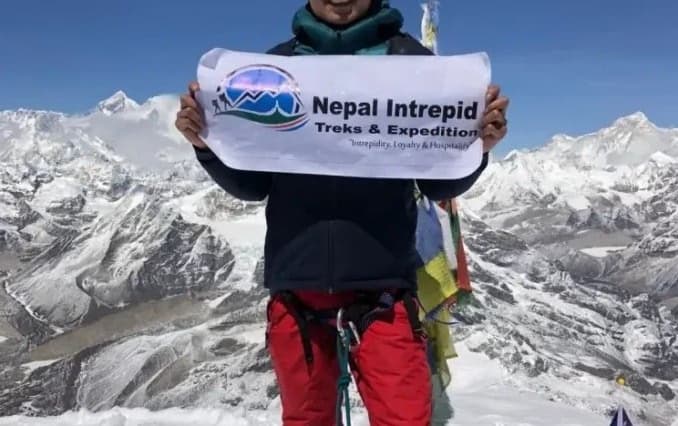
At Nepal Intrepid Treks, our relationship with Kathmandu is not one of a transit point we move clients through. It is one of a city we know with genuine depth, its quiet courtyards, its morning rhythms, its best Newari restaurants, and its most knowledgeable local guides.
Our Kathmandu cultural tours are designed for travelers who want context alongside experience. We pair you with guides who can explain the living religious traditions at Pashupatinath rather than simply pointing to them, who understand the architectural evolution visible at each Durbar Square, and who know which side-street restaurant serves the most authentic bara in Patan. These are not curated performances, they are introductions to real Kathmandu life. If you want all of this covered in a single guided day, our Kathmandu Valley private day tour takes you through Swayambhunath, Boudhanath, Pashupatinath, and Patan Durbar Square.
For trekkers, our role in Kathmandu is equally important. We manage permit acquisition, gear assessment, acclimatization planning, altitude medicine briefings, and guide introductions so that by the time you leave the city, you are genuinely prepared rather than merely equipped.
Why Choose Nepal Intrepid Treks for Trekking and Cultural Tours?
We operate under full licensing from the Nepal Tourism Board and the Trekking Agencies' Association of Nepal (TAAN). Every itinerary we offer is built from real experience, on the trails, in the teahouses, and in the city streets, not assembled from generic templates.
Our commitment to responsible, community-centered travel means we work with local family-run guesthouses and teahouses, independent artisans, and community-owned facilities wherever possible. Your visit, when designed with us, actively contributes to the economies and communities you move through rather than bypassing them. Our ongoing support for communities affected by the 2015 Gorkha earthquake, including rebuilt community infrastructure in the Langtang Valley and Bhaktapur, reflects a relationship with Nepal that extends well beyond tourism transactions.
If you are planning a visit to Kathmandu or a trekking expedition in 2026, we would genuinely welcome the opportunity to help you design something extraordinary. Reach out to the Nepal Intrepid Treks team and let's start building your journey together.
What Are the Key Takeaways About Kathmandu, the Capital City of Nepal?
Kathmandu consistently exceeds what first-time visitors imagine, and it consistently humbles those who underestimate its complexity. Here is what this guide has established:
Geographically, Kathmandu occupies a high-altitude valley at the intersection of ancient trade routes, flanked by sacred river systems and the world's highest mountain ranges. Its position between Tibet and India made it historically indispensable and culturally irreplaceable.
Historically, the city was shaped across two millennia by the Licchavi, Malla, and Shah dynasties, each leaving a distinct layer of architectural, religious, and cultural heritage that co-exists without contradiction.
Culturally, the Kathmandu Valley holds seven UNESCO World Heritage Sites, a living goddess tradition, festivals that draw citizens home from across the global diaspora, and a Newari artistic tradition of international significance.
Practically, the best periods to visit are spring (March–May) and autumn (September–November), when weather, cultural activity, and trekking conditions align most favorably.
For adventure, Kathmandu is the non-negotiable starting point for every major Himalayan trek and mountaineering expedition in Nepal. Its permit offices, gear infrastructure, and certified guide community make preparation possible in a way that no other Nepali city can match.
For food, the Newari culinary tradition alone justifies several days of dedicated exploration. Dal bhat, momo, bara, and choila together represent a food culture that is both deeply practical and genuinely distinctive.
The city challenges every traveler, with its traffic, its sensory intensity, its demands on patience, and its tendency to resist easy categorization. It rewards, in return, an engagement that is honest, curious, and unhurried. Most people who spend real time in Kathmandu leave already planning their return. That is perhaps the clearest measure of what it offers.