Choosing an experienced trekking agency in Nepal is a decision about far more than arranging a route, permits, and accommodation. A reputable agency connects trekkers with licensed local guides who understand Nepal’s Himalayan terrain, altitude, weather patterns, mountain communities, and changing trail conditions through firsthand experience. That expertise becomes especially valuable on routes such as Everest Base Camp, the Annapurna Circuit, Manaslu Circuit, Langtang Valley, Kanchenjunga, and Upper Mustang, where elevation, remoteness, seasonal weather, and limited infrastructure can quickly turn a routine trekking day into a complex situation.
The right trekking agency combines mountain expertise with practical safety and reliable logistics, from acclimatization planning and altitude-illness recognition to emergency evacuation, permit processing, accommodation coordination, porter welfare, and communication in remote areas. Experienced guides also add cultural understanding, regional language skills, community relationships, and access to less-visited trails and local traditions that standard itineraries often miss. Understanding these advantages, and knowing how to verify guide qualifications, agency registration, safety procedures, recent experience, and client reviews, helps trekkers choose a professional Nepal trekking agency that can support both a safe journey and a deeper Himalayan experience.
What Makes an Experienced Trekking Guide Valuable in Nepal?
An experienced trekking guide delivers 3 measurable things that independent trekking cannot replace: route-specific knowledge built across seasons, real emergency response capability, and local relationships that change what you access on the mountain.
Certification sets a baseline. A guide licensed by the Nepal Tourism Board (NTB) and affiliated with the Trekking Agencies Association of Nepal (TAAN) has passed the required examinations. But the real difference between a competent guide and an exceptional one is not paperwork, it is repetition under real conditions.
A guide who has walked the Annapurna Circuit 75 times reads trail conditions, weather shifts, and group fatigue differently than one who has done it twice. That accumulated pattern recognition is what protects trekkers when a situation develops faster than any manual could prepare for.
What most trekkers underestimate is the non-technical side of a guide's value. Managing group dynamics, reading physical fatigue before trekkers report it, and adjusting pace and elevation gain by 50-meter increments, these micro-decisions collectively prevent illness and abandonment. They don't appear on a brochure, but they determine whether your trek succeeds.
How Does Local Trekking Experience Improve Your Journey?
Local trekking experience converts a logistical route into a genuine Himalayan encounter by delivering trail knowledge, seasonal accuracy, and community access that no guidebook or travel app replicates.
A Nepali guide who grew up in Solukhumbu and has walked to Namche Bazaar through every season carries information that classroom training cannot teach. They know which teahouse's kitchen meets hygiene standards in October, which river crossing floods after three days of rain, and which alternate trail cuts two hours without adding elevation debt.
That local depth changes 3 specific outcomes for trekkers:
Accommodation quality: Local guides select lodges based on direct knowledge of kitchen standards and bedding hygiene, not online star ratings.
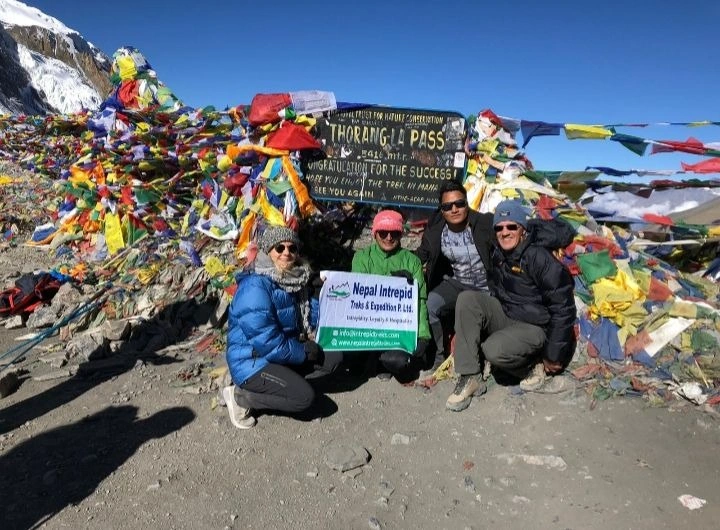
Pass timing: On Thorong La, the difference between a 4 a.m. and 5 a.m. departure changes wind exposure and summit-day success rates significantly.
Problem resolution speed: When plans change, and on any Himalayan trek, they do, a guide with existing contacts in the region resolves a logistics problem in 20 minutes instead of two hours.
Why Does Knowledge of Nepal's Mountain Trails Matter?
Knowledge of Nepal's mountain trails determines which route is safe on a given day, how your body responds to elevation changes, and whether the path you're on is the one you think it is.
Nepal has over 23 designated trekking routes and hundreds of unmarked trail variations across terrain ranging from subtropical lowlands to glaciated passes above 5,500 meters. The Annapurna Conservation Area alone covers 7,629 square kilometers. No map fully captures trail conditions after a landslide, a bridge washout, or the reroutes that local guides absorb through community networks within 24 hours of an event.
Trail knowledge also means understanding how Nepal's three trekking seasons, pre-monsoon March to May, post-monsoon September to November, and winter December to February, affect the same section of trail in completely different ways. A guide who walked the Kanchenjunga approach in February 2025 holds weather pattern and teahouse availability data that no search engine has indexed yet.
How Can an Experienced Guide Improve Trekking Safety?
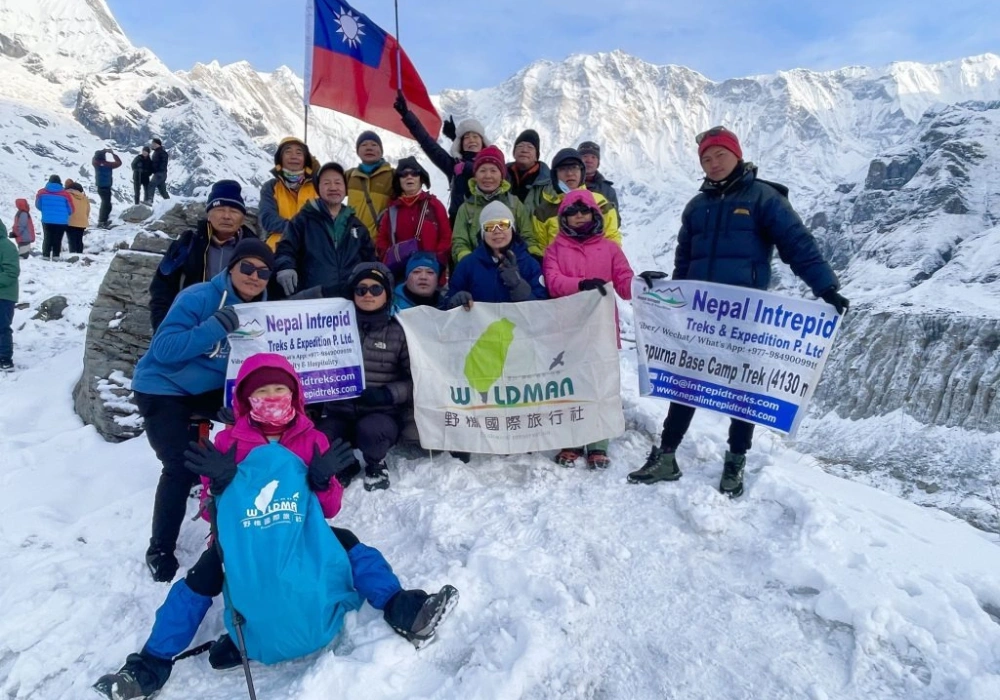
Experienced guides improve trekking safety through 4 actions: monitoring acclimatization daily, identifying altitude illness before trekkers self-report symptoms, navigating weather windows on high passes, and coordinating helicopter evacuations from remote terrain.
Safety is the most measurable advantage an experienced guide provides. The Himalayan Rescue Association reports that acute mountain sickness (AMS) affects 25 to 50% of trekkers above 3,500 meters. High-altitude pulmonary edema (HAPE) and high-altitude cerebral edema (HACE) occur less frequently but can become fatal within hours of symptom onset. The difference between a trekker who descends in time and one who doesn't is almost always the guide's intervention, not the trekker's own awareness.
How Do Guides Help With Altitude and Acclimatization?
Experienced guides manage acclimatization by enforcing a maximum of 300 to 500 meters of sleeping altitude gain per day above 3,000 meters, scheduling mandatory rest days at critical thresholds, and identifying early AMS symptoms before trekkers recognize them as medical issues.
The standard acclimatization principle is "climb high, sleep low." An experienced guide treats this as a non-negotiable schedule element, not a recommendation. The 2-day rest stop at Namche Bazaar on the Everest Base Camp route exists because physiology demands it, not because the teahouses are pleasant.
What guides identify that trekkers routinely miss:
Mild headache written off as dehydration: A guide checks whether it resolves with water or persists after rest. The answer determines whether the group moves or stays.
Reduced appetite at 3,800 meters: An early indicator of HACE that most trekkers attribute to trail fatigue and calorie debt.
Irregular nighttime breathing: A guide sleeping in proximity can identify Cheyne-Stokes respiration patterns, periodic breathing during sleep that signals dangerous altitude adjustment.
These observations happen before a trekker recognizes anything is wrong. That window is what experienced guides protect.
How Can Experienced Guides Respond to Trail Emergencies?
Experienced guides respond to trail emergencies through immediate condition assessment, autonomous descent decisions, helicopter evacuation coordination, and direct wilderness first aid, all executed without reliable mobile connectivity above 4,000 meters.
Nepal's high-altitude trails have limited cellular coverage across large sections. Emergency decisions happen on the ground, often at altitude, with no ability to call a physician in real time. A guide certified in Wilderness First Aid or holding WAFA (Wilderness and Remote Medicine) certification carries the skills to:
Administer supplemental oxygen and acetazolamide (Diamox) for AMS management
Deploy a portable altitude chamber (Gamow bag) for HAPE or HACE before evacuation
Coordinate with certified Himalayan rescue operators, such as Altitude Air, Fishtail Air, or Simrik Air, for helicopter extraction from remote landing zones
Helicopter evacuation costs in Nepal range from USD 3,000 to USD 10,000 or more depending on location and altitude. An experienced guide minimizes the situations requiring it. When evacuation is unavoidable, they coordinate it faster.
Why Does Local Weather Knowledge Matter on Himalayan Treks?
Local weather knowledge matters because Nepal's Himalayan weather changes faster than satellite forecasting apps update, and a wrong decision on a 5,400-meter pass has consequences that no retry option resolves.
The Himalayan weather system is driven by the South Asian monsoon, westerly disturbances, and local orographic effects that create microclimates unique to individual valleys. Thorong La Pass (5,416 m), Renjo La (5,360 m), and Cho La (5,420 m) can close to zero visibility within 90 minutes of a system moving through.
Experienced guides read 5 environmental signals that forecasting apps do not capture:
Cloud formation direction: Clouds building from the south after noon signal afternoon storms with high reliability on Annapurna-region routes.
Wind shift at pass base: A sudden shift from west to east at lower elevation indicates an incoming pressure system, experienced guides recognize this 2 to 3 hours before it closes the pass.
Animal behavior on trail: Yaks refusing to ascend is one of the oldest weather predictors among Sherpa communities and remains accurate.
Rapid temperature drop rate: A drop exceeding 5°C within 90 minutes at elevation signals incoming weather requiring immediate descent consideration.
Teahouse owner behavior: When lodge owners at pass-approach points begin stopping trekkers, that local intelligence overrides any forecast.
What Trekking Benefits Does a Professional Nepal Agency Provide?
A professional Nepal agency delivers 5 concrete operational benefits beyond the guide: customized itinerary design, permit processing across multiple government bodies, equipment coordination, porter welfare management, and 24-hour emergency communication infrastructure.
The agency is the logistical backbone that makes a guide's expertise deployable. Licensed agencies registered with the Nepal Tourism Board operate under accountability standards that protect both trekkers and the communities on the trail.
How Can Guides Create the Right Trekking Itinerary?
Guides create the right trekking itinerary by mapping daily distance, elevation gain, and rest stop placement against each trekker's fitness baseline and available days, then building contingency days for weather and health adjustments before departure.
Most standard Annapurna Base Camp itineraries are packaged as 7-day or 10-day programs. The 7-day version requires 20 to 25 kilometers of walking daily at elevations that exceed 4,000 meters by day 4. For a trekker with no high-altitude experience, that pace is an AMS risk built into the schedule from the start.
Experienced guides build across 3 itinerary types depending on the route and group:
Fixed itineraries: Set daily schedule for trekkers with firm return dates, with 1 to 2 buffer days for weather without itinerary collapse.
Flexible itineraries: Daily pace adjusts based on real health assessment and weather, standard approach for remote routes like Upper Dolpa or the Tsum Valley.
Hybrid itineraries: Fixed start and end points with daily pace flexibility in between, works consistently well for the Manaslu Circuit and Langtang Valley routes.
The itinerary also determines accommodation availability. Teahouses above 4,500 meters operate with limited capacity. A professional agency pre-books accommodation 48 to 72 hours ahead during peak October and November season to ensure trekkers have a proper roof over them at altitude.
How Do Agencies Manage Permits and Trekking Documentation?
Agencies manage permits by processing TIMS cards, national park entry permits, restricted area permits, and ACAP documentation simultaneously, completing paperwork before departure to prevent checkpoint delays or forced returns on trail.
Nepal's permit requirements change with government policy, and those changes do not always receive wide publication. Under prevailing Nepal Tourism Board (NTB) regulations, independent trekking is prohibited on all routes requiring a TIMS card; all foreign trekkers must hire a licensed guide through an approved agency, which processes the mandatory TIMS card for NPR 2,000 (for non-SAARC nationals). Restricted area permits for Upper Mustang cost USD 500 for the first 10 days and USD 50 per additional day. The Kanchenjunga Conservation Area requires a separate permit layer entirely.
Because the Nepal Tourism Board mandates that all trekkers on TIMS-regulated routes must be accompanied by a licensed guide, attempting to navigate checkpoints without agency-processed documentation will result in immediate mandatory return or fines. Restricted zone junctions in Nepal are staffed and monitored. Trekkers without complete documentation face fines or mandatory return.
Professional agencies that process permits daily know which checkpoints require originals versus photocopies, which trails have changed permit categories in the past 12 months, and how to process emergency replacements when permits are lost in the field.
How Can Experienced Guides Support Different Trekking Abilities?
Experienced guides support different trekking abilities by adjusting daily pace, modifying elevation schedules, splitting groups when necessary, and identifying early when a trekker's physical condition requires a route modification or early return.
Nepal's trekking routes are not equivalent in physical demand. The Everest Base Camp trek covers 130 kilometers round-trip with a 5,364-meter maximum elevation. The Poon Hill Circuit covers 40 kilometers at a maximum elevation of 3,210 meters. Both are sold to general audiences under similar marketing language.
Experienced guides assess trekking ability through 3 observable indicators during the first two days on trail:
Pace on a 15-degree grade: A consistent, controlled pace indicates adequate aerobic capacity. Irregular bursts followed by stops signal overexertion patterns that compound at altitude.
Recovery time after elevation gain: Trekkers who return to normal breathing within 10 minutes after a climb adapt well. Those who need 30 or more minutes require a modified schedule starting immediately.
Sleep quality reports at 3,000 meters: Poor sleep this low predicts harder physiological adjustment above 4,000 meters and sometimes warrants a pace change before reaching the critical altitude band.
When a trekker's ability falls short of the planned route, the guide restructures the objective, because arriving at a modified goal safely is better than failing an ambitious one at elevation with no descent support.
Why Is Local Cultural Knowledge Important While Trekking?
Local cultural knowledge is important because Nepal's Himalayan communities, Sherpa, Tamang, Gurung, Thakali, and Magar, operate under social norms that directly affect how trekkers are received, hosted, and supported in remote areas.
Nepal's mountain culture is not a backdrop to the trek. It is the infrastructure the trek runs on. Teahouse owners determine room allocation, meal preparation, and local intelligence sharing based on relationships built over years. A guide with genuine community ties receives a different level of trust and information than a stranger passing through, and that difference reaches trekkers in practical ways.
Trekkers who understand basic protocols, entering monasteries correctly, removing footwear at thresholds, accepting hospitality in the form it's offered, build goodwill that translates into better support when difficulties arise on the trail. Cultural awareness is not just respectful. It is functional.
Mani stones along the trail are circumambulated clockwise in Tibetan Buddhist practice. Walking counterclockwise marks a trekker as culturally unaware to village elders immediately. An experienced guide explains this before the first mani wall, not after an awkward moment.
How Does an Experienced Guide Enhance the Trekking Experience?
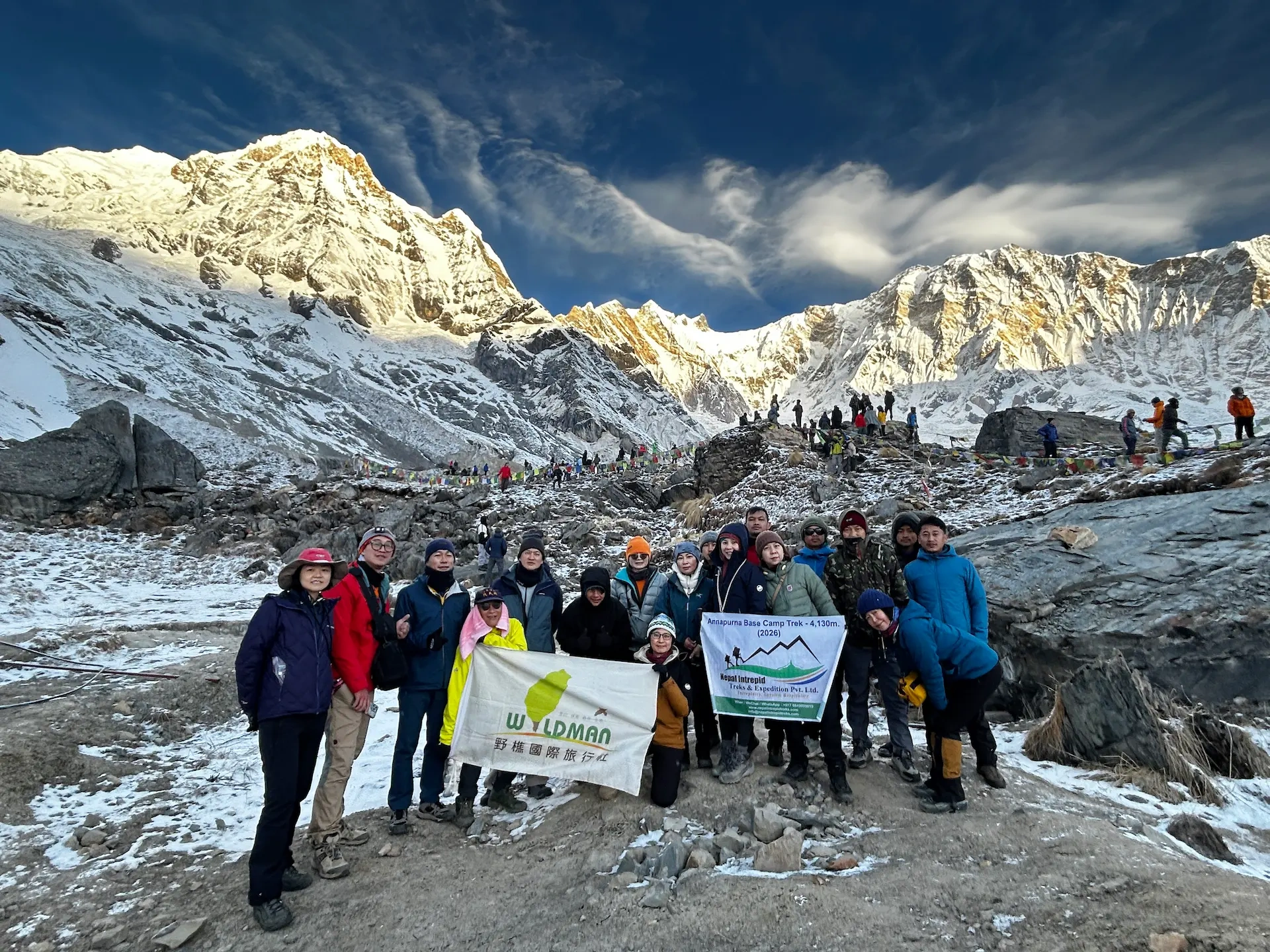
An experienced guide enhances the trekking experience by unlocking cultural access, facilitating genuine community connection, and opening trails and viewpoints that standard itineraries skip entirely.
The standard EBC route is the same track every agency runs. An experienced guide on that same trail adds specificity that no guidebook has space for: the family above Dingboche who has hosted trekkers for 35 years and whose eldest son was a Lhotse expedition porter, the monastery that conducts a weekly puja open to visitors who arrive before 7 a.m., the moraine ridge east of Gorak Shep that provides an angle on the Khumbu Icefall that most trekkers photograph from the wrong position.
These details are not in any app. They live in relationships and repetition.
How Can Guides Help You Discover Local Culture and Traditions?
Guides help trekkers discover local culture through direct introductions to community members, contextual explanation of living traditions, and access to seasonal events that require local knowledge to attend.
Nepal's Himalayan calendar runs cultural events that standard trekking itineraries rarely intersect: Mani Rimdu at Tengboche Monastery in November, the Tiji Festival in Upper Mustang each May, and Losar, the Sherpa New Year, celebrated differently in each valley, often without formal announcement.
An experienced guide who grew up in the region knows which monastery permits non-Buddhist visitors during puja without disturbing the ceremony, which homestays offer a more authentic exchange than commercial teahouses, and which festival timing aligns with a planned route and warrants a half-day detour.
This information does not exist in travel databases. It moves through community networks, and guides carry it because they are part of those networks.
Why Can Local Guides Improve Communication With Mountain Communities?
Local guides improve communication with mountain communities because they speak the regional dialects, Sherpa, Tamang, Gurung, that village elders, teahouse owners, and local rescue coordinators use exclusively in high-altitude areas.
According to the most recent official Nepal National Census, the country recognizes 124 distinct mother tongues. Nepali serves as the national language, but in Solukhumbu, Sherpa is the primary language of daily life. In the upper Mustang district, Tibetan dialects dominate. In Lamjung, Gurung-speaking communities communicate in their own language that has no written standard most outsiders encounter.
When trail conditions change due to weather or a new obstacle, local rescue teams and teahouse networks communicate in regional language first. When a lodge owner learns of a trail closure or a group in distress further up the route, they share that information in their native tongue. A guide who speaks the local language receives that intelligence immediately. One who does not waits for a Nepali translation that arrives incomplete or delayed.
In an emergency, the language gap can cost hours.
How Do Experienced Guides Help Trekkers Enjoy Less-Visited Trails?
Experienced guides enable access to less-visited trails by navigating unmarked routes, managing logistics in teahouse-scarce terrain, and verifying current safety conditions through local networks before entering remote areas.
Nepal's less-visited trekking routes include the Kanchenjunga Base Camp trek (under 300 annual permits issued), the Nar Phu Valley, the Tsum Valley, and the Great Himalaya Trail eastern section. Each receives fewer than 500 trekkers annually compared to the 60,000-plus who walk the EBC route each year.
On these routes, 3 things only an experienced guide provides:
Campsite selection and safety: No teahouses means wilderness camping, and not every flat area at elevation in Nepal is either safe for camping or legal to occupy.
Food and fuel logistics: Guides arrange supply logistics, including porter-carried loads for multi-day sections without resupply points, before the trek departs.
Emergency communication protocols: Satellite communicators including Garmin inReach replace cellular coverage, and guides who use them regularly know the SOS protocols and how to communicate location accurately in Nepal's mapping grid.
What Should You Look for in a Trekking Agency in Nepal?
The 4 primary markers of a credible Nepal trekking agency are: valid NTB registration with a verifiable registration number, TAAN membership, documented guide certification records, and recent client reviews that describe specific situations rather than general praise.
Nepal's trekking industry includes hundreds of operators at widely different standards. A professional agency is distinguishable through public records and specific answers to direct questions, not through website design or marketing language.
What Qualifications Should Experienced Trekking Guides Have?
Experienced trekking guides in Nepal hold 3 primary qualifications: an NTB-issued guide license at senior level, verified Wilderness First Aid or WAFA certification, and a minimum of 3 years of documented high-altitude guiding on routes matching your planned trek.
The Nepal Tourism Board (NTB) and the Nepal Academy of Tourism and Hotel Management (NATHM) issue a single, standardized Trekking Guide License upon completion of a mandatory 35-day training course. While reputable trekking agencies internally designate 'senior' guides based on years of field experience, the government does not issue an advanced secondary license based on a 2,000-hour requirement.
Additional qualifications that indicate higher competency above the license baseline:
Wilderness First Aid (WFA) or WAFA certification: Two-week field training courses focused on high-altitude and remote medical response, including AMS management, traumatic injury stabilization, and evacuation coordination.
Language proficiency documentation: Verified English or other foreign language certificates from recognized institutions, which affect how clearly a guide communicates with international trekkers under stress.
Specialized route certifications: NTB-issued permits required for restricted zones including Upper Mustang, Kanchenjunga, Manaslu, and Dolpa, which a guide must hold independently to legally lead trekkers in those areas.
Every NTB guide license carries a public registration number. Trekkers can verify any guide's credentials through the NTB database before paying a deposit.
How Can You Evaluate a Trekking Agency's Safety Standards?
You evaluate a trekking agency's safety standards by asking 5 specific questions about their emergency protocols, guide-to-trekker ratios, equipment inventory, evacuation response history, and travel insurance facilitation.
Questions that separate professional agencies from operators that only appear professional:
What is the guide-to-trekker ratio on this specific route? (Professional standard: 1 guide per 4 to 6 trekkers on high-altitude routes above 4,000 meters)
Does each guide carry a first aid kit, and what does it contain? (Minimum: Diamox, ibuprofen, antiseptic, blister kit, pulse oximeter)
What is the evacuation protocol if a trekker develops HAPE above 4,500 meters? (Answer should name specific helicopter operators and communication tools)
Has your agency coordinated a medical evacuation in the last 24 months? What was the situation and outcome?
Do you assist trekkers in filing travel insurance claims, and which insurers do your trekkers commonly use?
Agencies that give vague or generic answers to these questions are not operating at professional safety standards, regardless of how well-produced their website is.
Why Do Reviews and Trekking Experience Matter When Choosing an Agency?
Reviews and documented trekking experience matter because they provide the only external verification of how an agency performs under real conditions, not promotional conditions.
Nepal trekking agencies are reviewed across TripAdvisor, Google Business, Trustpilot, and GetYourGuide. Reviews that carry real weight share 3 characteristics:
They describe a specific difficult situation, a weather delay, an altitude illness incident, an injury, and explain what the agency or guide did in response.
They come from trekkers with comparable fitness levels and experience backgrounds to the reader evaluating them.
They were posted within the last 12 months, because guide staff, agency management, and operational quality all change.
Treat agencies with exclusively 5-star reviews and no specific detail with skepticism. Genuine reviews describe friction, uncertainty, and resolution. A trip that went perfectly from start to finish on a Himalayan trek is rarer than agencies would like you to believe. Reviews that acknowledge difficulty and describe how it was handled tell you more than those that don't.
How Can You Choose the Right Experienced Guide's Trekking Agency in Nepal?
Choose the right Nepal trekking agency through 5 sequential steps: verify NTB registration, confirm guide credentials against public records, compare safety protocols across at least 2 agencies, analyze recent reviews for specific situations, and request a full itinerary with elevation profiles and contingency notes before paying.
This process takes 3 to 5 days done properly. Relative to the weeks you will spend on trail, that investment is small.
Step 1, Verify NTB registration on the official Nepal Tourism Board website. Legitimate agencies hold a registration number linked to a company profile. If the number is not findable, the agency is unregistered.
Step 2, Confirm guide credentials by requesting the assigned guide's NTB license number and checking it against the NTB database before the trek begins, not after arrival in Kathmandu.
Step 3, Compare safety protocols across a minimum of 2 agencies using the same questions. Consistency in detail level and specificity of answers indicates operational readiness.
Step 4, Read recent reviews across multiple platforms. Filter for reviews dated within 12 months. Look for descriptions of real problems and real responses, not just general recommendation.
Step 5, Request a full itinerary before paying. A professional itinerary includes daily elevation profiles, specific accommodation locations, permit processing details, and at least one contingency note for weather delay. Agencies that cannot produce this document are not operationally prepared to run a professional trek.
Price is not the primary selection criterion. The cost difference between a USD 700 and USD 1,200 Annapurna Base Camp package typically reflects guide experience level and agency safety infrastructure, not profit. Choosing on price alone is the mistake that produces the emergency evacuations and abandoned treks that fill Himalayan Rescue Association case logs each season.
Can Nepal Intrepid Treks Help You Plan a Safe and Memorable Trek?
Nepal Intrepid Treks is a Nepal Tourism Board-registered trekking agency operating across all major Himalayan trekking regions, including Everest, Annapurna, Manaslu, Langtang, and Upper Mustang. Every guide holds NTB certification, and senior guides carry Wilderness First Aid training for high-altitude route management.
Itineraries are built with verified acclimatization schedules, complete permit processing, and 24-hour emergency coordination included as standard. Guides speak English and Nepali; regional dialect speakers are available for restricted area treks in Mustang and Dolpa. Porter welfare and fair wage practices are documented as part of the agency's operational standards.
Whether your goal is a first-time Poon Hill circuit or a multi-week Kanchenjunga approach, Nepal Intrepid Treks matches the itinerary to your actual fitness level and timeframe, not to a standard package that fits average expectations.
To discuss your route, guide assignment, or any specific concern about a planned trek, contact Nepal Intrepid Treks directly. The right conversation before departure is the most reliable safety measure available.
What Are the Key Takeaways About Choosing an Experienced Guide's Trekking Agency in Nepal?
The 6 points that determine whether your Nepal trek goes right:
Experienced guides prevent altitude illness by managing acclimatization schedules and identifying AMS symptoms before trekkers self-report, not just by navigating the trail.
Local knowledge is operationally irreplaceable. Trail conditions, weather pattern recognition, and community-level access require years of in-region experience that no application or guidebook provides.
Professional agencies manage logistics that independent trekkers consistently underestimate: permits across multiple government bodies, peak-season accommodation booking, porter welfare compliance, and emergency communication infrastructure.
Cultural knowledge changes trail access. Guides with genuine community relationships open cultural experiences, festivals, monastery visits, homestays, that standard tourism routes never reach.
Agency evaluation requires specific questions, not website browsing. NTB registration, guide credentials, safety protocols, and recent reviews are 4 verifiable markers. Vague answers to direct questions are a clear signal.
Nepal Intrepid Treks provides licensed, experienced guides and professionally built itineraries across Nepal's major trekking regions, with safety and cultural depth as operational standards rather than marketing claims.
The right guide does not just get you to base camp. They get you there safely, show you what the mountain actually holds, and make sure you come home with the kind of experience that changes how you think about travel.
.avif&w=1920&q=75)
.avif&w=1920&q=75)