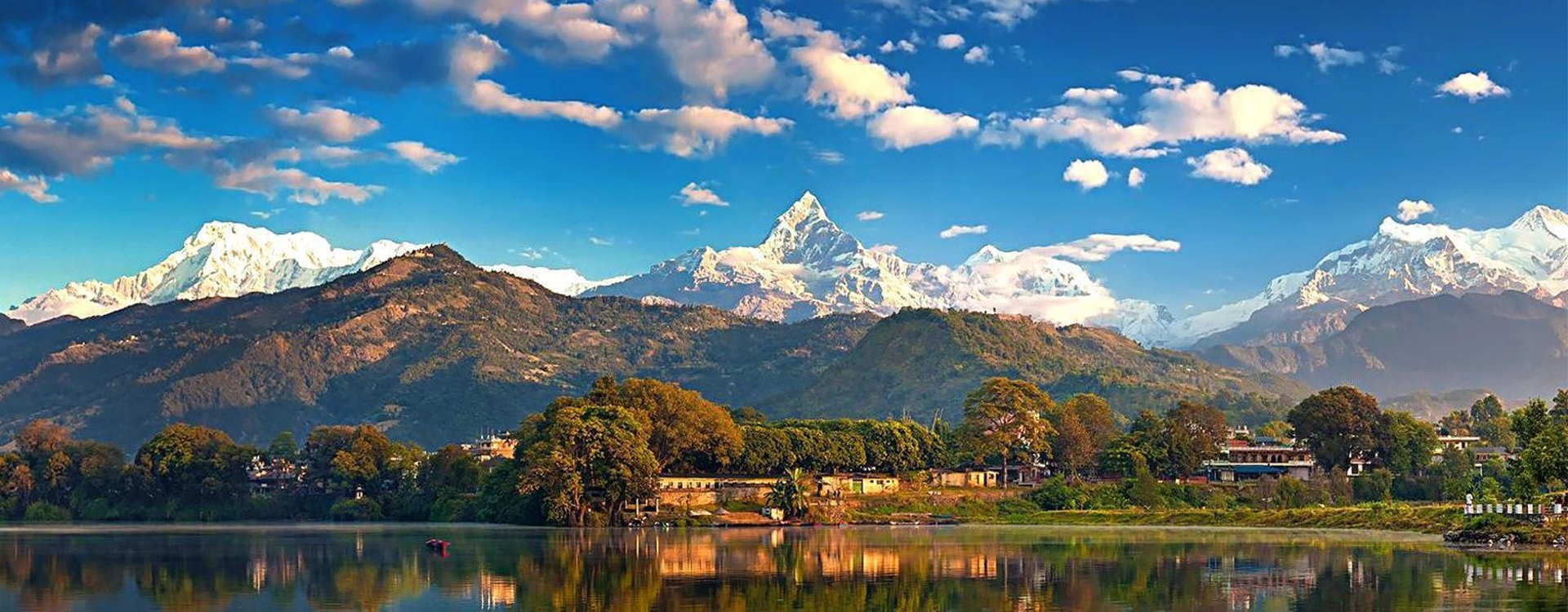
Pokhara City is Nepal’s premier lakeside mountain destination, a valley city in Gandaki Province where Phewa Lake, the Annapurna Himalayas, Machapuchare (Fishtail), and the Seti Gandaki River shape the landscape and travel experience. Located at about 827 meters above sea level, Pokhara brings Himalayan scenery, peaceful lakes, subtropical valleys, religious sites, historic neighborhoods, and accessible viewpoints into a compact destination. Phewa Lake and its Barahi Temple, Sarangkot’s Himalayan sunrise, the World Peace Pagoda, Devi’s Fall, Seti Gorge, Begnas Lake, the International Mountain Museum, and Old Bazaar represent the city’s major natural, cultural, and historical attractions. The combination of dramatic mountain panoramas and a developed Lakeside tourism hub makes Pokhara a destination for sightseeing, photography, relaxation, cultural exploration, and outdoor adventure.
Pokhara also functions as the principal gateway to the Annapurna region and the Annapurna Conservation Area, connecting travelers with the Annapurna Base Camp, Annapurna Circuit, Ghorepani Poon Hill, and Khopra Danda trekking routes. Adventure activities extend beyond trekking to paragliding from Sarangkot, boating on Phewa Lake, white-water rafting, ziplining, rock climbing, mountain biking, and ultralight flights, while the surrounding hills and villages provide opportunities for day hikes and cultural experiences. The best travel period generally falls between October and May for clearer Himalayan views and favorable outdoor conditions, although each season offers different experiences, costs, and trekking conditions. This comprehensive Pokhara City guide explores the destination’s geography, natural attractions, cultural heritage, adventure activities, trekking routes, seasonal conditions, transportation, itineraries, packing considerations, and practical planning information for experiencing Pokhara as a complete Nepal destination.
What Makes Pokhara City a Dream Destination in Nepal?
Pokhara City earns the title "dream destination" through a rare combination: 8 Himalayan peaks above 7,000 meters visible from within city limits, a renowned cluster of nine beautiful lakes, Nepal's most active adventure sports hub, and a temperate climate averaging 18°C annually, all concentrated in Gandaki Province's lakeside capital.
Where Is Pokhara Located?
Pokhara is located 200 kilometers west of Kathmandu, in the Gandaki Province (formerly Province No. 4) of Nepal. The city sits within the Pokhara Valley at coordinates 28.2096° N, 83.9856° E, bordered by the Modi Khola River to the west and the Seti Gandaki River flowing through its core.
The Pokhara Metropolitan City, established in 2017 by merging 33 Village Development Committees, covers 464.24 square kilometers. Per the 2021 National Population and Housing Census (Central Bureau of Statistics), the city's population reached 513,504 residents with a literacy rate of 88.72%, making it Nepal's second-largest city after Kathmandu. The Tribhuvan International Airport connects Kathmandu to Pokhara via a 25-minute domestic flight, while the Prithvi Highway provides a 6-7 hour road connection through the Trishuli and Marsyangdi river valleys.
What Is Pokhara Best Known For?
Pokhara is best known for 5 defining characteristics: Phewa Lake's reflection of the Annapurna range, Sarangkot's sunrise panoramas, the paragliding launch point above the valley, the Annapurna trekking circuit's base, and Lakeside's concentration of restaurants, guesthouses, and adventure operators.
The city also holds Nepal's only International Mountain Museum, one of South Asia's most impressive religious monuments (the World Peace Pagoda), and the Seti Gorge, a geological phenomenon where a river flows completely underground through the city.
Why Is Pokhara Called the Gateway to the Annapurna Region?
Pokhara serves as the primary trailhead for 4 of Nepal's most significant trekking routes: the Annapurna Circuit (160-230 km), the Annapurna Base Camp Trek (50-55 km), the Ghorepani Poon Hill Trek (approximately 55 km), and the Khopra Danda Trek (65 km). All 4 routes begin and end within 45 kilometers of Pokhara's city center.
The Annapurna Conservation Area Project (ACAP), Nepal's largest protected area at 7,629 square kilometers and home to more than 100,000 residents according to the National Trust for Nature Conservation's 2024 Annual Report, issues trekking permits at ACAP offices in Pokhara. The city provides complete pre-trek logistics, permit processing, gear rental, guide and porter hiring, acclimatization information, positioning it as the operational headquarters for Annapurna region exploration.
What Natural Attractions Make Pokhara a Dream Place?
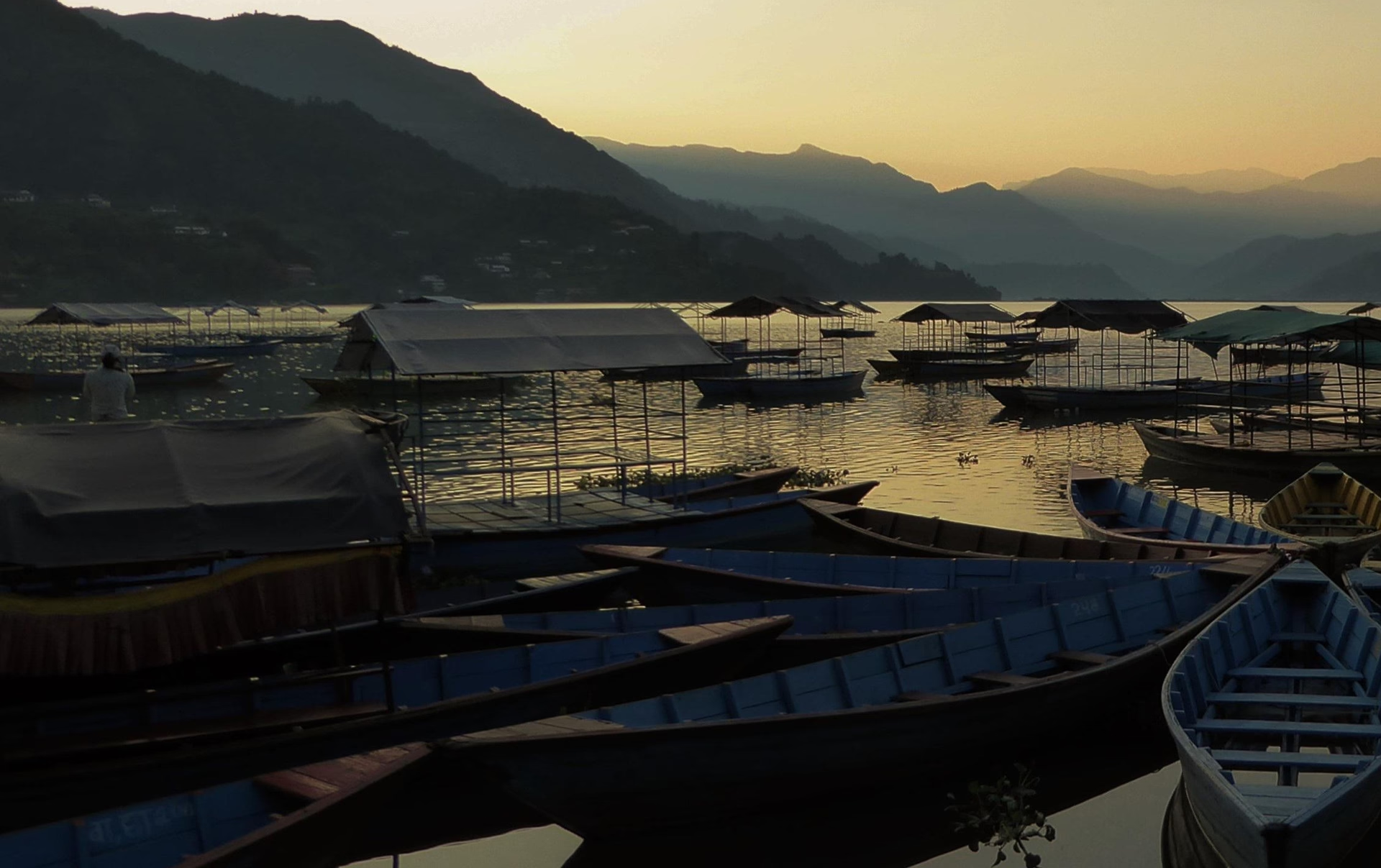
Pokhara's 6 primary natural attractions, Phewa Lake, the Annapurna panorama, the Seti Gorge, Devi's Fall, Begnas Lake, and the Rupa Lake wetland system, form a concentrated natural geography unmatched in any other Nepali city. Each attraction exists within a 15-kilometer radius of Lakeside Pokhara, making a single day sufficient to visit multiple sites.
What Can You See Around Phewa Lake?
Phewa Lake (also written Fewa Tal) is Nepal's second-largest lake, covering 4.43 square kilometers at an elevation of 742 meters. The lake stretches 4 kilometers in length and 1.5 kilometers in width, with a maximum depth of 26 meters.
3 distinct experiences define a visit to Phewa Lake:
The Barahi Temple: A 2-story pagoda-style Hindu temple dedicated to Ajima (Barahi), situated on a small island 150 meters from the Lakeside shore. Worshippers cross by wooden rowboat, and the temple conducts animal sacrifices during the Dashain festival in October.
The Annapurna reflection: On clear mornings between October and May, the lake's calm surface mirrors the Machapuchare (6,993 m) and Annapurna South (7,219 m) peaks, one of Nepal's most photographed natural phenomena.
Lakeside promenade walking: The 3-kilometer eastern shore path connects the Damside area to the Camping Chowk junction through cafes, boat rental points, and viewpoints positioned specifically for Himalayan photography.
Boating on Phewa Lake costs NPR 500–1,200 per hour depending on boat type, with rowboats, paddle boats, and motorized options available from the Lakeside jetty.
Why Is the Annapurna Range Famous From Pokhara?
The Annapurna range is the world's 10th-highest mountain massif, and Pokhara offers unobstructed views of 9 distinct peaks from its valley floor, a proximity unmatched among Himalayan cities. The straight-line distance from Pokhara to Annapurna I (8,091 m) measures only 40 kilometers, compared to Kathmandu's 175-kilometer distance from its nearest 8,000-meter peak.
The 9 peaks visible from Pokhara's viewpoints include:
Dhaulagiri (8,167 m), world's 7th-highest mountain
Annapurna I (8,091 m), world's 10th-highest mountain
Annapurna II (7,937 m)
Annapurna III (7,555 m)
Annapurna IV (7,525 m)
Gangapurna (7,455 m)
Annapurna South (7,219 m)
Hiunchuli (6,441 m)
Machapuchare/Fishtail (6,993 m), Nepal's sacred unclimbed peak
Machapuchare receives special attention because its twin-summit profile resembles a fish tail when viewed from Pokhara and because the Nepal government officially prohibits all climbing attempts on it, preserving the peak's pristine, unconquered status.
What Makes the Seti Gorge Unique?
The Seti Gorge is unique because the Seti Gandaki River, a major tributary of the Gandaki River, flows entirely underground through Pokhara city for a distance of approximately 2 kilometers. The gorge surface opening measures only 6-10 meters wide in most sections, yet the underground channel descends more than 20 meters below street level in places.
4 viewing points give access to the gorge within Pokhara city:
Mahendra Pul Bridge, the most central viewing point, 10 minutes from Lakeside
K.I. Singh Bridge, wider canyon view 2 kilometers north
Bimsentola area, archaeological site above the gorge
Pokhara Museum compound, panoramic gorge terrace
The gorge formed through limestone dissolution and river undercutting over thousands of years. The Seti River's distinctive milky-white color, visible from bridge viewing points, results from glacial flour, fine rock particles ground by glacial movement on the Annapurna massif.
What Can Travelers Experience at Devi's Fall?
Devi's Fall (locally called Patale Chhango, meaning "Underworld Waterfall") is located 2 kilometers southwest of Pokhara's Lakeside area. The waterfall channels water from Phewa Lake's overflow through a narrow slot in the bedrock, then drops the full flow into an underground tunnel system that reappears 100 meters downstream.
The waterfall's name traces to 1961, when a Swiss tourist named David fell into the chasm during a flood surge. The Nepali phonetic rendering of "David's Fall" transformed over decades into "Devi's Fall."
The fall volume varies dramatically by season: during monsoon (June-September), the chasm thunders with maximum discharge and mist; during dry season (November-May), water volume reduces by 70%, revealing the geological structure of the limestone sinkhole below. Entry costs NPR 50 for Nepali nationals and NPR 200 for international visitors. Pokhara Zoo, located directly opposite the fall, combines naturally into a half-day itinerary from the Lakeside area.
Why Is the World Peace Pagoda Worth Visiting?
The World Peace Pagoda (Shanti Stupa) justifies a visit through 2 distinct values: its status as one of 80 such pagodas built globally by the Japanese Buddhist organization Nipponzan-Myohoji, and its position at 1,100 meters elevation on a forested ridge directly above the south shore of Phewa Lake.
The pagoda was constructed between 1973 and 1996 under the direction of Nipponzan-Myohoji founder Nichidatsu Fujii and opened officially in 1996. Its 4 niches display golden Buddha statues representing 4 key events in Siddhartha Gautama's life: birth, enlightenment, preaching his first sermon, and nirvana.
The panoramic view from the pagoda's base terrace encompasses Phewa Lake directly below, the entire Pokhara Valley, Lakeside's urban spread, and the full Annapurna-Dhaulagiri-Machapuchare arc across the northern horizon. Two access routes connect Lakeside to the pagoda: a 45-minute forest trail from the Lakeside boat terminal (via rowboat crossing then hiking), or a 20-minute drive via the Damside-Shining Hospital road. The second route suits visitors prioritizing summit time over the forest experience.
What Are the Best Places to Visit in Pokhara City?
Pokhara's 8 best city-level destinations, Lakeside Baidam, Sarangkot, the International Mountain Museum, Old Bazaar, Bindhyabasini Temple, Phewa Lake, the Seti Gorge viewpoints, and the Gorkha Museum, form a complete city itinerary achievable in 3 full days. Each destination serves a distinct experience category: leisure, panoramic viewpoints, cultural education, historical commerce, and religious heritage.
What Can You Experience Around Lakeside Pokhara?
Lakeside Pokhara (Baidam area) is the 3-kilometer commercial and hospitality corridor running along Phewa Lake's eastern shore. The zone concentrates 300+ accommodation options ranging from NPR 500 budget guesthouses to NPR 15,000 boutique lakeside resorts, 150+ restaurants serving Nepali, Indian, Tibetan, Italian, and Japanese cuisines, and 60+ adventure sports booking offices.
3 distinct zones define Lakeside's geography:
Baidam North (Camping Chowk area): Paragliding operators, trekking gear shops, and mid-range hotels with direct mountain views.
Baidam Central: The densest concentration of restaurants, cafes, and souvenir shops along the main pedestrian street.
Baidam South (Damside): Quieter, lower-priced accommodation, the Phewa Lake dam, and the Shanti Stupa boat crossing point.
Lakeside's informal economy supports 12,000+ direct tourism-sector jobs, making it Nepal's second-largest tourism employment zone after Thamel in Kathmandu.
Why Should You Visit Sarangkot?
Sarangkot delivers the finest accessible sunrise panorama in Nepal's middle hills region, a 360-degree mountain view from 1,592 meters elevation, 5 kilometers north of Pokhara city, requiring no trekking experience and accessible by vehicle in 25 minutes from Lakeside.
The Sarangkot view tower sits at 1,592 meters and on clear mornings from October through May reveals 8 major Himalayan peaks simultaneously: Dhaulagiri, the complete Annapurna massif (I through IV), Gangapurna, Annapurna South, and Machapuchare. The 180-degree northern arc spans approximately 110 kilometers of Himalayan ridge.
Sarangkot serves 3 visitor types simultaneously:
Sunrise viewers: Arriving pre-dawn by taxi or motorbike (NPR 500-700 one way), watching the alpenglow sequence from dark peaks to golden illumination between 5:30-7:00 AM.
Paragliders: Taking off from the dedicated launch ramp 100 meters below the view tower, beginning flights that land 30 minutes later at Phewa Lake's northern shore.
Day trekkers: Walking the 2-hour Sarangkot to Naudanda ridge trail west toward the Australian Base Camp area.
What Can You Discover at the International Mountain Museum?
The International Mountain Museum (IMM) is Nepal's premier mountaineering history institution, covering 3,700 square meters of exhibition space in Pokhara's Prithvi Narayan Campus area. The museum was established by the Nepal Mountaineering Association in 2002 and officially inaugurated in November 2004.
The IMM's 6 permanent exhibition halls document:
Himalayan geology hall: The tectonic formation of the Himalayas over 50 million years, including plate collision models and rock specimen collections from major Nepali peaks.
People of the Mountains hall: Ethnographic displays covering 14 indigenous mountain communities, Sherpa, Gurung, Magar, Thakali, and others, with original clothing, tools, and ceremonial artifacts.
Mountaineering history hall: Summit records for all 14 eight-thousanders, complete with expedition photographs, original equipment, and summit route diagrams.
Equipment evolution hall: Chronological display of mountaineering gear from 1920s hemp ropes to modern titanium ice screws and Gore-Tex suits.
Conservation hall: Documentation of environmental changes in Nepal's mountain regions between 1950 and 2024, including glacier recession data.
Summit replica gallery: Life-scale models of Everest's Hillary Step and other technically significant route sections.
Entry fees: NPR 500 (international tourists), NPR 100 (SAARC nationals), NPR 30 (Nepali citizens). Average visit duration: 2-3 hours.
Why Is the Old Bazaar Worth Exploring?
Pokhara's Old Bazaar (Bagar area) predates the tourism era by 3 centuries. The bazaar served as a critical node on the trans-Himalayan salt-grain trade route connecting the Tibetan plateau (supplying salt) with the Terai lowlands (supplying grain), operating continuously from the 17th through 20th centuries until the road construction of the 1960s rerouted commerce.
4 aspects make Old Bazaar historically significant:
Traditional Newari architecture: 3-story brick buildings with intricately carved wooden windows and projecting roof eaves, representing Pokhara's pre-tourism urban fabric.
Active metalwork trades: Copper and brass vessel workshops operating with 18th-century production techniques, producing traditional water pots (gagri) and oil lamps (diyo).
Textile and spice merchants: Ground-floor shops dealing in Dhaka fabric (Nepal's traditional hand-woven textile), turmeric, black cardamom, and Himalayan rock salt.
Bhimsen Temple complex: A 3-tiered pagoda temple at the bazaar's center, dedicated to Bhimsen (the deity of trade and business), actively worshipped by local Newari merchants.
The Old Bazaar connects to the Bindhyabasini Temple, Pokhara's oldest religious site, located on a hillock 400 meters north of the main bazaar street.
What Adventure Activities Can You Enjoy in Pokhara?
Pokhara hosts 7 established adventure activity categories, paragliding, trekking, boating, zip-lining, rock climbing, ultralight aircraft flights, and bungee jumping, making it Nepal's most activity-dense destination outside the Everest region. All 7 activities operate from registered operators with safety certifications, and most run year-round except during peak monsoon weeks.
Where Can You Go Paragliding in Pokhara?
Paragliding in Pokhara launches from Sarangkot hill at 1,500 meters elevation and lands on the northern shore of Phewa Lake at 742 meters, a 758-meter descent over a 7-kilometer glide path. The flight duration ranges from 20 minutes (standard tandem) to 60 minutes (extended thermal flight), depending on wind conditions and package type.
Pokhara's paragliding conditions rank among Asia's finest for 3 reasons: consistent thermal lift generated by the valley's topography, a wide and obstacle-free landing zone at Phewa Lake, and a 9-month flying season (October through June, with March-May offering the longest thermal flights). Certified operators in Lakeside charge USD 70-120 for standard tandem flights. Nepal Paragliding Association certifies all local pilots, with each pilot logging a minimum of 200 hours before solo certification.
What Makes Pokhara Popular for Trekking?
Pokhara's trekking popularity derives from direct access to 4 distinct trek difficulty levels within 45 kilometers of the city, a geographic concentration enabling trekkers to choose a multi-week expedition or a single overnight walk from identical starting logistics.
The 4 primary treks operating from Pokhara:
Ghorepani Poon Hill Trek (3-5 days): Nepal's most popular short trek, reaching 3,210 meters at Poon Hill viewpoint. 14 kilometers of trail each way through rhododendron forests. Best months: October-November, March-April.
Annapurna Base Camp Trek (7-10 days): 55 kilometers through terraced farmland, subtropical forest, and alpine terrain to the 4,130-meter Annapurna Base Camp amphitheater. The trek passes 11 ethnic villages across Gurung and Magar communities.
Annapurna Circuit Trek (12-21 days): 160-230 km circumnavigation of the Annapurna massif, crossing the Thorong La pass at 5,416 meters, one of the world's highest motorable mountain passes. The route passes through 7 ecological zones.
Khopra Danda Trek (7-10 days): A less-trafficked alternative connecting Ghorepani to the Khopra Ridge at 3,660 meters and the Khayer Lake at 4,500 meters, which holds sacred significance for the local Magar community.
ACAP trekking permits cost NRs. 3,000 (about USD 22-23) for foreign nationals per the NTNC's official e-permit portal, and are processed at the ACAP office in Pokhara's Damside area within 30 minutes, travelers who wait to buy at a trail checkpoint instead pay double.
Where Can You Go Boating and Water Adventures?
Boating on Phewa Lake concentrates at the Baidam jetty in central Lakeside, where 4 boat types are available: traditional wooden rowboats (NPR 500/hour), pedal boats (NPR 700/hour), fiberglass motorboats (NPR 1,200/hour), and kayaks (NPR 600/hour).
2 primary boating destinations draw visitors onto the lake:
Barahi Island Temple: A 15-minute rowboat crossing from the main jetty, landing at the island pagoda dedicated to the tantric goddess Barahi. The crossing costs NPR 200 return per person and the temple grounds are open from 6:00 AM to 6:00 PM.
Southern lake shore exploration: A 2-hour rowing circuit hugging the southern forested shore, where the World Peace Pagoda and Annapurna peaks remain visible simultaneously across the water.
White-water rafting on the Seti and Kali Gandaki rivers operates from Pokhara as a day trip. The Kali Gandaki river section between Baglung and Beni offers Grade III-IV rapids over a 12-kilometer stretch, with full-day packages (including transport, meals, and equipment) priced at USD 50-75 per person from Lakeside operators.
Can You Experience Ziplining and Other Outdoor Activities?
The HighGround Adventures ZipFlyer, opened in 2012, is one of the world's steepest and longest fixed-pulley ziplines at 1.8 kilometers in length, dropping 600 vertical meters at speeds reaching 120 km/h. The zipline stretches from a ridgeline above Anadu village down to a valley landing zone, with the Annapurna range filling the northern horizon throughout the 2-minute ride.
4 additional outdoor activities operate from Pokhara:
Rock climbing at Begnas Lake cliff: A 3-pitch limestone climbing site 14 kilometers east of Lakeside, with routes graded 5a to 6c on the French grading scale.
Ultralight aircraft flights: 30-minute flights from Pokhara Regional Airport over the Annapurna foothills at 2,000 meters elevation, priced at USD 150-200 per person.
Mountain biking on Kahun Danda trail: A 22-kilometer technical mountain biking circuit linking Sarangkot to the Kahun Danda ridge, with 700 meters of cumulative elevation gain.
Bungee jumping at the Last Resort: Located 3 hours from Pokhara on the Prithvi Highway at the Bhote Koshi Gorge, offering a 160-meter free fall over the river.
When Is the Best Time to Visit Pokhara?
Pokhara's optimal visit window runs from October through May, covering 8 months of the year. The remaining 4 months (June through September) constitute monsoon season. Pokhara's average annual rainfall reaches 3,345 mm, more than double Nepal's national average, according to Department of Hydrology and Meteorology data published by the Nepal Tourism Board, and mountain views are obscured by cloud cover on most monsoon days.
Which Season Offers the Best Mountain Views?
October and November deliver the clearest mountain views, with 90%+ visibility days on the Annapurna panorama. Post-monsoon air carries minimal dust and humidity, producing the sharp atmospheric clarity that renders the Annapurna range's individual rock bands and snow striations visible from Lakeside without optical aid.
March and April rank as the second-best mountain view period. Rhododendron forests along trekking routes bloom at their peak, 109 species flower between 1,500-3,500 meters, creating the combination of crimson and pink forest foreground against white Himalayan backdrop that defines classic Annapurna photography. Temperatures at Pokhara city level reach 24°C in April, and trail conditions remain dry on lower sections through Ghandruk and Chhomrong.
Spring also marks the primary mountaineering expedition season for 8,000-meter peaks, meaning Annapurna I and Dhaulagiri climbing teams are active during these months, adding a live expedition dimension to trekking in the approach zones.
Is Pokhara Worth Visiting During the Monsoon?
Pokhara during monsoon (June-September) offers 4 distinct advantages that make it worthwhile for specific visitor types:
Waterfall intensity: Devi's Fall, Rupse Falls (80 km northeast), and dozens of seasonal cascades run at maximum volume, creating dramatic water features visible from roads.
Dramatically reduced tourist numbers: Hotel prices drop by 40-60%, restaurants are quieter, and trekking permits are immediately available without advance booking.
Lush valley landscape: Pokhara's rice terraces fill with water and young paddy plants from July onwards, creating the classic Nepal agricultural landscape.
Lower travel costs: Accommodation, guide services, and transport average 35-50% below peak-season rates.
Mountain views remain obstructed on most monsoon days. Trekking to higher elevations (above 3,000 meters) carries elevated risk during monsoon due to landslide activity on trail sections through unstable hillsides. Trekkers committed to monsoon visits operate best on lower-altitude cultural route sections below 2,500 meters.
What Should You Know About Winter Travel in Pokhara?
Pokhara's winter season (December-February) brings distinct conditions: city-level temperatures range between 4°C (night) and 20°C (afternoon), mountain views appear sharp and clear on most mornings, and rhododendron forests on lower trekking approaches remain green but leafless at higher elevations.
3 key winter travel facts:
High-altitude trail closures: The Thorong La pass on the Annapurna Circuit closes intermittently from December through February due to snow accumulation above 4,500 meters, making the full circuit incomplete for some winter trekkers.
Valley fog: Pokhara's valley experiences radiation fog on 20-30% of December and January mornings, clearing by 9:00-10:00 AM. Early morning Sarangkot sunrise visits require checking valley conditions the evening before.
Peak season pricing without peak season crowds: Most winter weeks outside the December 20-January 5 holiday window offer near-peak mountain visibility with 40% fewer visitors than October-November.
How Can You Plan a Memorable Pokhara Trip?
A complete Pokhara itinerary covering city sightseeing, natural attractions, and 1 short trek requires a minimum of 5 days. Adding the Annapurna Base Camp Trek extends this to 15 days total; adding the Annapurna Circuit Trek extends it to 28 days. Most visitors spend 3-4 days in Pokhara city before or after their chosen trek.
How Many Days Are Enough to Explore Pokhara?
3 days cover Pokhara's core city experiences:
Day 1: Sarangkot sunrise → Phewa Lake boating and Barahi Temple → Old Bazaar → Lakeside dinner.
Day 2: World Peace Pagoda (morning, via forest trail and boat) → International Mountain Museum → Devi's Fall → Seti Gorge viewpoint at Mahendra Pul.
Day 3: Bindyabasini Temple → Begnas Lake (14 km east, peaceful alternative to Phewa) → Lakeside evening paragliding tandem session (late afternoon thermal conditions).
Extending to 5 days adds the Ghorepani Poon Hill overnight trek (Days 4-5), giving the complete Pokhara-plus-short-trek experience that most international visitors find optimal. This 5-day structure requires no special preparation beyond basic fitness for the hill sections of Poon Hill.
What Should You Pack for a Pokhara Trip?
Packing for Pokhara requires 3 distinct category layers based on activity zones:
City and lakeside layer (all seasons):
Lightweight layers for temperature variation between morning (10-15°C) and afternoon (20-28°C in autumn/spring)
Sun protection (SPF 50+, polarized sunglasses, sun hat) for reflective lake conditions
Comfortable walking shoes for uneven Old Bazaar and Lakeside streets
Day hike and viewpoint layer:
Trekking boots or trail runners for Sarangkot, Devi's Fall, and Seti Gorge paths
Rain jacket (even in dry season, afternoon convective rain occurs 30% of days)
Daypack (20-25 liters) for water, snacks, and camera equipment
High-altitude trek layer (if extending beyond city):
Sleeping bag rated to -10°C for ABC Trek or Annapurna Circuit
Down jacket and thermal base layers for elevations above 3,500 meters
Trekking poles (reduces knee strain by 25% on descent sections)
Gear rental from Lakeside shops costs NPR 150-400 per day for trekking poles, sleeping bags, and down jackets, making purchase unnecessary for single-trip visitors.
How Can You Travel Around Pokhara City?
5 transport modes connect Pokhara's key destinations:
Local taxi: The most flexible city transport. Fixed-rate zones cover Lakeside to Sarangkot (NPR 700), Lakeside to Devi's Fall (NPR 300), Lakeside to International Mountain Museum (NPR 400), and Lakeside to Old Bazaar (NPR 200).
Electric rickshaw (e-rickshaw): NPR 100-200 for short Lakeside zone journeys. Available at Camping Chowk and Baidam Chowk.
Motorbike rental: NPR 1,200-1,800 per day for 150cc scooters from Lakeside rental shops. Requires an international driving license for foreign nationals.
Bicycle rental: NPR 400-600 per day for standard bicycles, NPR 800-1,200 for mountain bikes. Suitable for flat Lakeside routes and Phewa Lake circuit.
Shared minibus (micro-bus): NPR 20-50 per ride on fixed routes connecting Lakeside to Prithvi Chowk, Old Bazaar, and the airport area.
Pokhara's Lakeside zone itself covers 3 kilometers and is walkable in 30-40 minutes, making most central sightseeing accessible without transport.
What Are the Best Ways to Combine Pokhara With a Trek?
3 combination structures maximize the Pokhara trekking experience based on available time:
5-day combination (city + short trek):
Days 1-2: Pokhara city sightseeing
Days 3-5: Ghorepani Poon Hill Trek (trailhead at Nayapul, 42 km from Pokhara by road)
10-day combination (city + classic trek):
Days 1-2: Pokhara city sightseeing
Days 3-9: Annapurna Base Camp Trek
Day 10: Return to Pokhara, Lakeside rest day
21-day combination (full circuit):
Days 1-3: Pokhara city sightseeing, rest, and acclimatization
Days 4-19: Annapurna Circuit Trek
Days 20-21: Return to Pokhara, debriefing and departure
Trek starting transport operates from Pokhara's Baglung Bus Park (direct jeep to Nayapul in 1.5 hours for ABC/Poon Hill) or from Besisahar (Annapurna Circuit starting point, 3 hours by road from Pokhara). Following the Nepal Tourism Board's revised TIMS provision, effective March 31, 2023, hiring a licensed local guide through a registered agency is legally required for all trekkers in Annapurna and other regulated Protected Areas; this costs approximately NRP 2,500-3,500 per day and ensures trail navigation, cultural translation, and safety management.
How Can Nepal Intrepid Treks Enhance Your Pokhara Adventure?
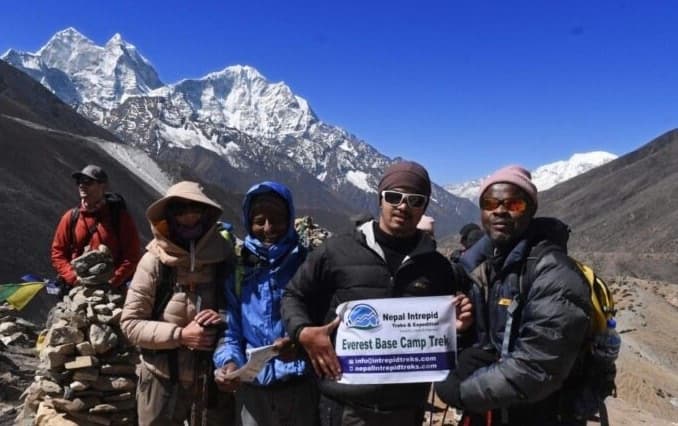
Nepal Intrepid Treks operates as a Pokhara-based trekking agency specializing in Annapurna region expeditions, bringing local expertise, permit management, guide certification, and itinerary customization that transforms a standard Pokhara visit into a structured, fully supported mountain experience.
Working with a Pokhara-based trekking agency eliminates the 3 most common traveler errors: arriving without permits, hiring uncertified guides through informal channels, and choosing trek difficulty levels mismatched to actual fitness levels. Nepal Intrepid Treks structures each itinerary around verified client fitness, available time, and peak-season conditions.
Can Nepal Intrepid Treks Help You Plan Treks From Pokhara?
Nepal Intrepid Treks designs customized trek itineraries for all 4 primary Annapurna routes, Poon Hill, ABC, the Annapurna Circuit, and the Khopra Danda, along with shorter cultural walks, tea house treks, and camping expeditions in the Mustang and Manaslu regions accessible from Pokhara.
Services include ACAP and TIMS permit procurement (same-day processing), government-certified guide assignment with Nepal Tourism Board credentials, porter hiring with load limits compliant with Nepal Porter Protection Code (maximum 20 kg per porter), and pre-departure briefings covering altitude sickness recognition and emergency evacuation protocols.
Contact Nepal Intrepid Treks through the agency website to begin planning your Pokhara and Annapurna itinerary. Whether your visit spans 3 days of lakeside exploration or a full 21-day circuit, the team builds schedules that respect trail conditions, seasonal factors, and your specific experience priorities.
What Are the Key Takeaways About Pokhara City as a Dream Place?
Pokhara City earns its status as Nepal's dream destination through a verified combination of geographic, cultural, and experiential advantages that no other city in the Himalayas replicates at equivalent accessibility.
6 defining facts summarize why Pokhara belongs on every serious Nepal itinerary:
Himalayan proximity: 9 peaks above 6,400 meters visible from city level, with Annapurna I just 40 kilometers distant, the closest 8,000-meter peak to any major city in Nepal.
Natural variety: 3 lakes, 1 underground river gorge, 2 significant waterfalls, and a forested ridge with a pagoda summit, all within a 15-kilometer city radius.
Adventure concentration: 7 certified adventure activity categories operating from a single 3-kilometer tourist zone, making multi-activity days logistically straightforward.
Trekking access: 4 major Annapurna trekking routes beginning within 45 kilometers, ranging from 3-day beginner options to 21-day high-altitude circuits, covering every experience level.
Cultural depth: A 17th-century trade bazaar, 14 documented indigenous community cultures at the Intl. Mountain Museum, and 3 active temple complexes representing Nepal's religious plurality.
Year-round viability: 8 months of strong weather windows (October-May), with monsoon season offering valid alternative value through reduced pricing and dramatic waterfall conditions.
Pokhara City is not simply a rest stop before a trek. It is a full destination, one that rewards deep exploration as much as it rewards using it as a launching point into the Annapurna Conservation Area. Plan for at least 3 days in the city itself, and align your visit timing with your primary goal: October-November for crystal mountain photography, March-April for rhododendron trekking, or December-February for off-peak clarity and solitude.