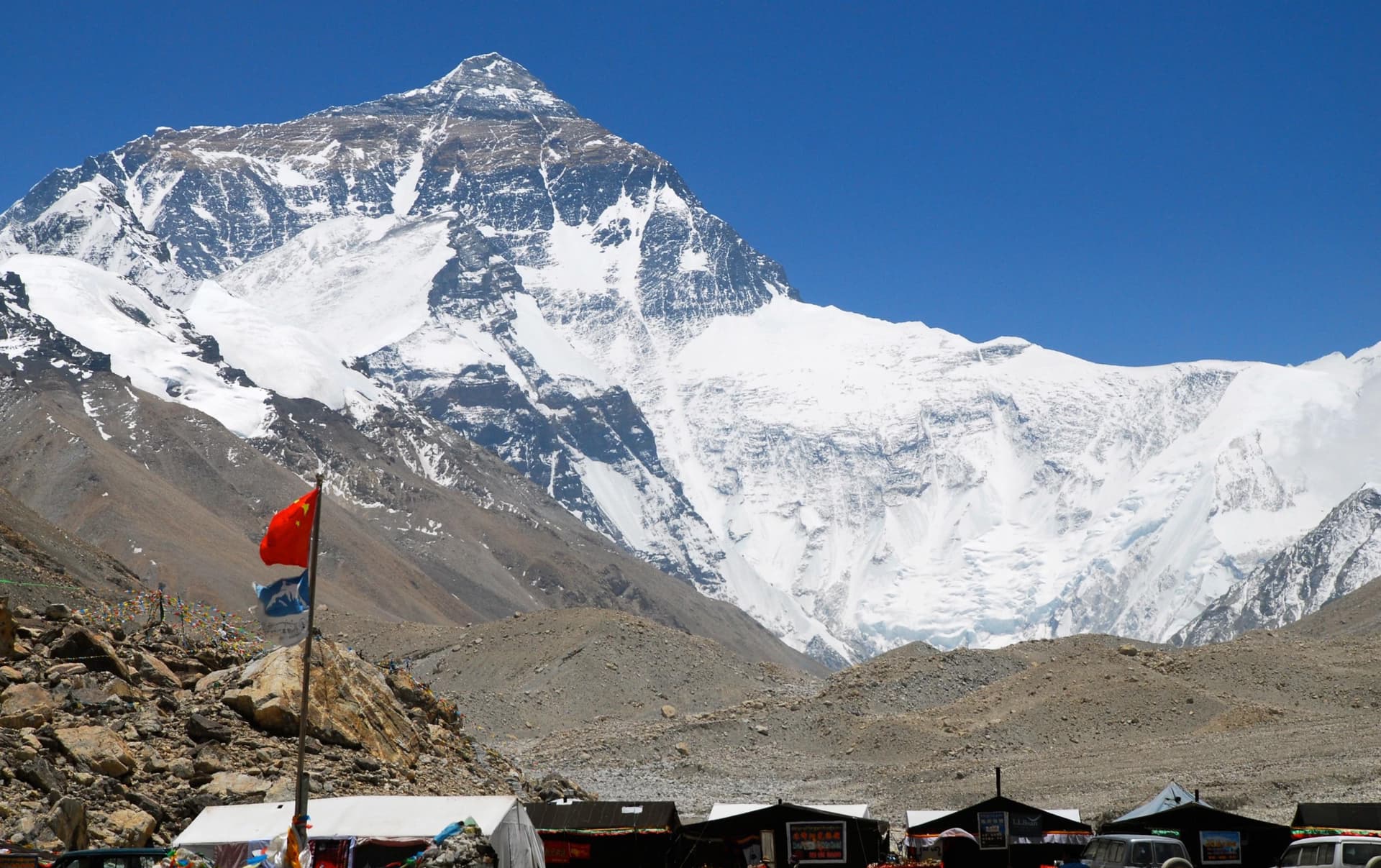
The Everest View Trek is a short Himalayan trekking route in Nepal’s Khumbu region that combines direct views of Mount Everest with the landscapes and Sherpa culture surrounding Namche Bazaar. The trail begins in Lukla and follows the Dudh Koshi valley through Sagarmatha National Park to Namche Bazaar, then climbs toward the Everest View Hotel at 3,880 meters, with the route extending through Khumjung and Khunde. From the high ridges above Namche, trekkers can see Mount Everest (8,849m), Lhotse (8,516m), Nuptse (7,861m), Ama Dablam (6,812m), Thamserku, and other Himalayan peaks while experiencing suspension bridges, Buddhist monasteries, mani walls, prayer wheels, rhododendron forests, and traditional Sherpa villages.
Most Everest View Trek itineraries take 6 to 8 days and require moderate fitness rather than technical climbing experience, making the route suitable for travelers with limited time, first-time Himalayan trekkers, families, and visitors who want a lower-altitude alternative to the Everest Base Camp trek. The trek reaches about 1,500 meters lower than Everest Base Camp while still requiring proper acclimatization, particularly during the stay in Namche Bazaar at 3,440 meters. Successful planning depends on choosing the right season, allowing time for Lukla flight delays, preparing for changing temperatures and altitude, arranging the required permits, selecting appropriate accommodation and food options, and carrying suitable trekking gear. This guide explains the complete Everest View Trek itinerary, route, altitude, difficulty, best time to visit, mountain views, packing requirements, permits, accommodation, food, and altitude-safety considerations for planning the trek in 2026.
What Is the Everest View Trek?
The Everest View Trek is a short, low-altitude hike in the Khumbu region of Nepal that reaches the Everest View Hotel above Namche Bazaar for direct views of Mount Everest, Lhotse, Nuptse, and Ama Dablam. It follows the same entry route as the Everest Base Camp trek, flying into Lukla and walking through Sagarmatha National Park, but turns back after Namche Bazaar instead of continuing toward base camp.
Trekking agencies also market this route as the "Everest Panorama Trek" or "Everest Experience Trek." All three names describe the same core itinerary: a 5- to 8-day round trip from Kathmandu that trades summit-level altitude for a faster, gentler introduction to the Everest region.
What most first-time trekkers overlook is that this route was never designed as a scaled-down base camp trek. It was built around a single destination, the viewpoint at 3,880 meters, and every day of walking supports that one payoff. That focus is what keeps the itinerary short without cutting the parts of the Khumbu experience that matter most: Sherpa villages, monasteries, suspension bridges over glacial rivers, and unobstructed mountain views.
The trek works for three groups in particular: travelers with 6–8 days rather than 12–14, families or first-time high-altitude hikers who want a gentler ascent profile, and repeat visitors to Nepal who have already completed base camp and want to revisit the Khumbu without the full commitment.
Where Does the Everest View Trek Take You?
The Everest View Trek runs from Lukla through the Dudh Koshi valley to Namche Bazaar, then climbs to the Everest View Hotel and the Sherpa villages of Khumjung and Khunde before returning the same way. The full loop stays inside Sagarmatha National Park, a UNESCO World Heritage Site that also contains Everest Base Camp, Gokyo Lakes, and the Three Passes.
A typical route sequence looks like this:
Kathmandu to Lukla: a 25–35 minute mountain flight (or a road transfer to Ramechhap airstrip followed by a shorter flight during the March–May and October–November peak seasons, when Kathmandu's domestic terminal reroutes Lukla traffic)
Lukla to Phakding: a gentle descent and riverside walk along the Dudh Koshi
Phakding to Namche Bazaar: the steepest single climbing day, passing the Sagarmatha National Park entry checkpoint at Monjo
Namche Bazaar to Everest View Hotel, Khumjung, and Khunde: a day-hike loop above town
Return to Lukla: retracing the trail over two days, or one long day for strong hikers
Because the entire route sits below 4,000 meters, it never reaches the terrain or exposure of the high passes or Kala Patthar. That makes it a genuinely different product from the base camp trek rather than a shortened version of it.
How High Does the Everest View Trek Reach?
The Everest View Trek reaches its highest point at the Everest View Hotel, elevation 3,880 meters, with Namche Bazaar (3,440 meters) and Khunde village (roughly 3,840 meters) as the other major elevation points on the route. Lukla, the starting point, sits at 2,840 meters, and Phakding at 2,610 meters.
For comparison, Everest Base Camp sits at 5,364 meters and Kala Patthar at 5,644 meters. The Everest View Trek tops out roughly 1,500 meters lower than base camp, a difference that materially reduces altitude-related risk while still placing trekkers well above 3,500 meters, high enough that acclimatization still matters.
Which Mountains Can You See on the Everest View Trek?
From the Everest View Hotel and the surrounding ridgelines, trekkers see Mount Everest (8,849m), Lhotse (8,516m), Nuptse (7,861m), Ama Dablam (6,812m), and Thamserku (6,608m), often in a single unobstructed sweep. On clear mornings, Khumbila (5,761m), the sacred, unclimbed peak that watches over the Khumjung valley, and Kwangde (6,187m) are also visible from various points along the trail.
What separates this viewpoint from a typical trailside vista is proximity combined with elevation. Because the Everest View Hotel sits on a ridge rather than in a valley, the peaks appear less obstructed by foreground terrain than they do from many points along the base camp trail itself, where Everest is often partially hidden behind Nuptse until trekkers reach Kala Patthar. Early morning, before cloud buildup, consistently produces the clearest visibility, a detail experienced guides plan around by starting the Khumjung–Khunde loop before 7 a.m.
How Long Does the Everest View Trek Take?
Most Everest View Trek itineraries run 6 to 8 days including flights to and from Lukla, with the core trekking portion lasting 4 to 5 days. Shorter 4- to 5-day versions exist for trekkers with limited time, though they compress acclimatization and increase the risk of altitude discomfort.
How Many Days Are Usually Needed for the Trek?
A well-paced itinerary needs a minimum of 6 days from Kathmandu. This includes one buffer day for Lukla flight delays, which are common due to mountain weather and affect nearly every Everest-region trek regardless of season. Trekkers who skip the buffer day risk missing international flights home if Lukla weather closes the airstrip for even a single day, a scenario that happens several times each trekking season.
What Does a Typical Everest View Trek Itinerary Include?
A representative 7-day itinerary looks like this:
Day 1: Fly Kathmandu to Lukla (2,840m); trek to Phakding (2,610m)
Day 2: Trek Phakding to Namche Bazaar (3,440m), entering Sagarmatha National Park at Monjo
Day 3: Acclimatization day in Namche; short orientation walk
Day 4: Day hike to Everest View Hotel (3,880m), Khumjung, and Khunde; return to Namche
Day 5: Trek Namche back to Phakding or Monjo
Day 6: Trek to Lukla
Day 7: Fly Lukla to Kathmandu
Operators frequently add a night in Tengboche (3,867m) for trekkers who want to see its monastery, the largest in the Khumbu, extending the trip to 8 or 9 days. This variation also adds a second acclimatization benefit, since the Namche-to-Tengboche stretch gives the body more time at altitude before descending.
How Difficult Is the Everest View Trek?
The Everest View Trek is rated moderate: it involves 4 to 6 hours of daily walking on well-maintained trails with steady but non-technical elevation gain, and requires no climbing equipment or prior high-altitude experience. The most physically demanding section is the climb from Phakding to Namche Bazaar, which gains roughly 800 meters over a half-day of walking on a stone-and-dirt trail with sustained switchbacks.
In real-world use, the difficulty of this trek comes less from terrain and more from unfamiliarity: uneven stone steps, suspension bridges that sway underfoot, and thinner air that makes a familiar pace feel harder than expected. None of these require technical skill, but they do reward a realistic pace, Sherpa guides commonly use the phrase "bistari, bistari" (slowly, slowly) for good reason.
What Level of Fitness Is Needed for the Trek?
Trekkers should be able to walk 5 to 6 hours on uneven terrain with a daypack of 4 to 6 kilograms, on consecutive days, without requiring rest days beyond the itinerary's built-in acclimatization stop. A baseline of regular cardiovascular activity, brisk walking, hiking, cycling, or stair climbing three to four times a week for at least a month before departure, is sufficient preparation for most healthy adults.
This trek suits a wider range of ages and fitness levels than base camp or the high-pass routes. Families with children aged 10 and older, first-time trekkers, and travelers recovering from a less strenuous fitness routine can generally complete it, provided they respect the pacing and don't rush the Namche acclimatization day. What experienced guides commonly flag as a mistake is treating the acclimatization day as a "day off" and pushing a long, fast walk instead of a short, deliberately easy one.
When Is the Best Time for the Everest View Trek?
The best months for the Everest View Trek are March through May and late September through November, when skies are clearest and temperatures at altitude remain manageable. Both windows offer daytime temperatures between 10°C and 18°C in Namche Bazaar and nighttime lows that can drop below freezing above 3,000 meters.
Is Spring a Good Season for the Everest View Trek?
Spring, from March to May, is a strong season for this trek: rhododendron forests bloom along the lower trail sections between Lukla and Namche, daytime temperatures are mild, and visibility is generally good outside of occasional afternoon haze. Spring also coincides with the Everest climbing season, which adds a distinct layer of activity to Namche Bazaar and the Khumbu trail as expedition teams pass through.
Is Autumn a Good Season for the Everest View Trek?
Autumn, from late September to November, typically offers the clearest mountain visibility of the year, immediately following the monsoon's washout of dust and haze from the atmosphere. This is the busiest season on the trail and in Namche's teahouses, so booking accommodation and Lukla flights several weeks in advance is a practical necessity rather than an optional precaution.
Can You Do the Everest View Trek During Winter or Monsoon?
Winter (December to February) is possible on this trek because the route stays below 4,000 meters, avoiding the heavy snow accumulation and pass closures that shut down higher routes; expect sub-zero nighttime temperatures in Namche and fewer fellow trekkers on the trail. Monsoon season (June to August) brings daily rain, leech activity on the lower forested sections, and persistent cloud cover that frequently obscures mountain views by mid-morning, conditions that make this the least reliable season for the trek's primary purpose.
What most seasonal guides don't mention is that winter, despite the cold, often delivers some of the sharpest mountain photography of the year, since dry winter air carries less atmospheric haze than spring. Trekkers who pack correctly for the cold, down jacket, insulated sleeping bag rated to at least -15°C, and thermal layers, frequently report winter as an underrated choice for this specific route.
What Can You Expect Along the Everest View Trek Route?
The Everest View Trek route moves through pine and rhododendron forest, over high suspension bridges spanning the Dudh Koshi gorge, and through the trading town of Namche Bazaar before reaching open ridgelines with unbroken mountain views. Along the way, trekkers pass mani walls, prayer wheels, and chortens that mark the trail as sacred ground in Sherpa Buddhist tradition.
What Is the Lukla to Namche Bazaar Route Like?
The two-day walk from Lukla to Namche Bazaar follows the Dudh Koshi River through Sherpa farming villages, crossing several suspension bridges, including the high Hillary-era bridges near Jorsale, decorated with thousands of prayer flags. Trekkers pass through the Sagarmatha National Park entry checkpoint at Monjo, where permits are checked and stamped, before the trail's steepest climb into Namche Bazaar.
The final approach into Namche delivers the first proper mountain view of the trip: a gap in the ridgeline that frames Everest, Lhotse, and Nuptse together, often the moment trekkers first understand the scale of what surrounds them for the rest of the trip.
What Can You Experience in Namche Bazaar?
Namche Bazaar functions as the commercial and cultural hub of the Khumbu, with a Saturday market that draws traders from surrounding villages, bakeries serving fresh pastries and espresso, equipment shops for last-minute gear, and a small museum documenting Sherpa mountaineering history. Most itineraries schedule an acclimatization day here, which trekkers use for a short walk to the Sagarmatha National Park visitor center or the Everest Photo Gallery rather than full rest.
In real-world terms, Namche is also where trekkers get their first taste of "acclimatization economics": prices for food, bottled water, and Wi-Fi rise noticeably compared to Lukla and Phakding, since everything above this point arrives by porter or yak train rather than by road or plane.
What Is the Visit to Everest View Hotel Like?
The hike to Everest View Hotel takes roughly one to two hours from Namche Bazaar and ends at one of the highest-altitude hotels in the world, where trekkers commonly stop for breakfast or coffee on an outdoor terrace facing Everest, Lhotse, Ama Dablam, and Thamserku directly. The hotel sits above Namche near the small Syangboche airstrip, on a ridge that keeps the view free of the intervening terrain that blocks sightlines from lower points on the trail.
Because the terrace faces the mountains, morning arrival, before roughly 9 or 10 a.m., makes the difference between a clear panorama and a cloud-filled valley. Guides who run this route regularly build the day's start time around that window rather than around a fixed departure hour.
Which Sherpa Villages and Monasteries Can You Explore?
The Khumjung and Khunde villages, a short walk from Everest View Hotel, offer a quieter, more residential counterpart to Namche's commercial bustle, along with Khumjung's monastery, which holds a relic locally identified as a yeti scalp. Sir Edmund Hillary's Himalayan Trust funded the Khunde Hospital and the Khumjung school in these villages during the 1960s, and both remain active, a detail many trekkers find more memorable than the mountain views themselves once they hear the history behind it.
Trekkers with an extra day frequently extend to Tengboche, home to the largest and most active monastery in the Khumbu, where monks perform daily prayer ceremonies open to visitors in the early morning and late afternoon.
What Should You Pack for the Everest View Trek?
Pack for temperature swings of 20°C or more between midday sun and nighttime cold: layered clothing, sturdy broken-in trekking boots, a sleeping bag rated to at least -10°C, and a basic personal medical kit cover the core requirements for this trek. Because the route stays below 4,000 meters, gear needs are lighter than for base camp, but the fundamentals of altitude and cold-weather trekking still apply.
What Clothing and Footwear Are Essential?
A functional layering system for this trek includes a moisture-wicking base layer, an insulating mid-layer such as fleece or light down, and a waterproof, windproof outer shell. Trekkers should also carry a warm down jacket for evenings in Namche and above, where temperatures regularly drop below freezing outside of summer months.
Footwear matters more than any other single item on this list: broken-in, ankle-supporting trekking boots prevent the blisters and ankle strain that account for a large share of on-trail injuries at this altitude. New boots worn for the first time on the trail are a common and entirely avoidable mistake, break them in on at least three or four training hikes before departure.
What Trekking Gear and Personal Items Should You Bring?
Beyond clothing, the practical packing list includes:
A daypack (25–35 liters) with rain cover
Trekking poles for the steep Phakding-to-Namche climb
A headlamp with spare batteries
Water purification tablets or a filter (bottled water sold on the trail creates significant plastic waste and cost)
Sunglasses with UV protection and high-SPF sunscreen, reflected glare at altitude is stronger than most trekkers expect, even on overcast days
A basic first-aid kit including blister treatment, altitude medication if prescribed, and any personal prescriptions
A power bank, since charging costs money at teahouses above Lukla and outlets are limited
Do You Need Trekking Permits for the Everest View Trek?
Yes. The Everest View Trek requires two permits: the Khumbu Pasang Lhamu Rural Municipality entry permit (obtained and checked upon arrival in Lukla) and the Sagarmatha National Park entry permit (checked at the Monjo checkpoint on the way into the park). As of 2026, the Sagarmatha National Park permit costs NPR 3,390 (approximately $25) for non-SAARC nationals, and the Khumbu Pasang Lhamu Rural Municipality permit costs NPR 3,000 (approximately $23), though local government fees are revised periodically and should be confirmed close to departure.
While Nepal introduced a nationwide mandatory guide rule for most protected areas in 2023, the local Khumbu Pasang Lhamu Rural Municipality explicitly exempts the Everest region, meaning independent trekking without a guide remains legally permitted on the Everest View Trek. Trekking agencies handle both permits and the guide requirement as part of a standard booking, checking documents at Monjo and any secondary checkpoints along the trail. Neither permit substitutes for travel insurance, which remains a separate and equally necessary arrangement, particularly insurance that explicitly covers high-altitude trekking and helicopter evacuation.
What Are the Accommodation and Food Options on the Everest View Trek?
Accommodation on the Everest View Trek consists of teahouses and small lodges offering private twin rooms with shared bathrooms, while food centers on Nepali staples like dal bhat alongside a surprisingly wide range of Western-style options in Namche Bazaar. Facilities become progressively simpler above Namche, though this trek never reaches the more basic conditions found on longer, higher routes toward base camp.
Where Do You Stay During the Trek?
Teahouses along this route typically offer private rooms with two single beds, a shared squat or Western-style toilet down the hall, and, at Namche's better lodges, attached bathrooms with solar-heated showers available for an extra charge. Rooms are unheated except for a shared dining area warmed by a wood or dung-fueled stove in the evening, where trekkers typically socialize, eat, and dry gear before bed.
Namche Bazaar offers the most comfortable lodging on the route, including a small number of higher-end guesthouses with attached bathrooms and reliable hot water, a detail worth booking ahead during peak spring and autumn weeks, when the town's rooms fill quickly.
What Food and Drinks Are Available Along the Route?
Dal bhat, rice, lentil soup, and vegetable curry, typically served with unlimited refills, remains the most practical trail meal, since it provides balanced carbohydrates and protein at a fair price and keeps kitchens simple to manage at altitude. Namche Bazaar adds noticeably more variety, including bakery pastries, pizza, momo (Tibetan dumplings), thukpa (noodle soup), and espresso-based coffee at several dedicated cafés.
Hydration matters more on this trek than diet: guides commonly recommend 3 to 4 liters of water daily, treated with purification tablets or a filter rather than purchased in single-use plastic bottles, both for cost reasons and because bottled water disposal is a genuine environmental problem in the Khumbu. Alcohol is available in Namche but best avoided above 3,000 meters, since it interferes with acclimatization and increases dehydration risk.
What Should You Know About Safety and Altitude on the Everest View Trek?
Altitude sickness remains possible on the Everest View Trek despite its lower elevation, since Namche Bazaar (3,440m) and the Everest View Hotel (3,880m) both sit above the altitude threshold where acute mountain sickness (AMS) commonly begins, generally cited as 2,500 meters. The trek's built-in acclimatization day in Namche exists specifically to manage this risk, and skipping it to save time is one of the most consequential mistakes trekkers make on this route.
How Can You Reduce the Risk of Altitude Sickness?
The most effective prevention measures, in order of impact, are:
Following the itinerary's acclimatization day in Namche rather than skipping it
Ascending slowly and avoiding rushing between elevation points, even when feeling strong
Drinking 3 to 4 liters of water daily to support the body's adjustment to lower oxygen availability
Avoiding alcohol and sleeping pills above 3,000 meters
Recognizing early AMS symptoms, headache, nausea, dizziness, and disrupted sleep, and reporting them to a guide immediately rather than pushing through
Because this trek stays below 4,000 meters, severe AMS is less common here than on base camp or high-pass routes, but mild symptoms still appear in a meaningful share of trekkers, particularly those flying directly from sea level to Lukla with no prior altitude exposure. Guides commonly recommend the phrase "climb high, sleep low" for any add-on day hikes, and it applies just as well to the short Everest View Hotel excursion as it does to longer treks.
What Health and Safety Precautions Should You Follow?
Beyond altitude management, practical safety measures for this trek include carrying comprehensive travel insurance with helicopter evacuation coverage, informing your guide of any pre-existing medical conditions before departure, and carrying a personal first-aid kit with any prescribed medications rather than assuming teahouse pharmacies will stock them. Consulting a travel medicine clinic 4 to 6 weeks before departure, for altitude medication discussions, routine vaccinations, and general fitness clearance, is a sound step for trekkers with any underlying health concerns.
Government-licensed guides carry basic first-aid training and, on many routes, a pulse oximeter to monitor blood oxygen saturation, which gives an objective early warning sign well before symptoms become obvious. Trekkers traveling independently, where permitted, should carry this same equipment themselves.
How Can You Plan an Everest View Trek With Nepal Intrepid Treks?
Planning an Everest View Trek with Nepal Intrepid Treks starts with matching the itinerary length and pace to your fitness level and travel dates, then letting the agency handle permits, guide assignment, Lukla flight bookings, and teahouse arrangements. A locally based operator with government-licensed guides removes the logistical friction that causes most of the avoidable problems on this route, missed permits, unbooked rooms during peak weeks, and Lukla flight scheduling gone wrong.
Can Nepal Intrepid Treks Arrange a Safe and Comfortable Everest View Trek?
Nepal Intrepid Treks arranges the Everest View Trek with government-licensed, first-aid trained guides, pre-booked teahouse accommodation along the route, and full handling of the Sagarmatha National Park and Khumbu Pasang Lhamu Rural Municipality permits before departure. Itineraries are adjusted around each trekker's fitness level, available dates, and interest in add-ons such as an extra night in Tengboche or a helicopter return from Lukla.
If you're weighing your first Khumbu trek or planning a return trip with less time on hand, reach out with your travel dates and fitness background, and the itinerary can be built around what actually fits your trip, not a fixed template.
What Are the Key Takeaways About the Everest View Trek?
The Everest View Trek delivers direct views of Everest, Lhotse, Nuptse, and Ama Dablam in 6 to 8 days, at a maximum altitude of 3,880 meters, roughly 1,500 meters lower than Everest Base Camp. It suits trekkers with moderate fitness, limited time, or a preference for lower altitude-related risk, while still passing through Namche Bazaar, Khumjung, Khunde, and the heart of Sherpa culture in the Khumbu.
Success on this trek comes down to a short list of fundamentals: respect the acclimatization day, choose spring or autumn for the clearest views, pack for a 20-degree daily temperature swing, and confirm permits and guide arrangements before flying into Lukla. Get those details right, and the trek delivers one of the most efficient mountain payoffs in Nepal, a morning on the Everest View Hotel terrace, coffee in hand, looking directly at the roof of the world.